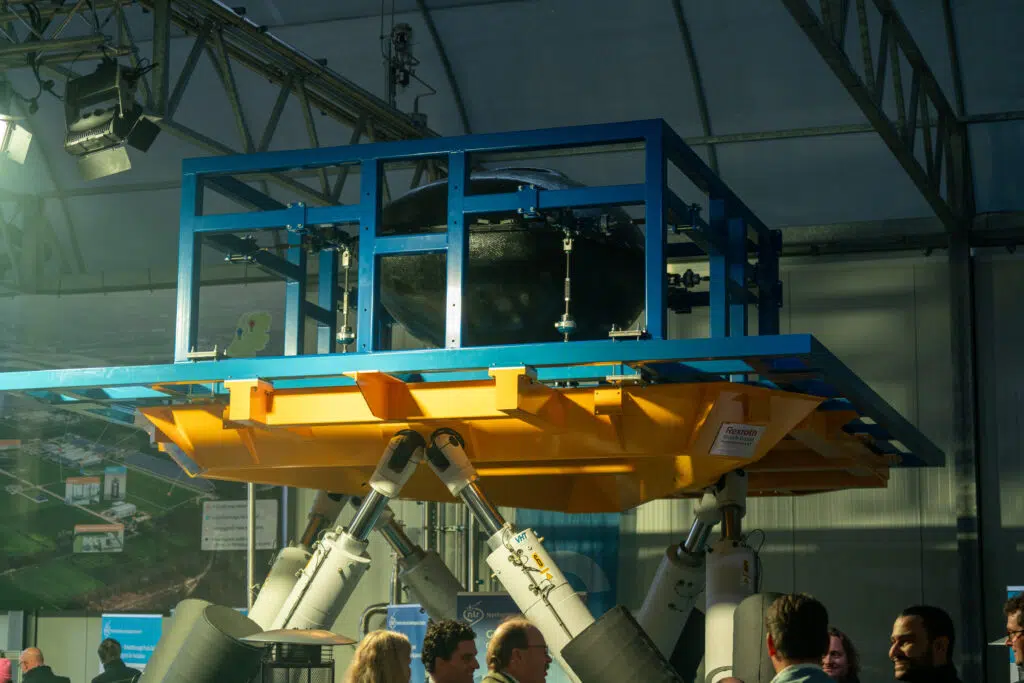
A liquid hydrogen tank for aviation needs to be lightweight, double-walled, and vacuum insulated. The connection between the inner and outer walls needs to be such that heat fluxes are minimal. This means that the relatively low stiffness and strength of these connections are critical design elements. Furthermore, liquid hydrogen tanks are susceptible to boil-off, where the fuel evaporates over time. As a result of sloshing, the boil-off rate increases. Evaluating and improving this boil-off behaviour is therefore an important research topic.
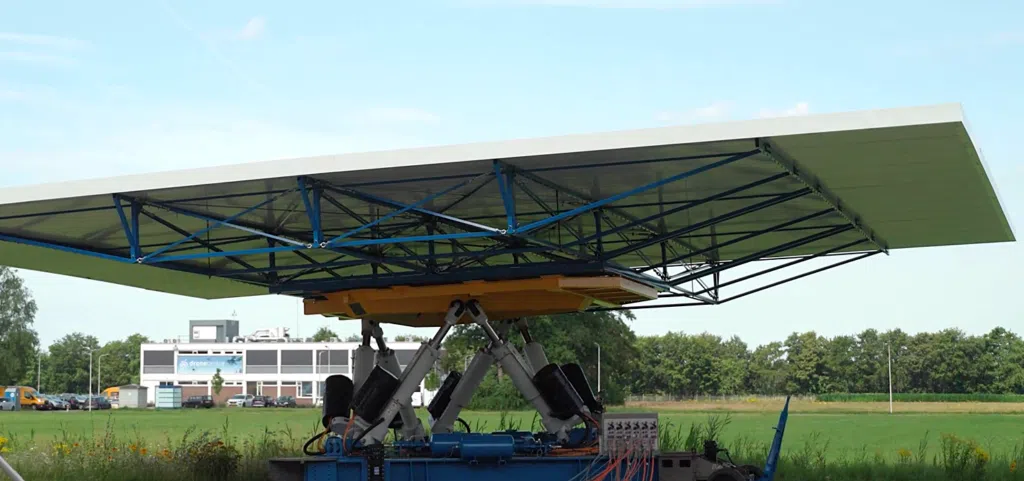
Drones are becoming increasingly important for both civil and military applications. As they are deployed on moving platforms, such as ships or tanks, they need to be able to take off and land safely from a mobile base. To evaluate their performance in these situations requires a testing capability that can mimic the
motions of these platforms.
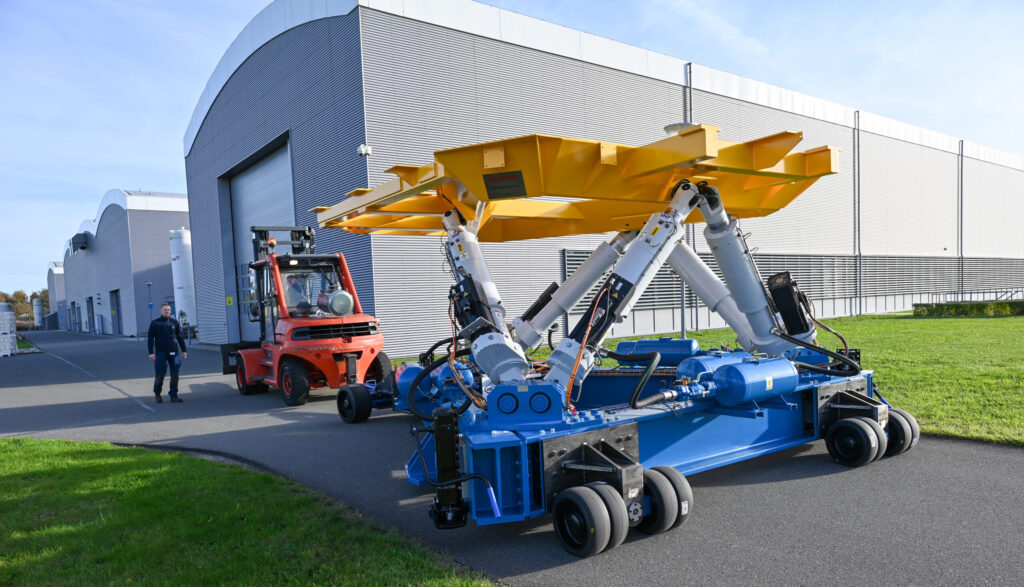
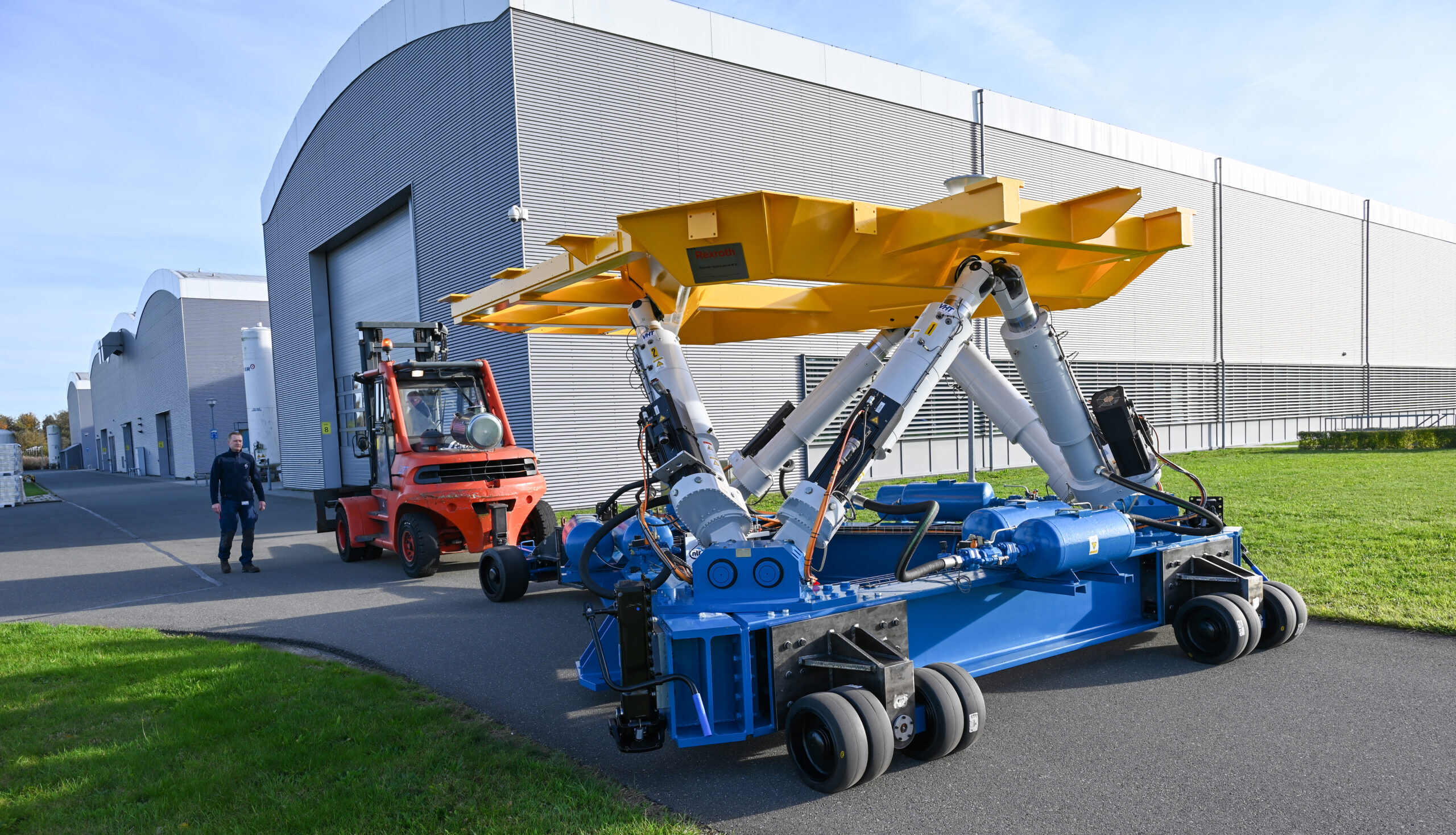
The GRACE platform can be used to:
- perform sloshing tests of liquid hydrogen storage tanks
- carry out attitude tests (of parts) of a complete powertrain
- simulate drone landing scenarios on moving platforms
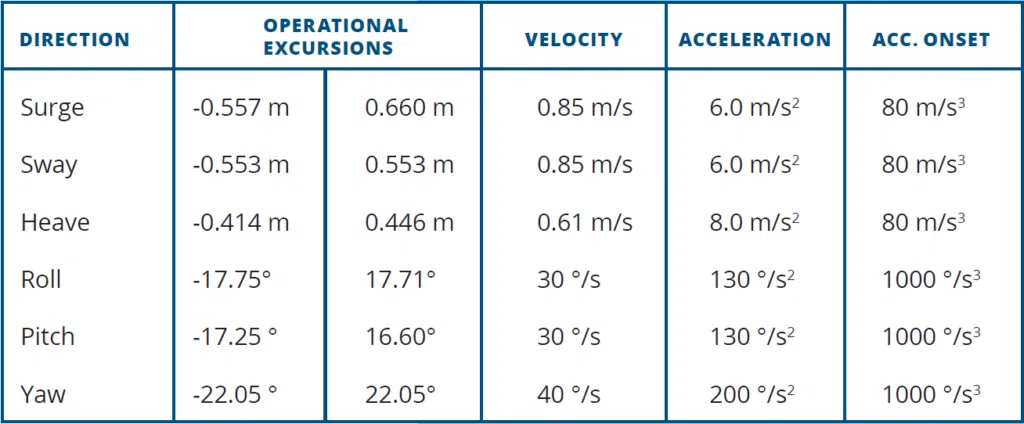
- mimic the movements of various platforms or objects (within its physical limits)
- provide a modular deck with optional sizing (up to 15 m x 15 m)
Main features
- Maximum payload: 7,356 kg
- Mass without payload: 19,000 kg
- Nominal power: 100 kW