Area of expertise
Data Science and Engineering
The world is rapidly automating and digitalising, and it’s essential for the Dutch Defense and industry to keep pace with this development to remain competitive and effective. Within the broad field of Data Science & Engineering, we focus on data analysis, including artificial intelligence (AI). Our goal is to build digital knowledge over the coming period that will be essential for Defense and industry to effectively perform their tasks in the near future.
Outline of the research
Artificial Intelligence
We are encountering more data than ever before, and much of this data is unstructured or difficult to interpret. Assistance is needed to make these data streams manageable and to utilise them, and Artificial Intelligence (AI) offers a solution for this. Using state-of-the-art AI techniques, we analyse large volumes of data and convert them into valuable information.
NLR closely monitors new AI developments and develops impactful applications, ensuring we have extensive AI expertise within the aerospace sector. Thanks to this broad expertise, we can assess how both new and existing AI algorithms fit within aerospace applications and what added value they offer. We are able to validate the added value of using AI within these applications, both technically and operationally, thereby ensuring the quality and reliability of our solutions.
In addition, NLR can use scientific literature to work towards a Proof of Concept or even a fully-fledged prototype in which AI is actually applied. We aim to develop AI routines that are not only effective, but also transparent and accountable. By applying Explainable AI, we ensure that our AI solutions can also be safely deployed in critical systems.
Although we are able to cater for a wide range of aerospace applications, our current focus is on the application of deep learning, machine learning and AI within the aerospace sector. Drawing on our combined expertise, we develop AI solutions that optimise processes and enhance decision-making, with quality as our guiding principle.
Information engineering
Information Engineering focuses on generating, disseminating, analysing, and utilising data and information. Key disciplines such as machine learning, artificial intelligence, control theory, signal processing, and information theory play a crucial role in this field. The outcomes of Information Engineering are used to make reliable predictions, conduct in-depth analyses, and provide decision-making support.
Some of our projects
Application of AI in manufacturing and MRO industry
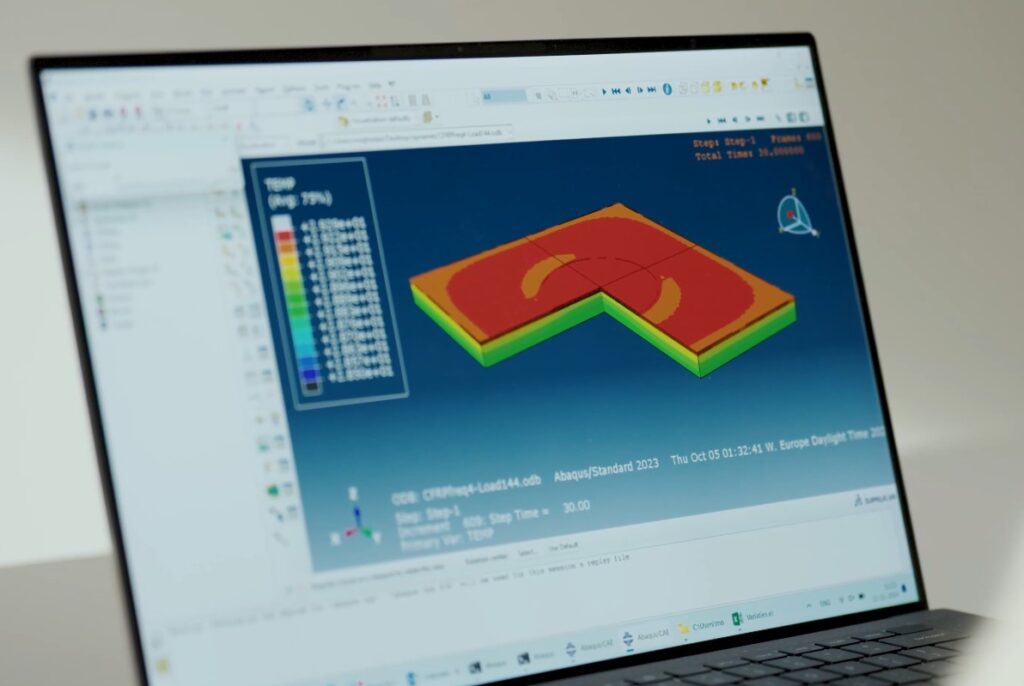
Research is being conducted to determine which AI techniques are effective for the manufacturing and MRO industry. Training an AI is a challenge when dealing with low production or repair volumes. An investigation has been carried out to explore how existing AI models can be utilized for structural analyses, which is a collaborative effort between AI experts and FEA (Finite Element Analysis) experts within NLR. The knowledge gained primarily focuses on the processes and properties required to establish such a system. A prototype has also been developed with the intention of running FEM (Finite Element Method) calculations overnight, where the input parameter values are determined by an AI each time. This aims to accelerate the optimisation process, allowing FEA experts to concentrate on analyses during the day.
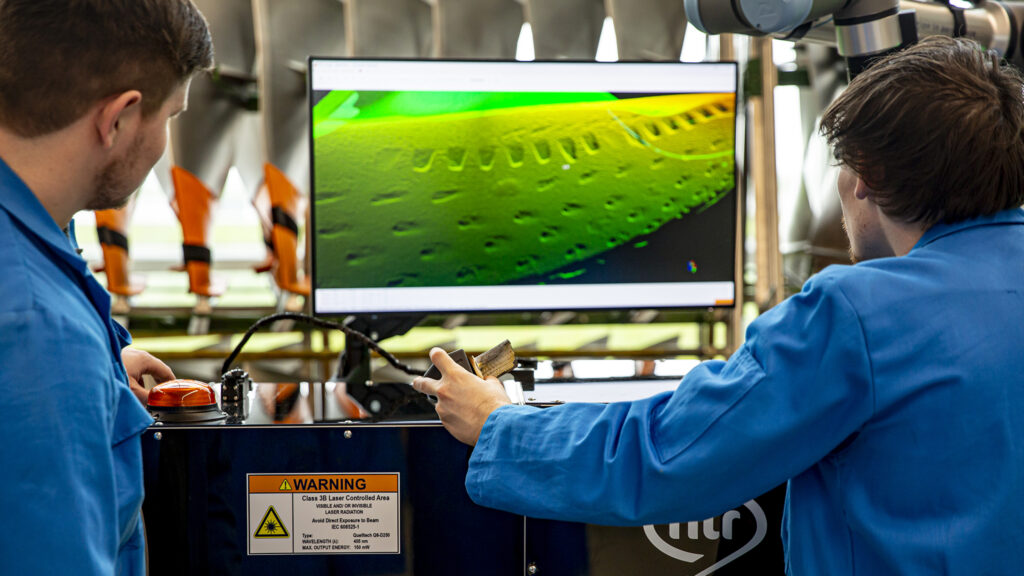
Closed-loop digital pipeline for manufacturing of large components
The project aimed to manufacture large components using integrated automation methodologies and holistic data management. This involved utilising various tools to achieve the required precision and customer orientation. A key aspect of production was non-destructive inspection of components. The first research question was how to efficiently automate the construction and assembly of large fiber-reinforced composite structural components for aircraft, leveraging developments from other sectors. The second research question was how to automatically process inspection results from tools into useful information about product quality.
The project demonstrated developments from previous years on the aerospace pilot line, including the combined use of multiple non-destructive inspection methods, simulation methods for training data, and AI models for automatic processing of inspection results. Additionally, work was done on disseminating the obtained results.
More knowledge and technology
RESEARCH INFRASTRUCTURE
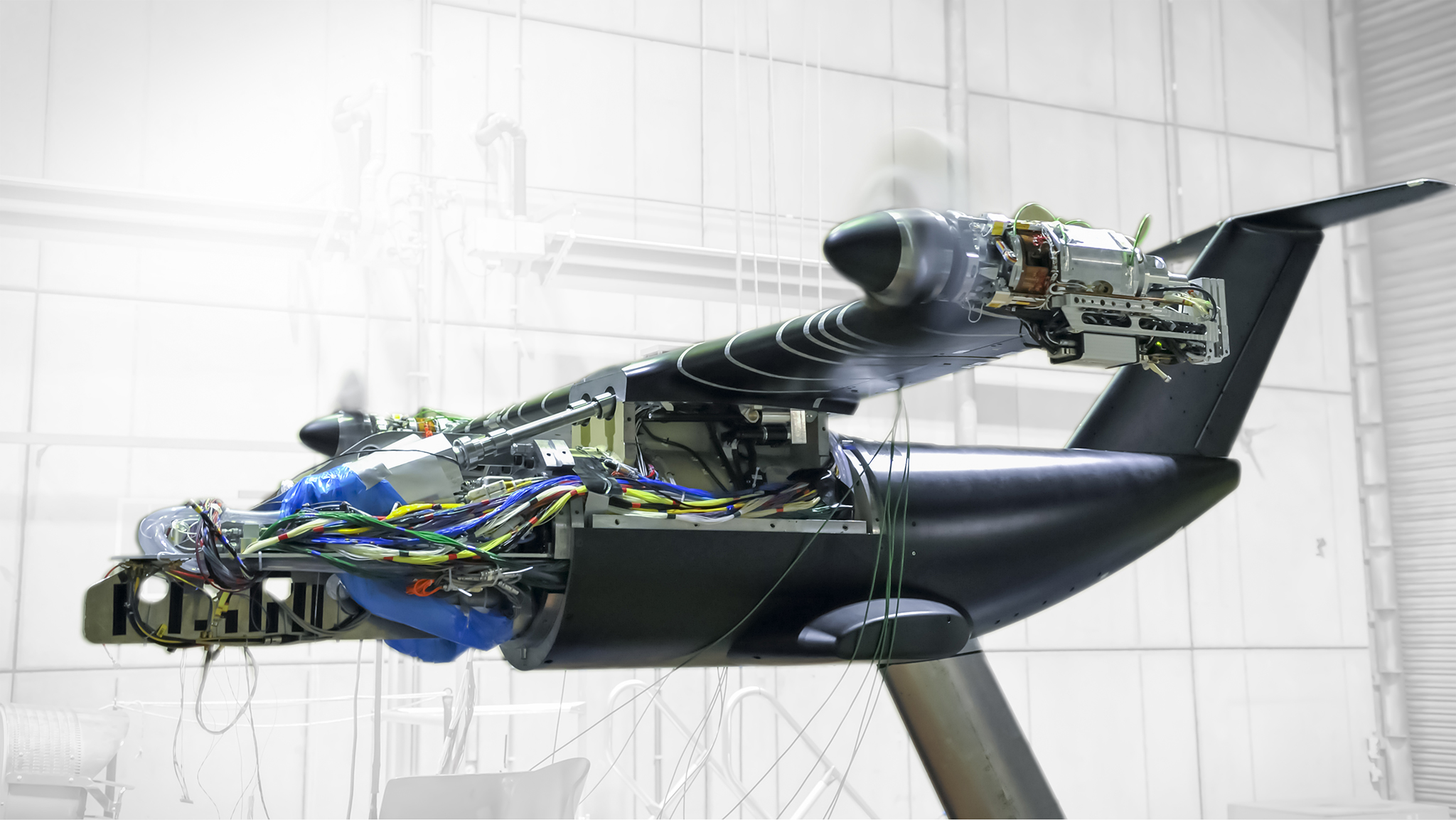
From wind tunnels to simulators
Discover the wide range of NLR research infrastructure, which are also accessible to other research institutions and companies.

capabilitIES
Knowledge sharing
Explore our capabilities to discover how they can be customised to meet the needs of your project.