Space for defence and society – background interview
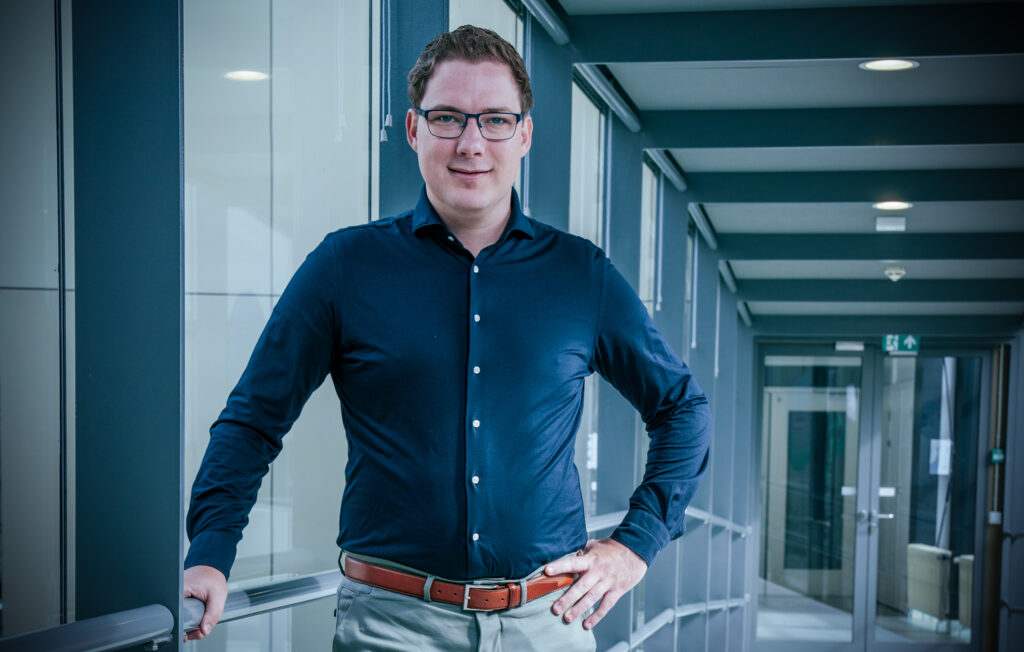
Satellites are invisible from Earth, yet they play a significant role in our daily lives. In fact, they are indispensable. Without space technology, our economy, and safety and security would be at risk. Therefore, NLR has initiated the knowledge programme Space for Defence and Society by the end of 2025. Programme leader Rik Bosma explains the programme.
What does the knowledge programme involve?
“In recent years, we have seen that space technology is becoming an increasingly important theme at NLR. The government and industry are also paying more attention to the possibilities in space. With the programme, we want to contribute to realising the ambitions of the Dutch industry and government, both from the Ministry of Economic Affairs and the Ministry of Defence, in the field of space technology. The Dutch Long-term Space Agenda (LTR) and the strategy from the Ministry of Defence are important starting points for the programme. We want to put the Netherlands more firmly on the map when it comes to space technology. It is essential that we, as NLR, continue to look ahead. What will be needed in 10, 20, or even 30 years? We need to anticipate and make plans for that now.”
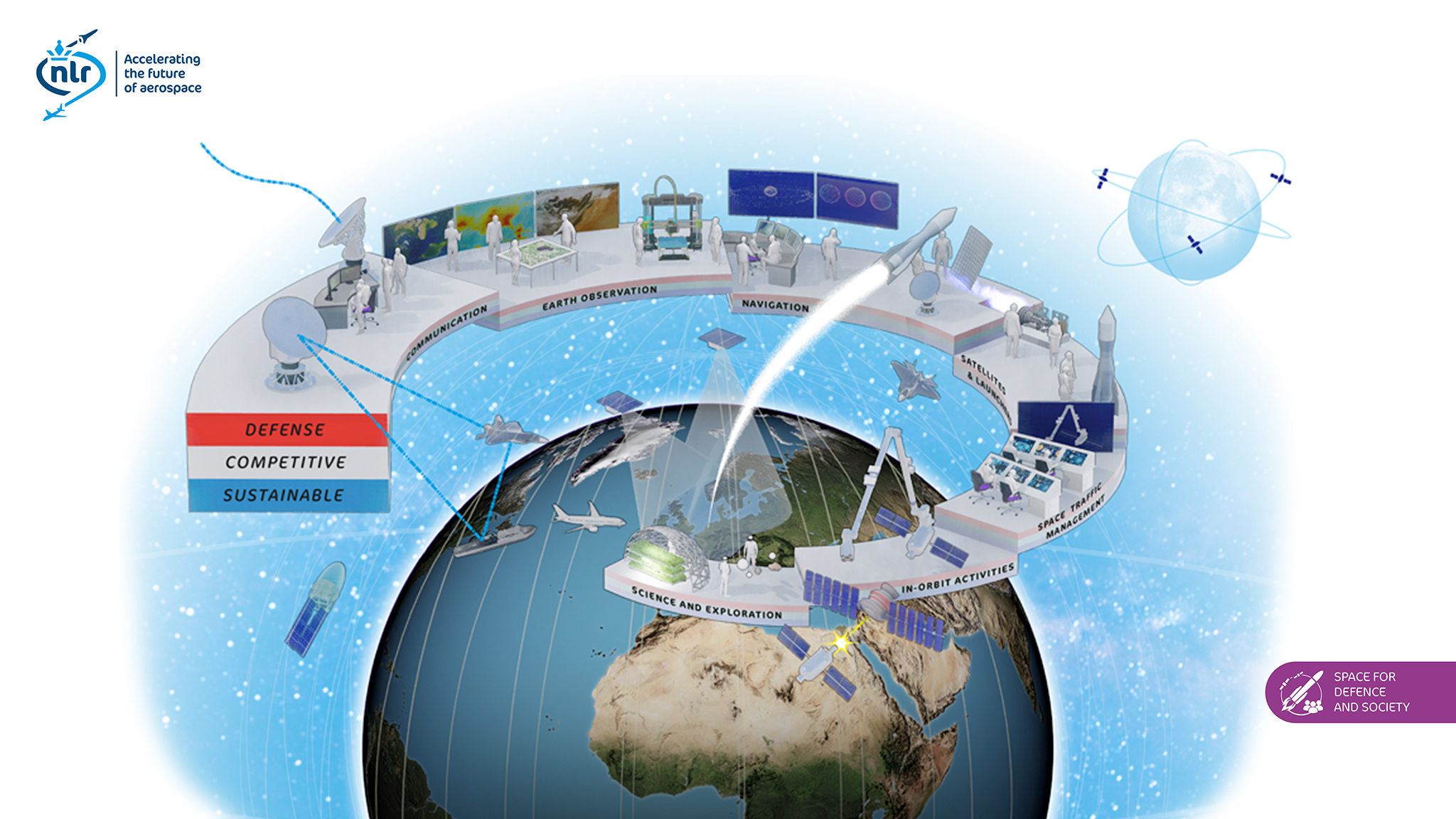
Strategic programme: Space for defence and society
NLR is an expert in various space-related fields, particularly at the technical component and system level and their integration. NLR aligns with the priorities set by the Dutch government in the Long-term Space Agenda (LTR). Our goal is to contribute to the safe and secure, and sustainable use of space, thereby ensuring the prosperity, knowledge position, and safety of the Netherlands and Europe, both now and in the future.
Click on the visual to enlarge.
What is the link between Defence and Society in the context of this programme?
“Space helps us, among other things, to protect the Kingdom of the Netherlands. With satellites, we collect crucial data about the Netherlands, Aruba, Curaçao, and Sint Maarten. To be less dependent on others, we need to invest in our own Dutch and European space infrastructure.”
“Space is also part of the current political threat. We are heavily reliant on satellites: without GPS, ambulances arrive late and our payment systems come to a standstill. This makes systems like GPS and the European Galileo part of our country’s critical infrastructure. If something happens to these systems, it will have a huge impact on our daily lives. We are still very vulnerable in this area, and we need to do something about it.”
“Our vision is to put the Netherlands on the map as a technological authority in the field of space technology”
What kind of research takes place within this programme?
“In space, we primarily do three things: we communicate, we look down and we navigate. All research is aimed at making the technology needed for this as stable and reliable as possible. One of the research questions, for example, could be: how can we ensure that an aircraft can continue to fly even if the navigation signal is disrupted (jammed)?”
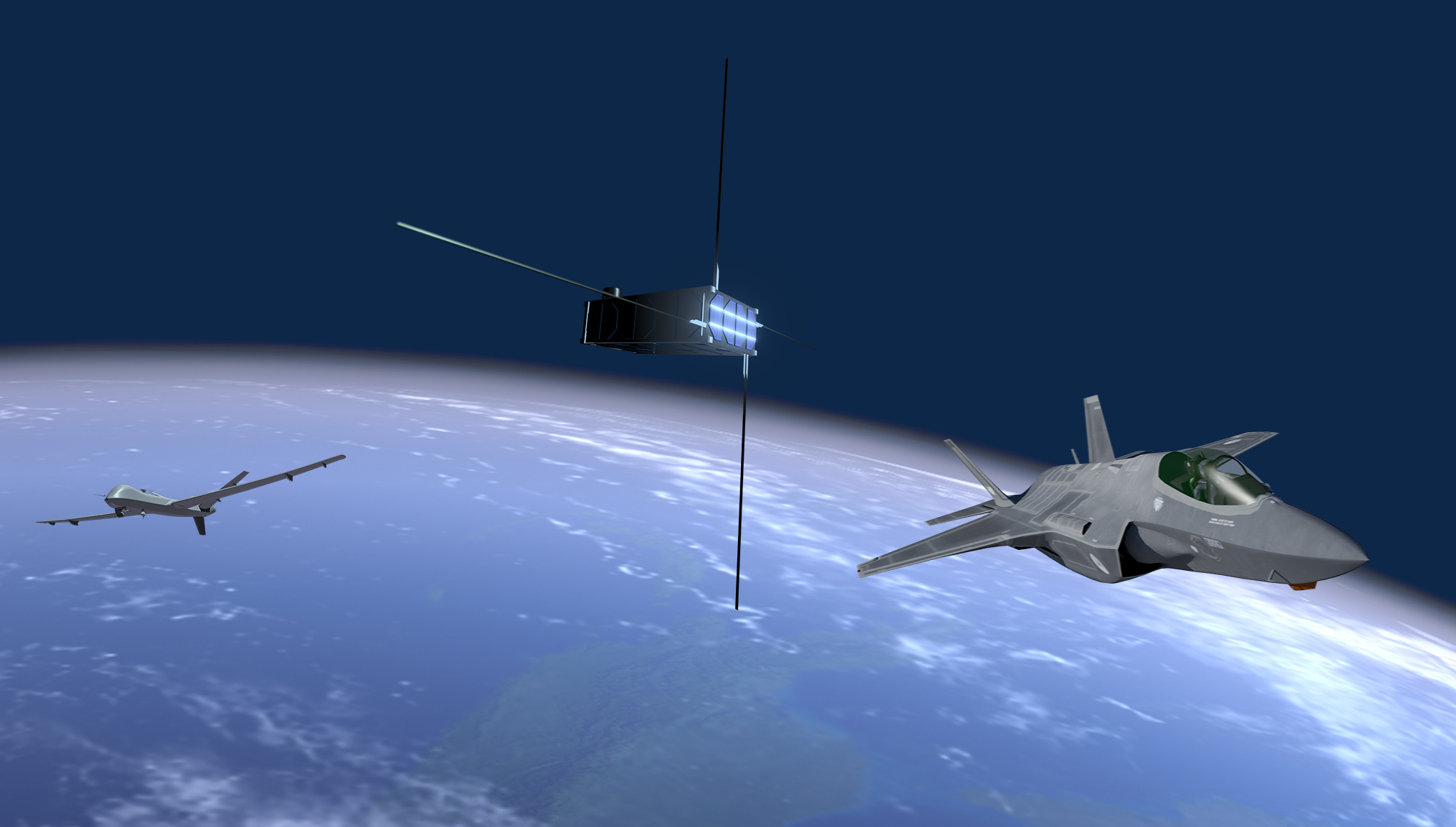
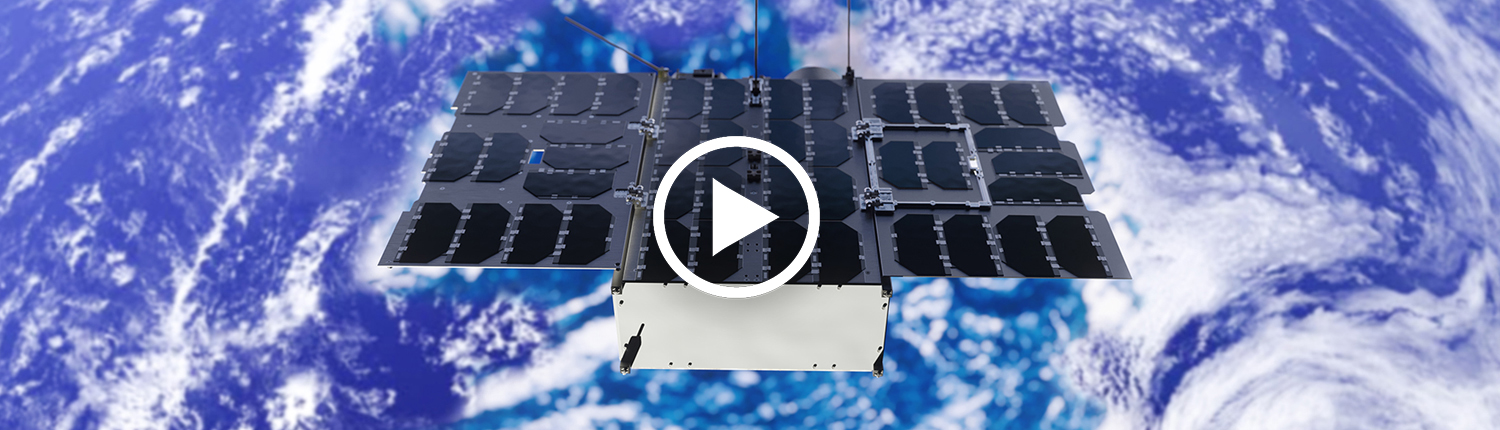
“One of the programme’s most important ambitions is to set up a ‘Space Research Facility’ where we want to develop space technology and operations. A major part of the facility is the construction and operation of our own NLR research satellite. This brings many challenges, so it’s a special step for NLR and the Netherlands.”
What is the goal of the programme?
Our goal is to contribute to the safe and sustainable use of space, thereby safeguarding the prosperity, knowledge position, and safety of the Netherlands and Europe, both now and in the future. The mission of the programme is to execute NLR’s space strategy. The key point in the strategy is to increase collaboration within the ecosystem. We aim to make connections and assist both the government and industry in developing and deploying space technology, enabling them to utilise our NLR research satellite in the future, for example.
To achieve this, NLR will need to act as a catalyst to contribute to the development of space technology as quickly as possible. This means we need to accelerate and take developments to the next level. This also involves working more with an entrepreneurial spirit. Our vision is to put the Netherlands on the map as a technological authority in the field of space technology.
Why is the Netherlands the ideal place for the development of a space industry?
“We have a strong high-tech industry and knowledge economy in the Netherlands. Additionally, there is a lot of potential among Dutch startups and SMEs. That’s why we’re developing a valorisation and technology transfer strategy at NLR to further shape our collaboration. Startups and SMEs can, for example, test certain equipment and technologies through our research satellite. Ideally, this will enable us to achieve results via our satellite much faster than with regular missions. Startups don’t have time to wait two to three years; they need to move forward with their development much more quickly. I think it’s essential to support that from NLR. Large companies know how to approach it themselves, how lobbying works, and where to get the money from. For startups and SMEs, we at NLR can make a difference. Although, ultimately, the entrepreneurs have to do it themselves.”
What does the future look like?
“In space, we still have the chance to join hands as humanity and create a peaceful area. That’s a very idealistic thought of mine, as you can already see conflicts arising. But I think it’s essential to focus on the opportunities. And that’s what we at NLR want to contribute to as well.”
“The future is not yet set in stone; we can do many things together to contribute to a good outcome. That’s why I’d like to end with a call to action. Would you like to contribute to NLR’s space plans? You can always contact me, and we’ll see what we can do together.”
About the programme leader
Rik Bosma is an R&D Engineer and programme leader of the Space for defence and society programme. He transitioned from industrial automation to the aerospace sector and has found his place.
“I am convinced that we need to invest more in space technology within the Netherlands and Europe. That’s why I’m pleased that we’re taking the necessary steps from NLR through this programme. However, as a knowledge institution, we cannot do it alone. The knowledge and expertise from both the government and industry are of crucial importance. Therefore, we need to establish connections and collaborate to find synergies at all levels.”