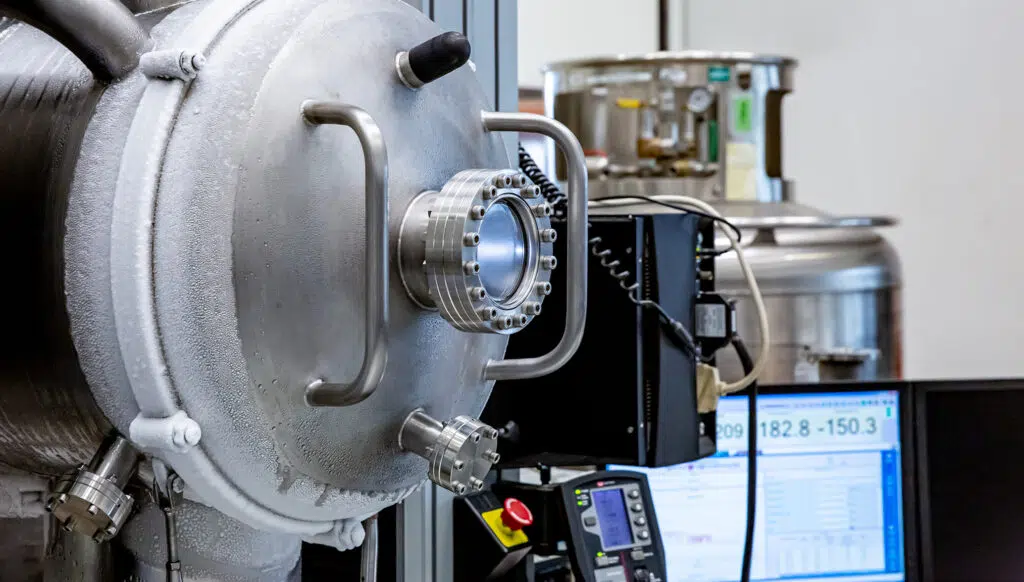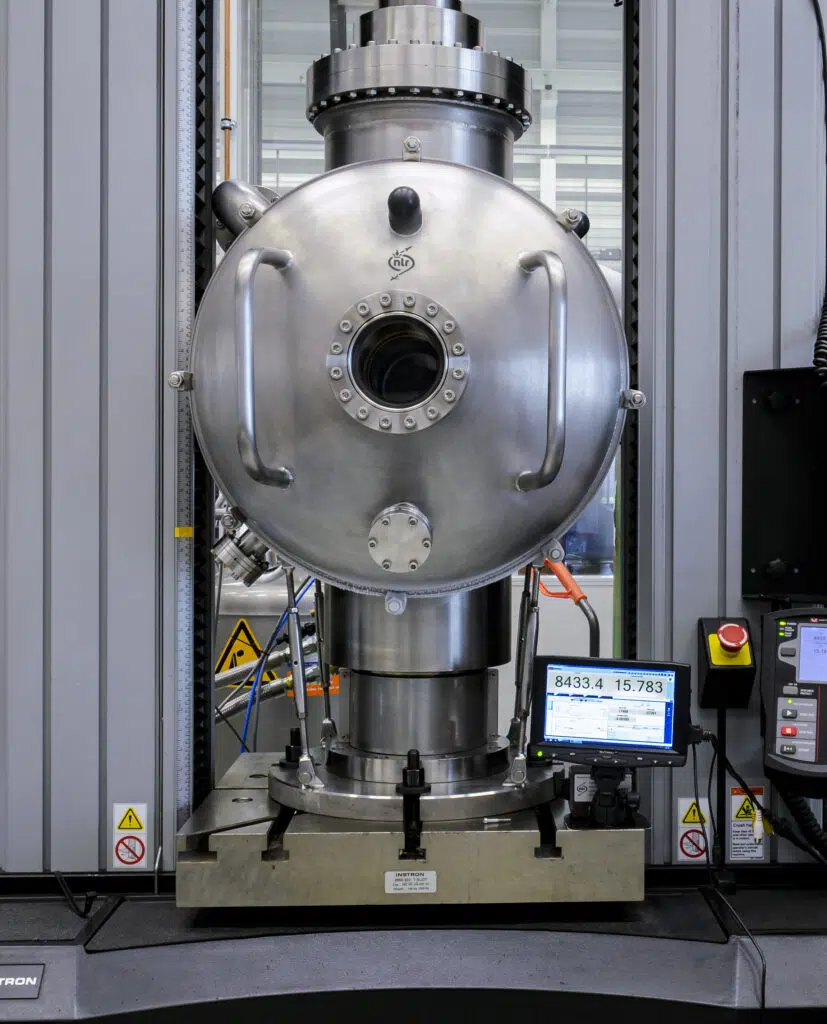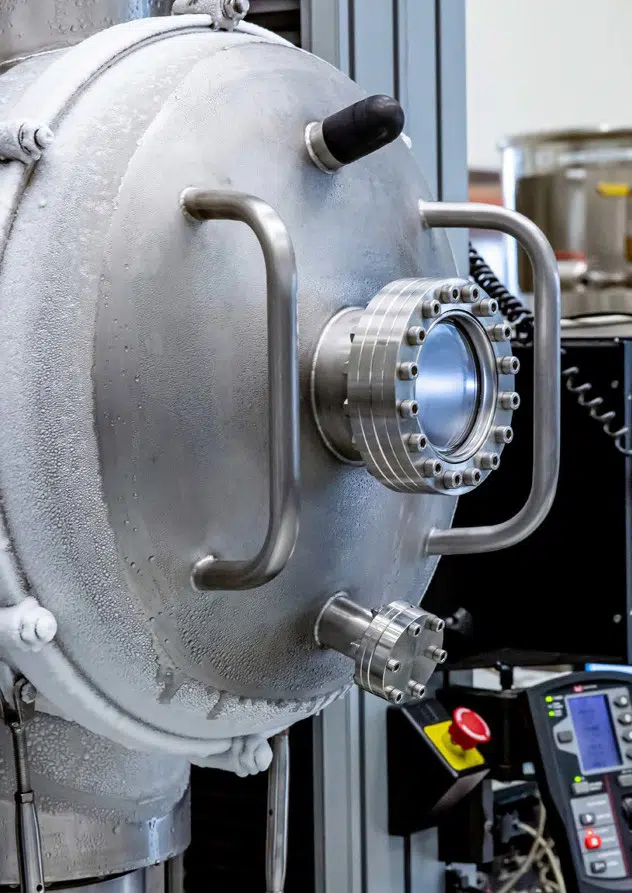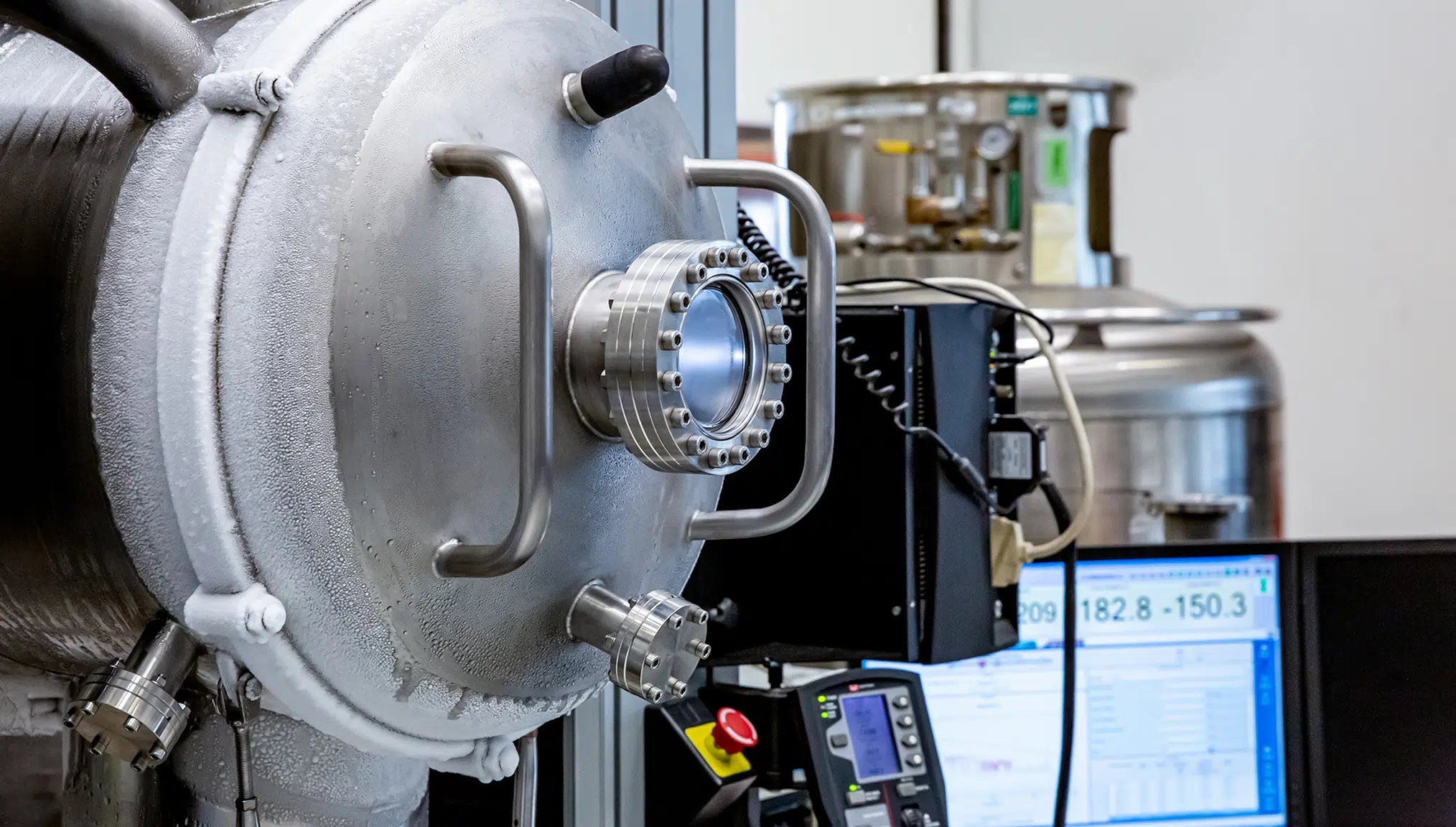
NLR has pioneered advanced cooling systems for material and structural testing, on a journey that started at –55 °C and eventually reached extreme temperatures, such as –253 °C. NLR’s future goals include testing of full‑scale hydrogen tanks, fuel system components and hydrogen‑electric powertrains. Pursuing these goals is vital for achieving net‑zero emissions by 2050. The continuous technological advancements and high demands highlight the crucial role of cold testing technology in the aerospace industry.
NLR’s test house has developed modular and specific cooling solutions for material and structures testing, utilising various cryogenics and thermal equipment. NLR’s approach prioritises affordability, maintainability, safety, scalability and accuracy, over a broad operating temperature range. The developed systems are highly autonomous, suitable for continuous 24/7 operation.
Typical testing temperatures include:
Cold -55 °C / 218 K: standard temperature for aircraft flying at cruise conditions.
- Using liquid nitrogen (LN2) coolant combined with a control loop for the temperature.
Cryogenic -169 °C / 104 K: temperature for pipe structures transporting LNG (Liquified Natural Gas).
- -180°C / 93K temperature for specific space structures.
- Using LN2 coolant combined with a control loop for the temperature.
Deep Cryogenic -253 °C / 20 K: temperature for liquid hydrogen applications (the boiling point of hydrogen).
- Using various cryogenic gases for temperature control.
- Using thermal equipment for cooling efficiency.
Mechanical tests can be performed in accordance with:
- ASTM standards
- AITM standards
- ISO standards
- Custom requirements for unique non-standard small-scale specimens
Main features
Load capacity
- Tensile capability of up to 100 Kn
- Compression capability of up to 250 kN
Current capabilities
- Static testing of coupons according to ASTM/AITM/ ISO standards at 20 K
- Non-standard small-scale static testing at 20 K
Foreseen capabilities
- Dynamic testing of coupons at 20 K and max. frequency of 120 Hz
- Tear & wear of materials and/or seals at 20K
- Temperature cycling 20 – 77 K / 20 – 293 K
- Dynamic testing with in-situ H2 atmosphere