The Endless Runway

1 minute read

The aviation sector currently doubles in size every 15 years. How can we facilitate that growth while at the same time improving safety and security and reducing environmental impact? And how can we expand airport capacity without detrimental effects on the liveability of the human environment? NLR has been exploring these issues for decades, with a focus on the long term. As part of these efforts, NLR has been involved in a European project called ‘The Endless Runway’. This radical new airport concept is based on the construction of a circular runway with a diameter of approx. 3.5 km around an airport terminal. Such an airport would take up only a third of the space of a conventional airport. Another advantage is that aircraft would always be able to take off and land independently of the wind direction, since there is always a point without crosswind on the circular runway. Landing aircraft can also be routed away from residential areas because they are not dependent on a standard approach path. Finally, the ‘Endless Runway’ concept will enable multiple aircraft to take off and land simultaneously, resulting in increased airport capacity.

The Endless Runway project has been executed by NLR, DLR (Germany), ONERA (France), INTA (Spain) and ILOT (Poland), and has received funding through the EU FP7 (7th Framework Programme). More information on The Endless Runway can be found on the project website.

Besides this futuristic concept, NLR’s activities are also focussing on resolving present time challenges, e.g. with its Runway Allocation Advice System (RAAS), or Airport Capacity Forecast (ACF).

BBC News recently published the video below on The Endlesss Runway which is now an internet hit with over 30 million views.

Latest news

Defence and Security

15 October 2026

Skunk Works and the Royal NLR expand strategic collaboration

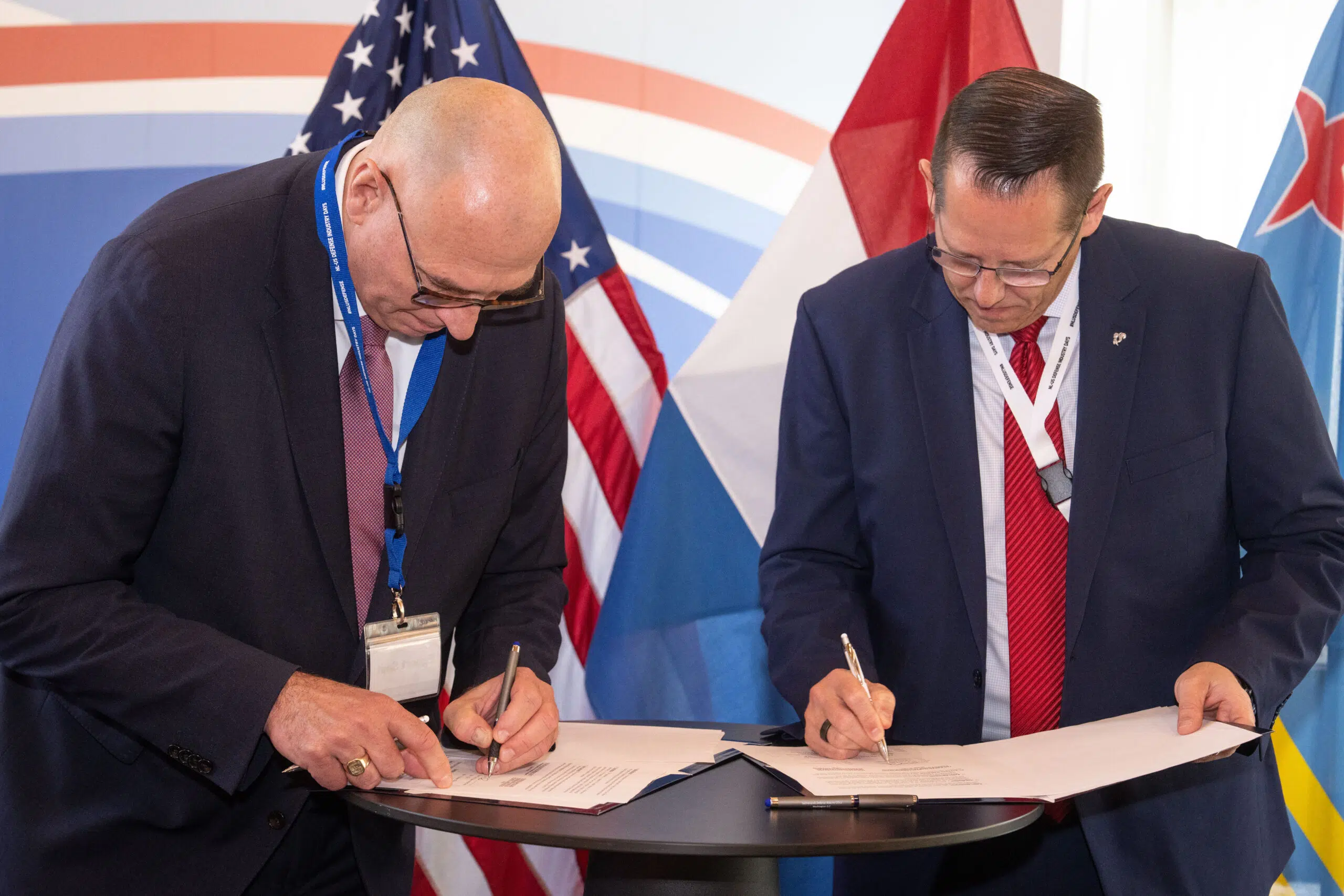
Washington, D.C., Oct. 15, 2026 – Lockheed Martin Skunk Works® (NYSE: LMT) and The Royal Netherlands Aerospace Centre (NLR) today announced a broadening of their strategic partnership with a focus on four key pillars. These include connectivity to the Dutch industrial base, coordination on military operational analysis, alignment on technology roadmaps, and collaboration on Unmanned Aerial Systems (UAS). What began two years ago as an exploratory Memorandum of Understanding (MoU) has matured into a high-impact collaboration, rapidly transitioning advanced technologies from the research lab into operational solutions that directly support the mission readiness of the Royal Netherlands Air Force.