Noise is an increasing concern in emerging markets with future possibilities of drones and urban air aircraft such as air taxis. In case local authorities are planning to allow rotorcraft to fly nearby (densely) populated areas first they should be able to predict the noise nuisance. At this moment the current international guidance on aircraft noise modelling is limited to fixed-wing aircraft. Therefore, defining a validated noise modelling methodology for rotorcraft was a high priority for the European Union. As a result a newly developed software tool allows member states of the EU, the European Commission and EASA to perform adequate noise impact assessments.
Best fit
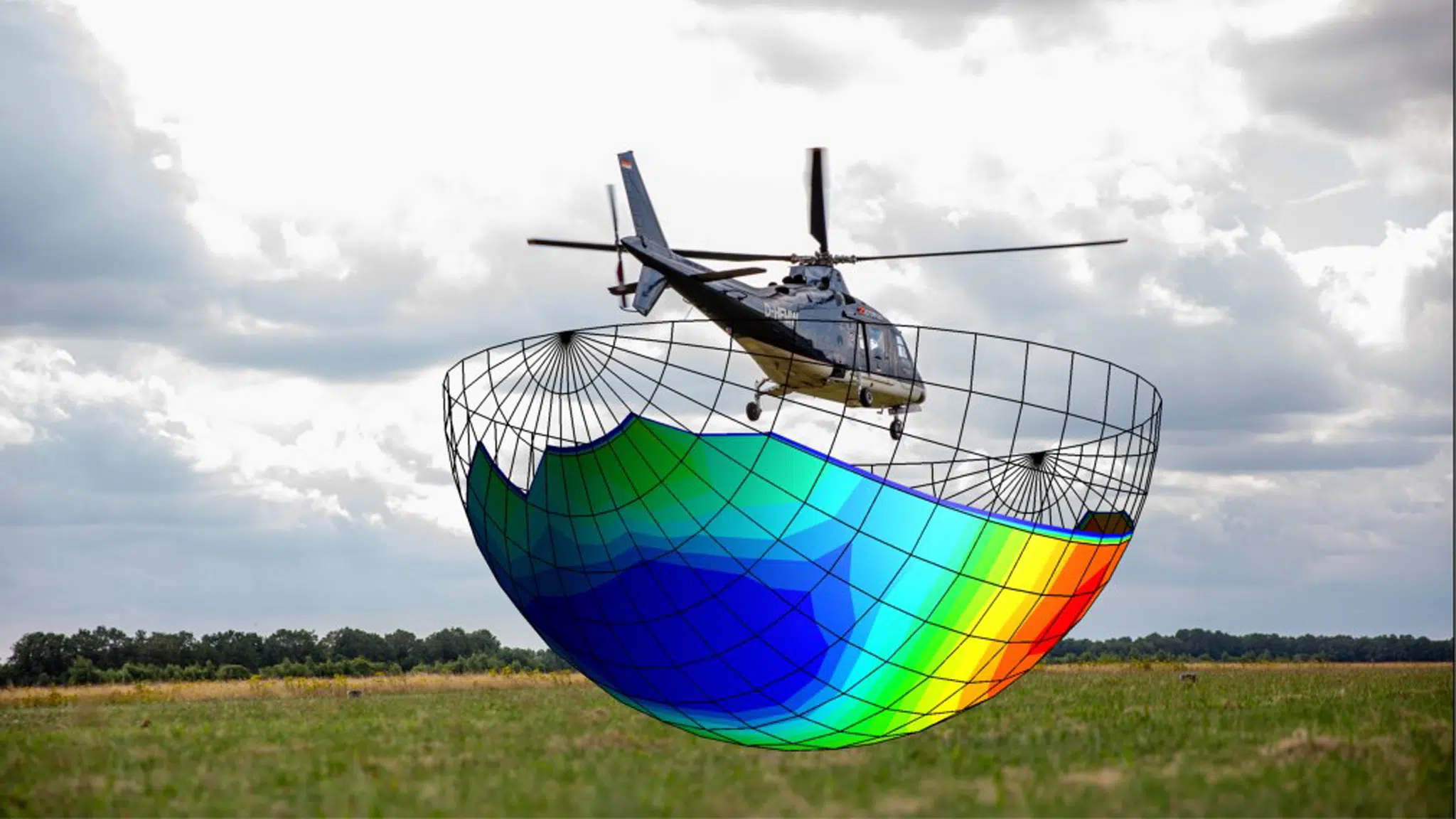
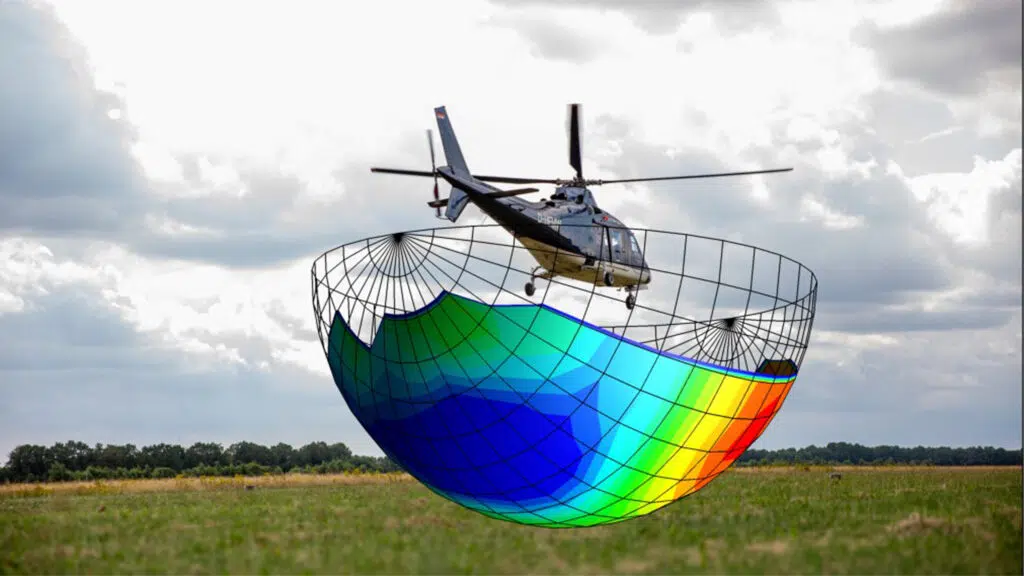
Instead of measuring the noise of actual flights, authorities use a prediction tool to assess noise nuisance in the vicinity of an airport. The prototype software tool NORAH (an acronym for ‘noise of rotorcraft assessed by a hemisphere approach’) allows users to compute the amount of noise experienced by people on the ground for a single event flight operation. Considering all operations from and to an airport on yearly basis, the experienced hindrance is evaluated against government imposed noise limits. To come up with a best fit for nuisance predictions, the team of the NORAH project acquired a noise data base by dedicated flight tests, using helicopter types that are representative of the bulk of the helicopter fleet currently operating in Europe. Examples are the Guimbal Cabri G2, the AugustaWestland A109 and the Sikorsky S-92.
Understanding noise
“Several aspects had to be considered for a proper understanding of noise nuisance”, Marthijn Tuinstra, scientist Principal Aeroacoustics and lead of the project explains. “To predict noise, first we had to be able to characterise the sound emitted by a helicopter. Secondly we needed to determine how the sound attenuates when propagating through the air, from rotorcraft to a person on ground. For this we used two separate models. We used so called hemispheres to model the emission characteristics and we used semi-analytical modelling the relevant physics involved in noise propagation.”
The hemisphere approach is suitable for modelling the noise of helicopters but also for future transport modes such as drones and urban air mobility (UAM). In the latest version of NORAH, the propagation modelling method was extended with screening effects from buildings and topography. Next to this, specific modelling guidance was introduced to enable inclusion of taxi, idling, hover and turns operations in noise impact assessments. Eventually the team developed the noise prediction methodology for rotorcraft, and gathered datasets of small to large-size helicopter types that are representative of the bulk of the helicopter fleet (more than 80%) operating in Europe.
Evolving method
With technical support from the European Union Aviation Safety Agency (EASA) the European Commission began to address rotorcraft noise modelling methods already back in 2015. This led to a first prototype of NORAH and a noise database comprising eight light- to medium weight helicopters.
From 2020 onwards, an NLR led consortium – with Anotec Engineering and SINTEF – supported the contracting and technical authority EASA with the continued development of a commonly agreed European rotorcraft model. In consultation with AIRMOD and European stake holders (e.g. airports, and governments) gaps and shortcomings of NORAH were identified and addressed. Three medium- to heavy weight helicopters were added to the noise database, enriching and complementing the existing database. The noise propagation method was enhanced to allow prediction of noise over uneven terrain. Furthermore a new software protype was developed, NORAH2.0; the materialization of the rotorcraft modelling method, which will be available to European member states for evaluation and application.
For more information,
you can download the final report of the NORAH project here and you can watch the video below for an additional explanation.
The rotorcraft noise prediction method is defined in a manner that it allows continued evolution of the method and/or the noise database, improving strategic noise maps capabilities for current and future transport modalities.
Later in time a training video will be made available on the EASA website and last but not least the NORAH tool will be made available by EASA (note that the Intellectual property rights (IPR) are with EASA. They will provide the licenses for the use of the software, with further related information on the EASA project page).
This project has received funding from the European Union’s Horizon 2020 research and innovation programme under grant agreement No MOVE/B3/SUB/2020-243/SI2.826742.