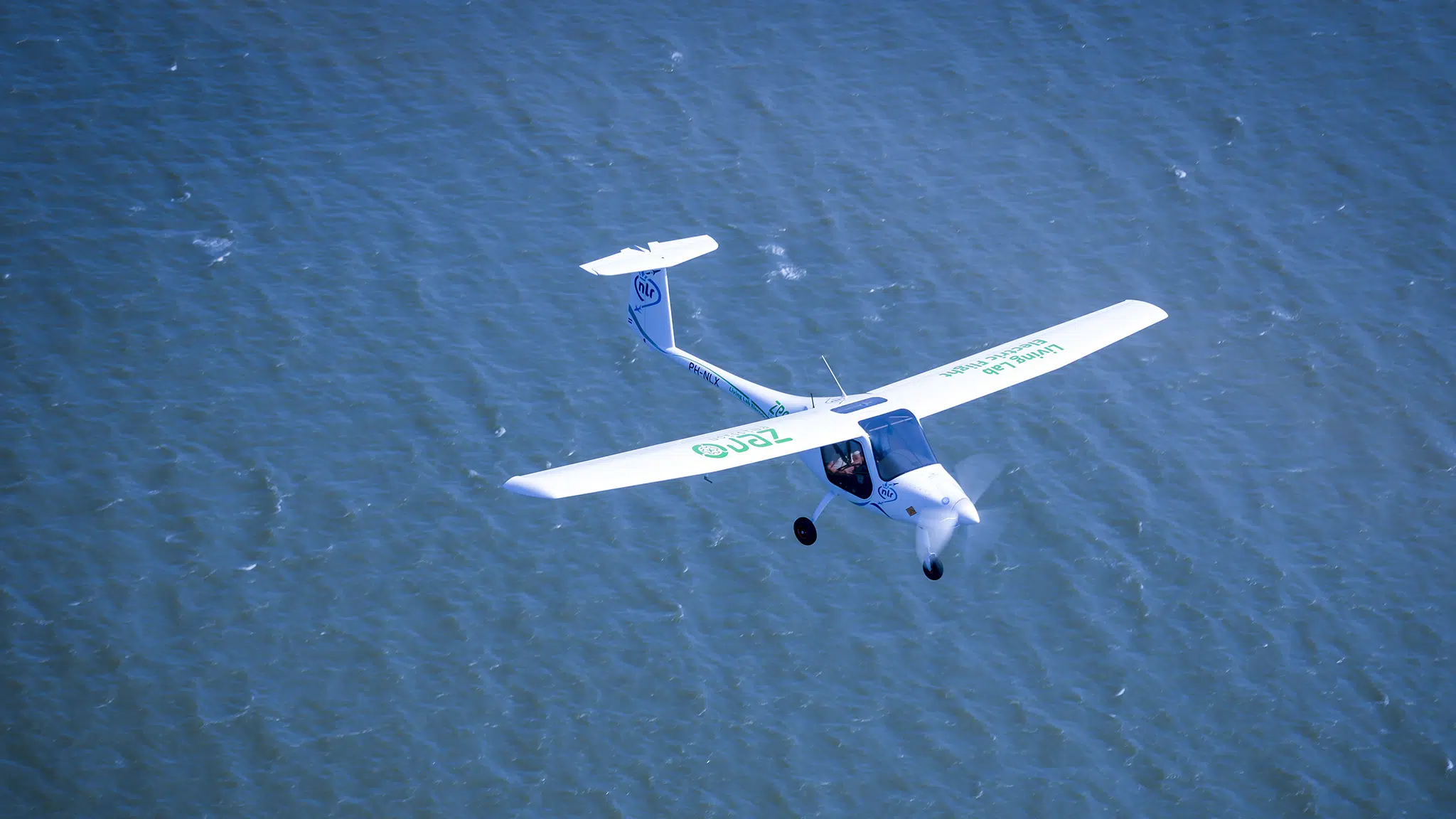
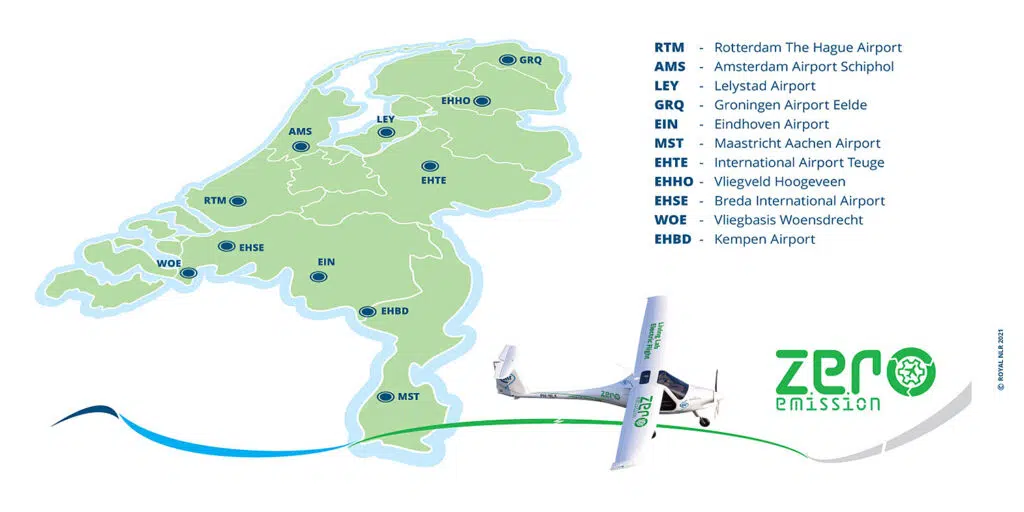
Innovations are essential for climate-neutral aviation. As part of that, significant developments in electric flight are also occurring. This makes it a good moment for NLR – in collaboration with PwC and the Platform Duurzaam Vliegen (Sustainable Flight Platform) – to accumulate more knowledge and experience, discovering what challenges are involved in electric flight applications in practice. We will be doing this in a project called ‘Elektrisch Vliegen Rondje NL’ (Around the Netherlands by Electric Plane) during the period from 23 August to 3 September. We will be carrying out several flights in a two-person, electrically powered aircraft, the Pipistrel Velis Electro. This will involve the aircraft landing and taking off from various airports and airfields in the central, southern, northern, western and eastern regions of the Netherlands.
During this tour of the country, in cooperation with various airports, we will be visiting several initiatives, projects and activities relating to electric and hybrid flight. The focus will be on making aviation greener.
The twelve airfields that the NLR research aircraft will be visiting on its tour of the Netherlands.
Living Lab Electric Flight
In the autumn of 2020, NLR received an electrically powered propeller aircraft. The home base of the Pipistrel Velis Electro belonging to NLR is Rotterdam The Hague Airport (RTHA). NLR uses PH-NLX – that’s the registration number of the research aircraft – for various purposes; including building up its knowledge and experience in electric flight. People worldwide have been accumulating knowledge about powered flight for over a century, but commercial parties flying on batteries is a relatively new development. So far, this has only proved possible for small aircraft. Batteries are relatively heavy and simply do not yet provide enough energy for commercial aircraft to travel any further. To take the step up to larger aircraft, we need to understand more about all the facets of electric aviation, both in the air and on the ground.
Royal NLR is looking for synergy in electric flight research. NLR is setting up a research facility, aiming for an accessible way of exchanging knowledge and experience about sustainability with other relevant parties. To do that, the Electric Flight Living Lab (LLEF) research platform has been set up.
The LLEF is a virtual knowledge centre with joint research projects where technology can be tried and demonstrated on what is referred to as a ‘test platform’ that includes not only NLR’s Pipistrel Velis Electro but also the use of test facilities, wind tunnels and everything in between.
- For more information about Royal NLR and sustainable aviation, see https://www.nlr.org/focus-area/strategic-themes-2022-2025/theme-sustainable-aviation/.
- The Pipistrel Velis Electro is a small training plane for two people and whether the flights will be possible or not depends heavily on the weather conditions. Consequently, individual flights may have to be postponed or cancelled.