Avy and NLR partner to drive drone innovation

2 minutes read

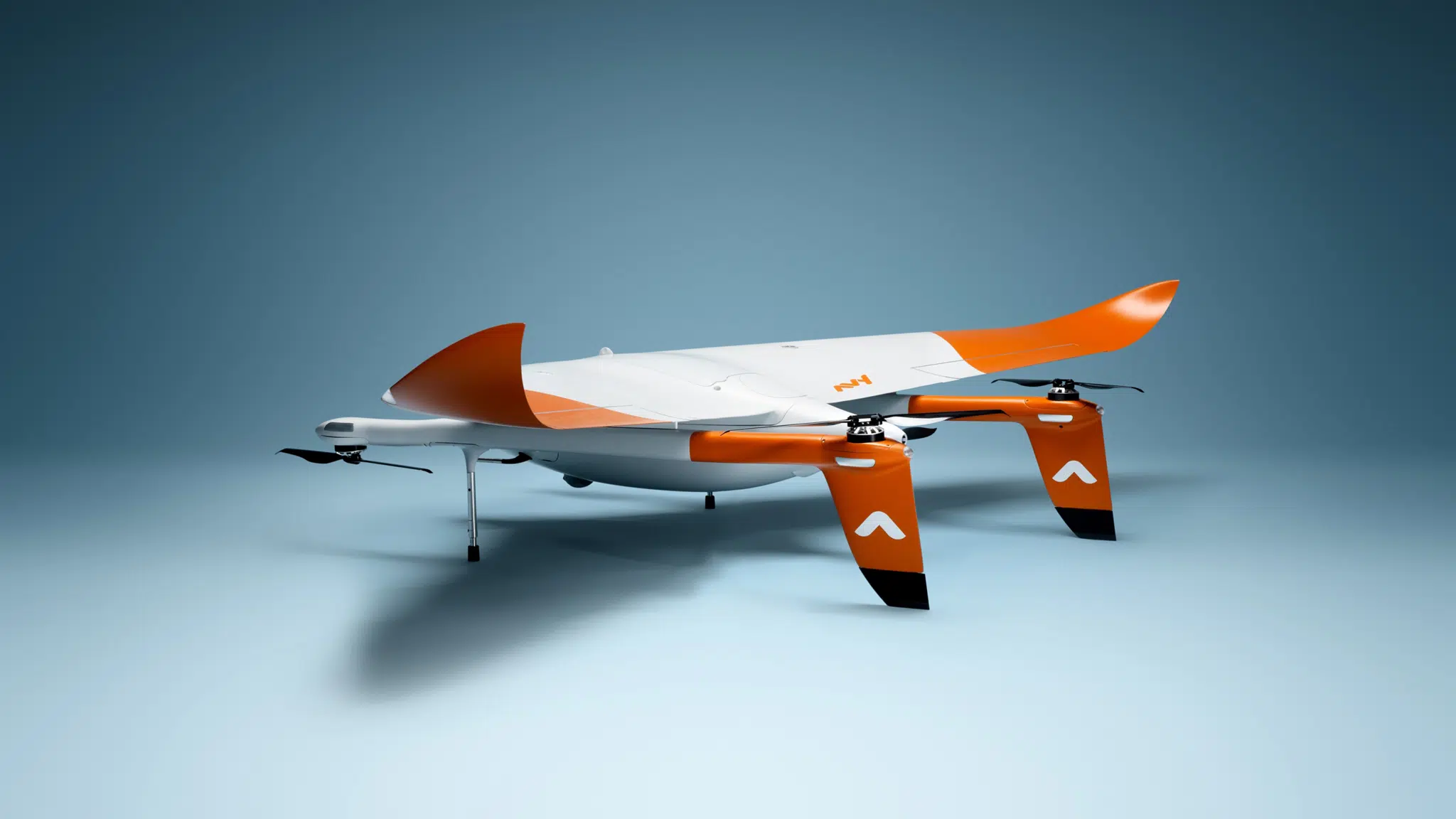
NLR has partnered with Avy, a Dutch company that develops autonomous fixed-wing drones tailored for humanitarian, health, and environmental missions, with a focus on creating a sustainable impact. NLR has acquired an Avy drone for testing and evaluation, aiming to drive innovation in aerospace applications. This collaboration supports the development of sustainable and cutting-edge drone technology.

Avy - Autonomous fixed-wing drone

Avy, a pioneer in autonomous sustainable drone solutions, has entered into a strategic collaboration with Royal Netherlands Aerospace Centre (NLR), a leading authority in aerospace research and innovation. As part of this partnership, NLR has acquired an Avy latest generation Aera Unmanned Aerial Vehicle (UAV) for testing and operational evaluation. Additionally, NLR will leverage its expertise to help Avy audit and enhance its operational capabilities.

The Avy Aera, recognized for its emission-free and autonomous flight capabilities (Beyond Visual Line of Sight), will be integrated into NLR’s research programs. These programs focus on testing innovative aerospace applications, including emergency response, monitoring and urgent logistics. The Aera’s capabilities, such as long-range autonomous flight up to 100km, and advanced safety features, make it an ideal fit for NLR’s pioneering initiatives.

Simultaneously, NLR’s collaboration with Avy extends beyond product deployment. As part of its commitment to develop excellence in aerospace practices, NLR will conduct a comprehensive audit of Avy’s operations. This process aims to ensure Avy’s workflows align with industry-leading standards and guarantee optimal performance across product design, manufacturing, deployment, and regulatory compliance.

“Partnering with NLR is a significant milestone for Avy,” states Benjamin van der Hilst, CEO of Avy. “Their expertise in aerospace innovation and rigorous operational auditing will accelerate our mission to revolutionize UAV solutions while maintaining the highest standards of quality and sustainability.”

Michel Peters, CEO of Royal NLR, fully agrees: “It is a core objective of NLR to support the Dutch aviation industry in establishing a strong position in the UAM supply chain. Therefore, we’re very pleased to test the potential of this sustainable and innovative designed Dutch drone in various applications while supporting Avy in enhancing their operational frameworks.”
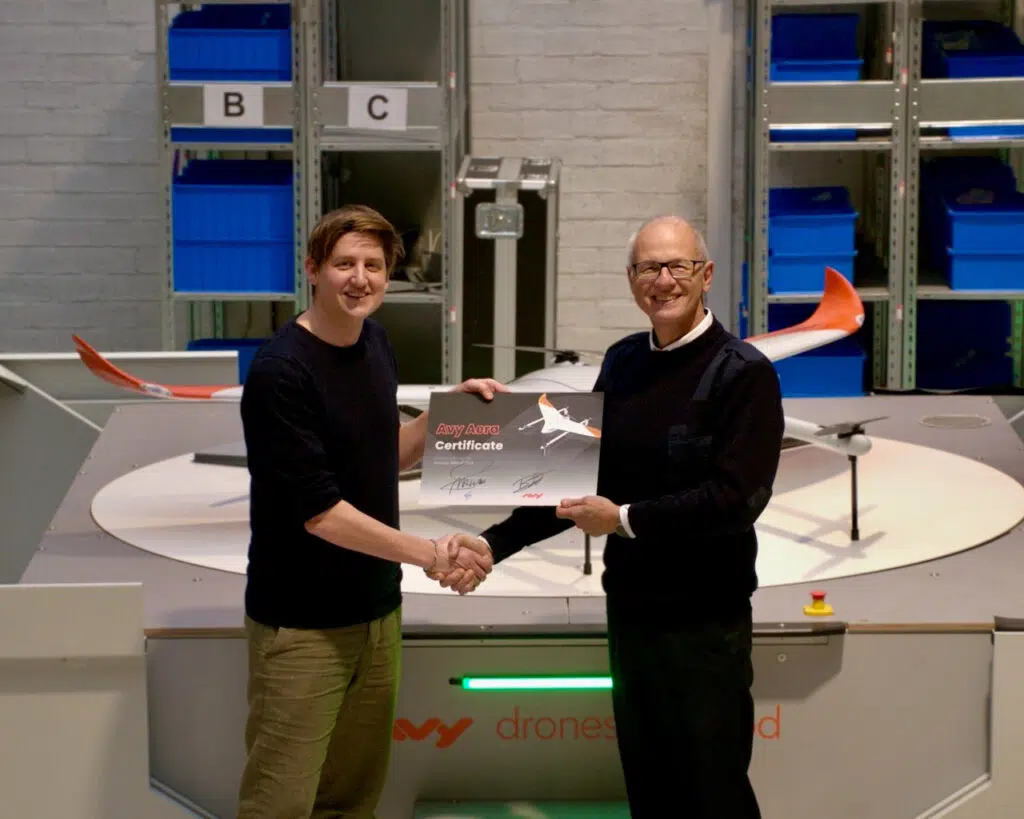
Benjamin van der Hilst, CEO of Avy (left), and Michel Peters, CEO of Royal NLR have sealed the deal (credit photos: Avy).

Latest news

Construction and Manufacturing

25 June 2026

Three NLR projects with SME partners receive funding from Holland High Tech

NLR is set to conduct research into radiation-resistant chips for use in space (with the company Spherical Systems); the production of rocket engines using additive manufacturing (with Ignarion); and the 3D printing of boat hulls (IMPACD Boats and Tectonic-3D). All three projects will be carried out in collaboration with Dutch high-tech companies. The projects will receive financial support from Holland High Tech as part of the SME Defence Call 2025.

NLR corporate

18 June 2026

Fifty years of German-Dutch Wind Tunnels: a success story of European cooperation

On 18 June 2026, a milestone is celebrated in the Noordoostpolder, an area of the Netherlands reclaimed from the sea. The German-Dutch Wind Tunnels (DNW), a collaboration between the German and Dutch research organisations DLR and NLR, will have been in existence for fifty years. During this time, DNW has grown into a leading organisation for aerodynamic and aeroacoustic experiments for research institutes and industry worldwide.

Sustainability and Environment

03 June 2026

NLR and TU Delft link simulation models in new lab focused on climate-neutral aviation

How do you make an entire aviation system more sustainable, rather than just a single flight or a single aircraft? That is what Royal NLR – Netherlands Aerospace Centre – and TU Delft are investigating in the newly established Dutch Aviation Systems Analysis Lab. Last week, the organisations demonstrated connecting their simulation models for the first time. An important step towards being able to find the answers to tomorrow’s questions.