The challenge
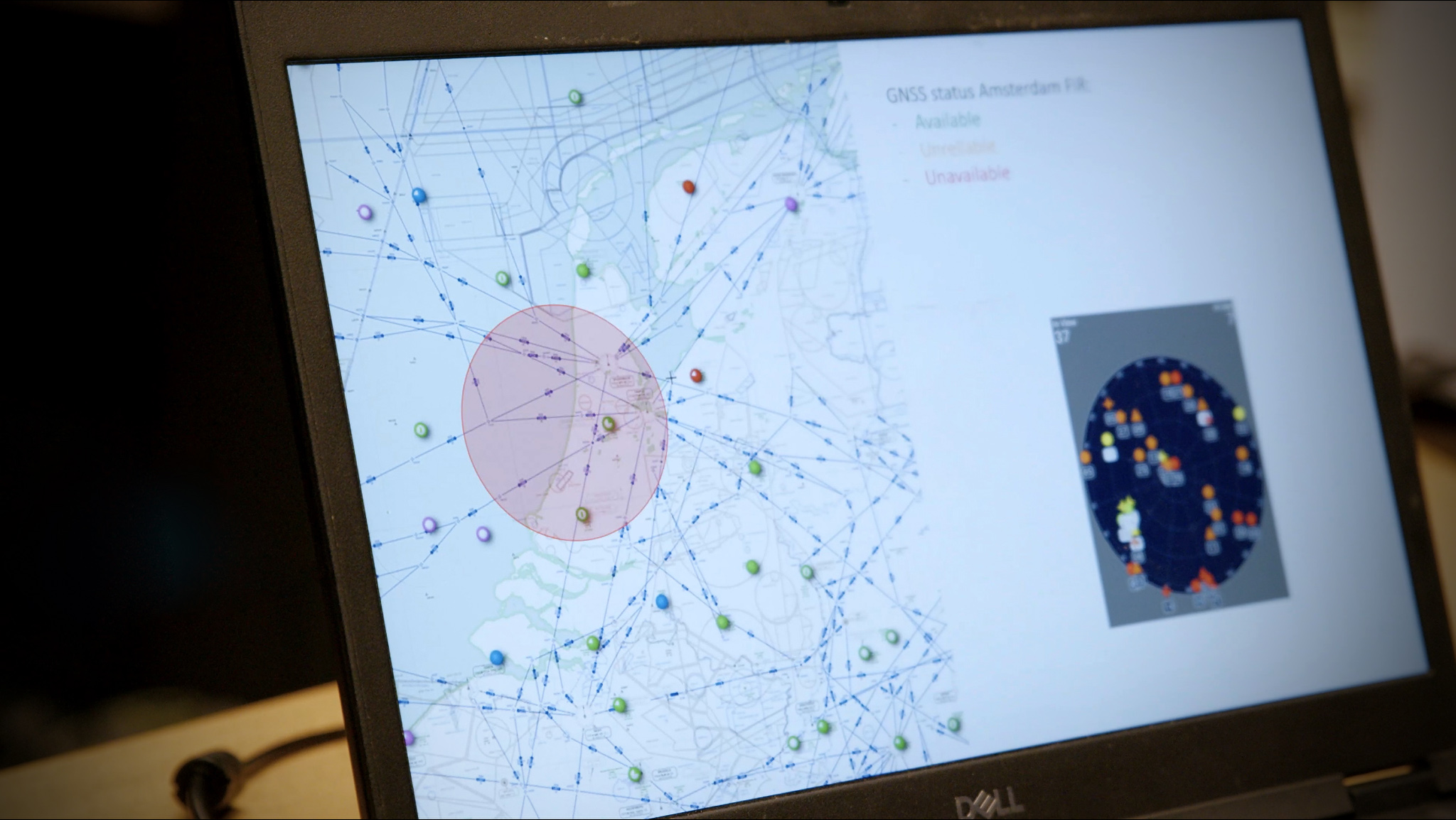
The AIRING project has investigated the increased risk of interference and spoofing for aviation, and the technical ways it can be detected or mitigated. A concept was proposed to combine technology and operational procedures, in such a way that GNSS interference can be detected and dealt with in an effective and safe way.
The solution
A wide range of technological solutions for interference detection and mitigation was investigated, ranging from simple and readily available filtering techniques to complex, new antennas that cannot (yet) be applied on civil aircraft. The technologies were integrated in a detection and reporting concept. An operational concept was proposed to integrate the solution into current ATC practice.
What did we do?
NLR has investigated the use of a controlled radiation pattern antenna for civil aviation. The complex, multi-element antenna enables both detection and mitigation of GNSS interference and spoofing. The impact of AIRING technologies
on ATC operations was investigated in an operational demo with the tower (NARSIM) and cockpit (APERO) simulators, to show that the concept can reduce the operator workload and increase safety.
Project partners:
Industry: GMV, FGI, Axentec, GMV NSL, Enaire
Research organisations: NLR