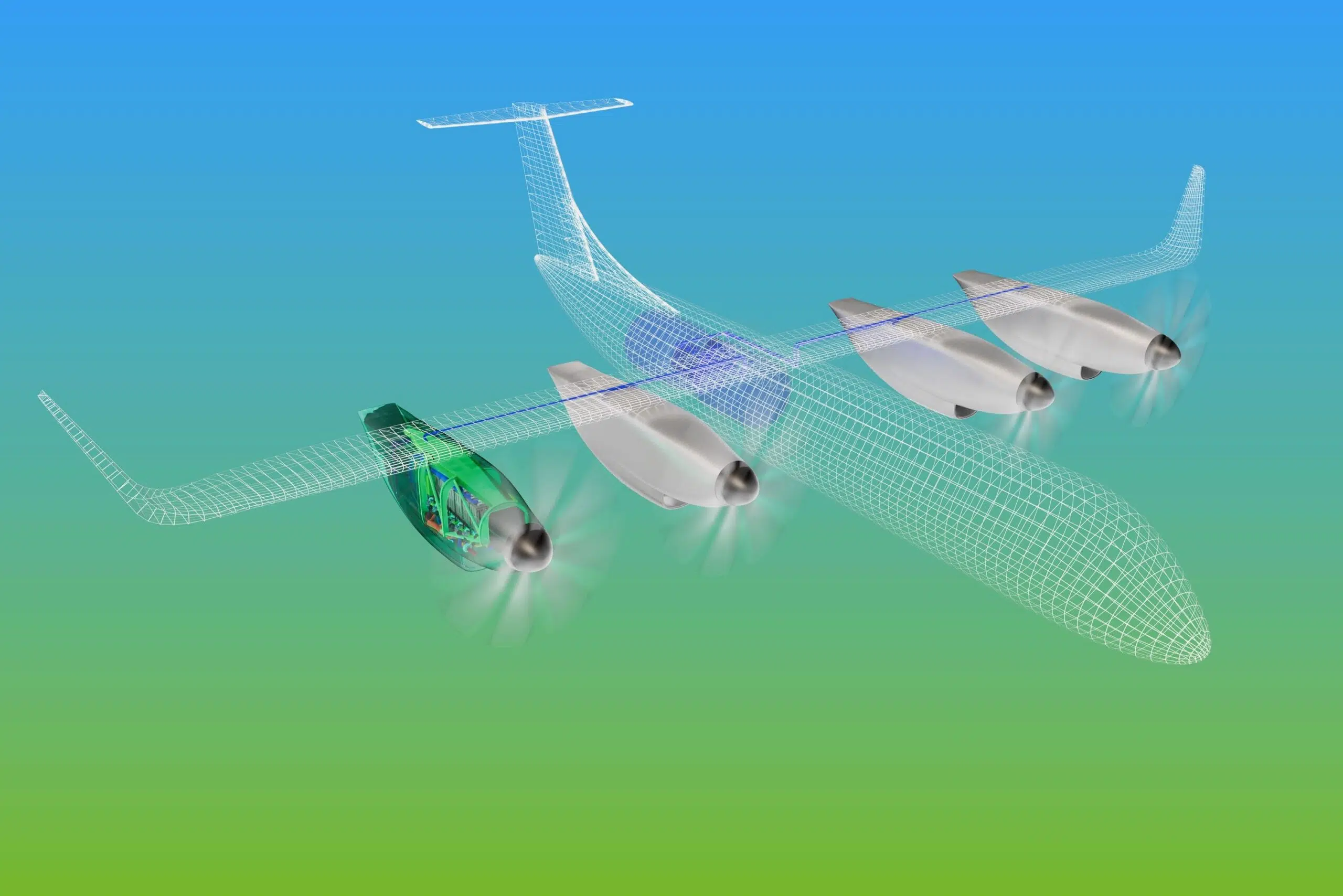
Booklet: R&D More electric and hydrogen-electric powered aerospace

Hydrogen as a fuel is considered to be an important route towards future sustainable aviation. For aviation
applications, hydrogen presents several key advantages: it allows for the elimination of carbon emissions in
flight and along the entire life cycle. Its usage in fuel cells allows eliminating NOx and particles. When burnt
in a turbine engine, very low particle emissions can be expected, as well as reduced NOx emissions, provided that the combustion system is optimised. However, water vapour emissions need to be carefully managed.

Overall, the use of hydrogen in thermal (combustion) engines is also expected to yield significant benefits in
comparison to non-CO2 emissions (high altitude phenomena) that result from conventional kerosene fuelled-aircraft.
Latest Downloads

F35 in de lucht
Defence and Security

02 July 2026

NLR Portfolio: Innovations for Military Capabilities

For over a century, Royal NLR has been a dedicated and knowledge-based innovator. Proud of our royal predicate, we act as a strategic partner for the entire Netherlands Defence organisation.
We focus on timely capability development to bolster national security. We build operational flexibility directly into defence systems through sustainable solutions, ranging from alternative energy to unmanned vehicles. When rapidly evolving threats emerge, our 'fast innovation lane' quickly adapts civil technology for immediate military use. This forward-thinking approach extends to mobility as well. We are shaping the future of transport by integrating aviation with other networks and pioneering smaller, electric and hydrogen-powered aircraft.

Platform System Design

04 June 2026

Brochure: Wind tunnel modelling and testing

When an aircraft model enters a wind tunnel, it's a decisive step in development. Years of development, simulation and numerical analysis are about to face measurable reality.