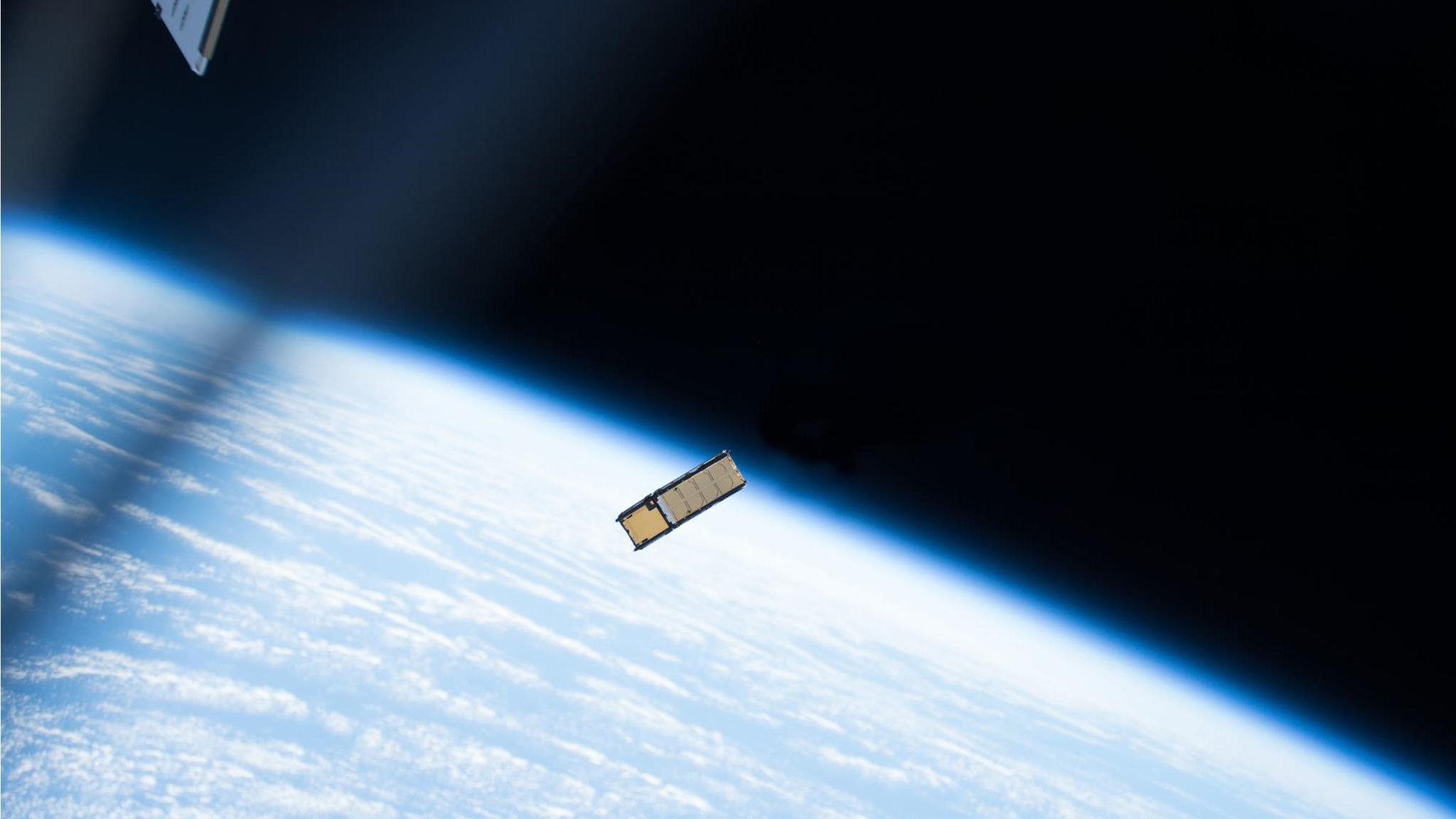
Space may feel infinite, but the most practical and useful orbits around Earth for satellites are becoming crowded. Thousands of satellites – with their own dedicated functionality or as part of a larger constellation – support everything from navigation and weather forecasting to banking and emergency response. Yet alongside these essential systems floats something far less from helpful: space debris.
Space debris refers to ‘old’ defunct satellites, fragments from past intentional and unintentional collisions, discarded rocket stages, and even tiny paint flakes travelling at extraordinary speeds of approximately 28,000 km/h. Although many pieces are no larger than a coin, they can cause serious damage. At orbital velocities, even a centimetre‑sized object can disable a satellite or endanger crewed missions. The problem is growing, and without coordinated action, it threatens to undermine the very infrastructure modern society relies on.
The risks of space debris
The danger is twofold. First, debris increases the likelihood of collisions. A single impact can generate thousands of new fragments, creating a chain reaction known as the Kessler Syndrome. This refers to a theoretical scenario where the density of artificial objects in Low Earth Orbit (LEO) becomes so high that a single collision triggers a cascade of further collisions, creating a self-sustaining, runaway debris cloud. In the worst case, this could make certain orbits unusable for decades. Secondly, debris complicates operations. Satellite operators must constantly track objects (traceable when larger than approximately 10 cm) and perform avoidance manoeuvres. This consumes fuel, shortens mission lifetimes, and increases operational costs. As more commercial and governmental actors enter space, the pressure on orbital “traffic lanes” only intensifies.
Introducing the Zero Debris Charter
Recognising the urgency, the European Space Agency (ESA) and a growing coalition of partners have launched the ‘Zero Debris Charter’. The goal is ambitious but necessary: by 2030, missions should leave no long‑term debris in orbit. The charter encourages organisations to design spacecraft that minimise debris creation, ensure responsible end‑of‑life disposal, and adopt technologies that actively reduce existing clutter. It is not a legal requirement, but a shared commitment to sustainable space operations—similar to environmental pledges on Earth, but focused on the orbital environment.
Will to act
According to NLR CEO Tineke van der Veen, recent trends show an explosive growth in the number of satellites and constellations, with an increasing diversity of satellites and functionalities. “Satellites are being used for both civilian and military purposes, with a growing need for interoperability. So clearly, space debris is a serious challenge we face”, she states. “The Zero Debris Charter is a step in the right direction. It signals that the global space community understands the stakes and is going to act. If we succeed, future generations will inherit an orbital environment that remains safe, accessible, and full of possibility.”
Contribution of NLR
NLR actively contributes to reducing space debris and keeping space safe and sustainable. We conduct research into space situational awareness and collision risk assessment, model debris evolution and operational risks, and support mission design with effective de-orbiting and disposal strategies. In addition, we translate proven aviation safety principles into practical approaches for space traffic management. NLR also strategically invests in a Space Research Facility and in research to enable the effective use of Very Low Earth Orbits (VLEO).
One of the key challenges of operating in VLEO is preventing satellites from rapidly re-entering and burning up in the atmosphere. Atmospheric drag increases significantly at lower altitudes, requiring innovative design and propulsion solutions to maintain stable operations. At the same time, this higher drag offers a major advantage from a space debris perspective: VLEO can be considered “self-cleaning orbits,” as debris that enters these regions naturally decays and re-enters the atmosphere relatively quickly — much faster than in conventional Low Earth Orbit (LEO).
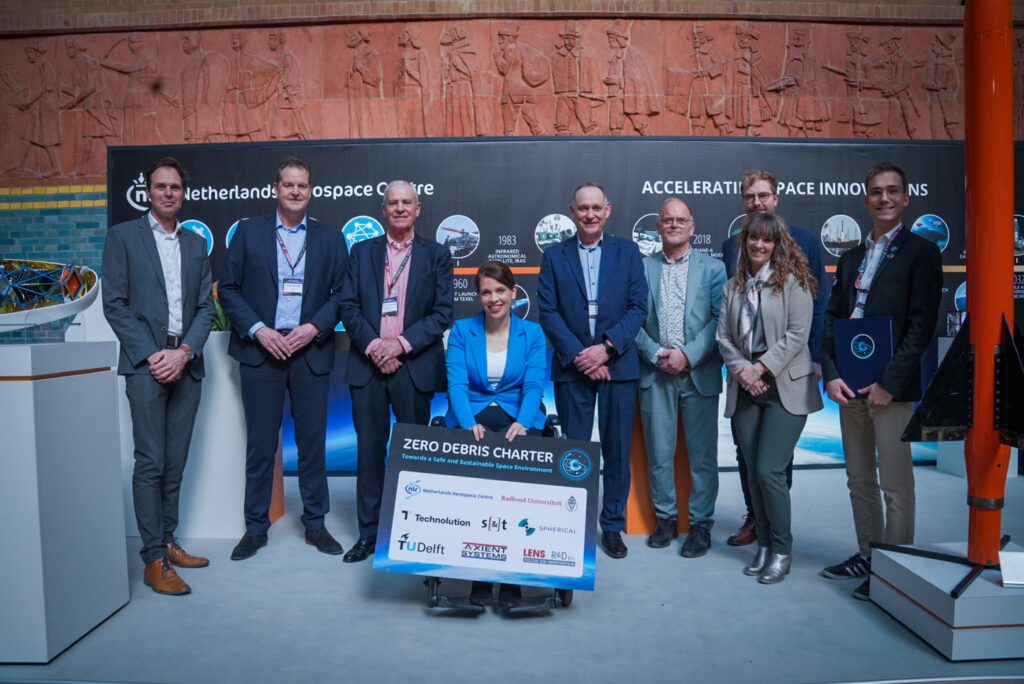
If your organisation would like to sign the Zero Debris Charter and join the collective effort, please complete this form: Zero Debris Charter – INTENT TO SIGN.