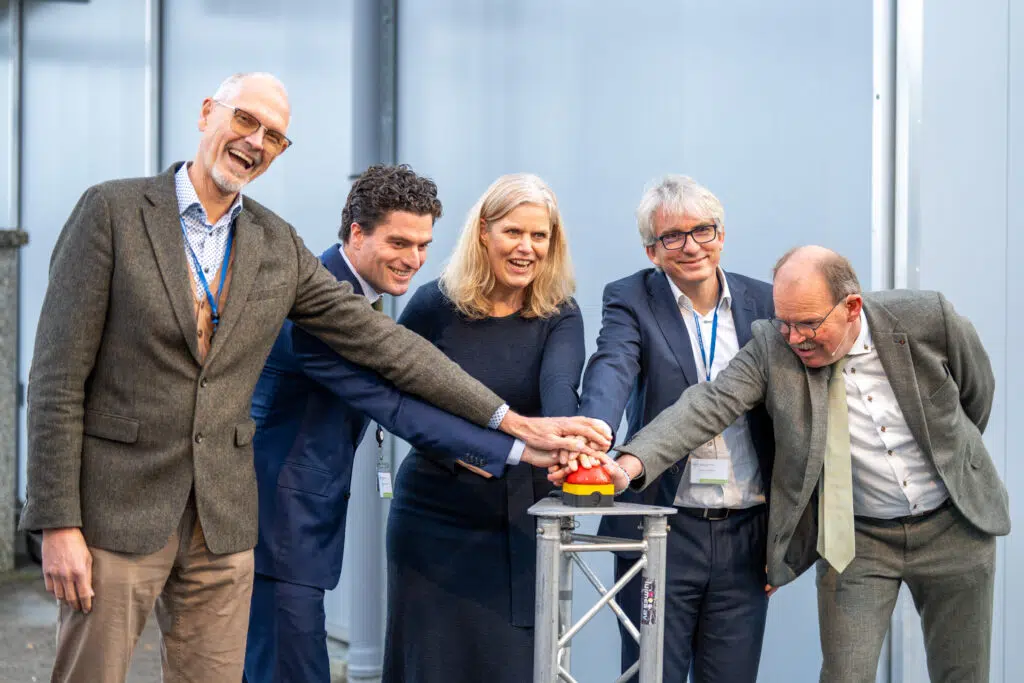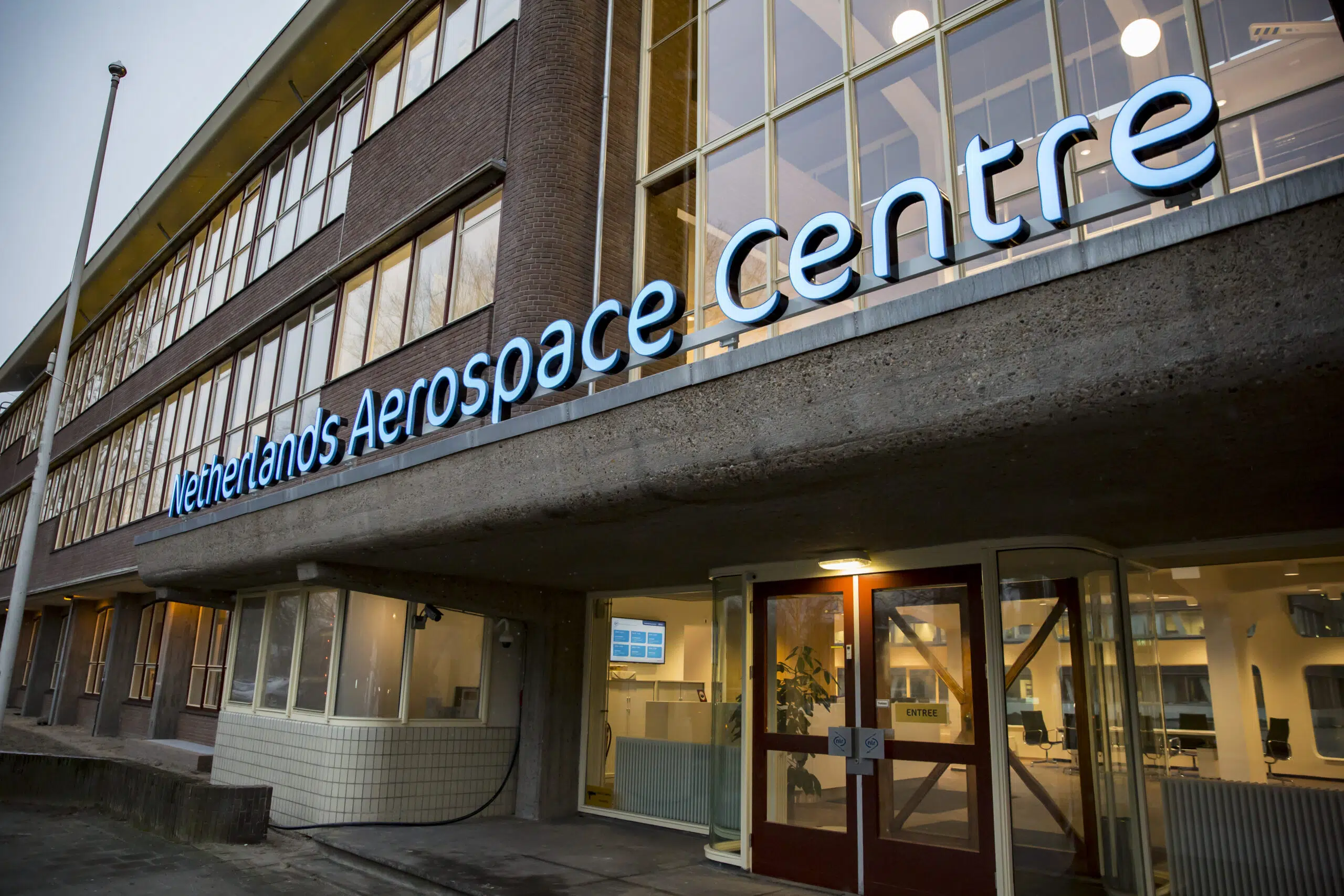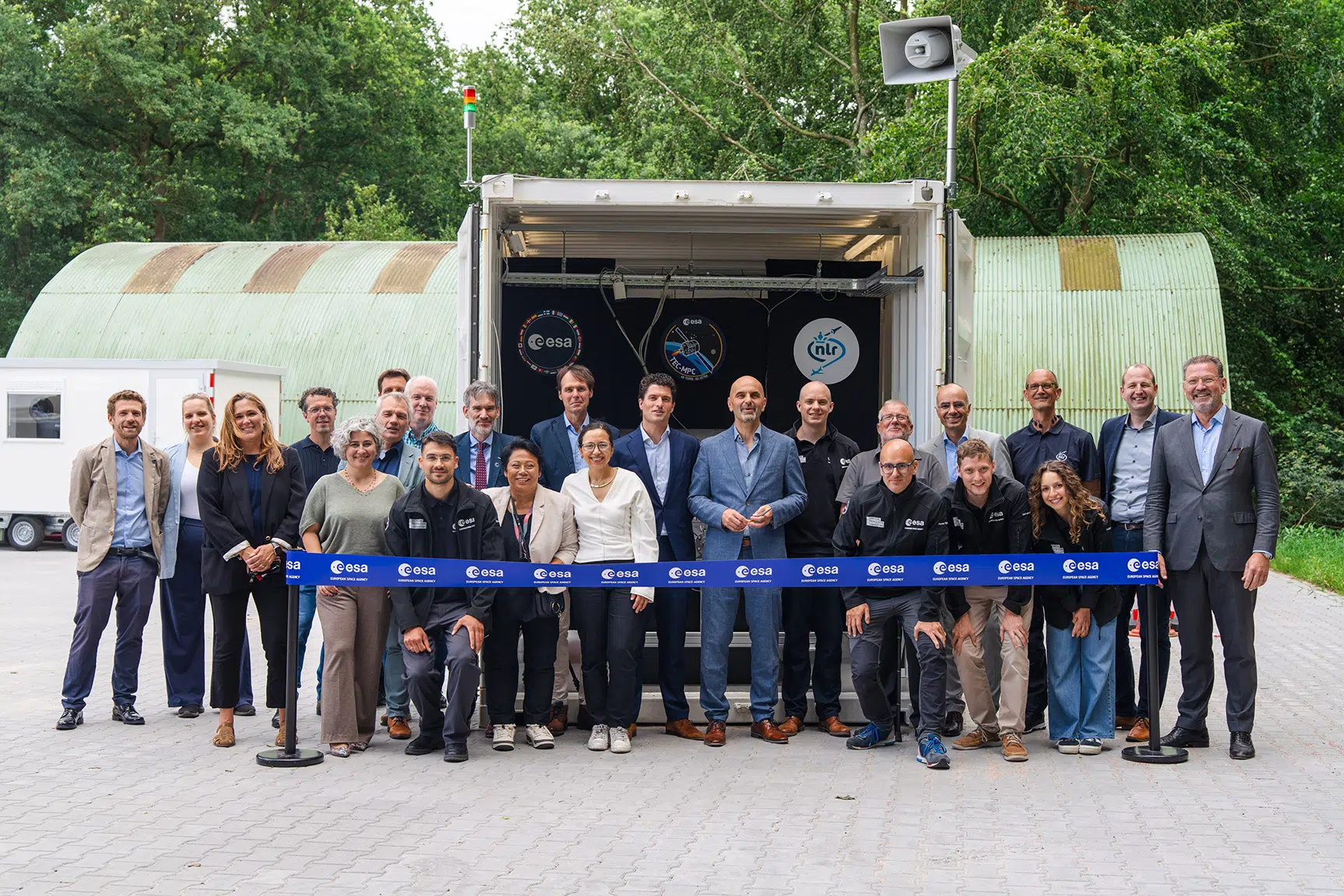
Royal NLR has officially opened the EPTF in Marknesse, that is ready for operation. It enables NLR to accurately and efficiently evaluate new propulsion technologies, for aviation applications through advanced testing capabilities, including hydrogen-electric systems.
Hydrogen as a promising route to decarbonisation
The European Union aims to achieve climate neutrality by 2050. This requires a significant reduction in CO₂ emissions, also within the transport sector. NLR is therefore investing in research into hydrogen as an alternative fuel for aircraft.
For long-haul flights, sustainable aviation fuel (SAF) will remain the most suitable sustainable route for the foreseeable future. However, for the majority of global flights – 95% of which cover less than 4,000 kilometres and together account for half of aviation’s CO₂ emissions – other solutions are possible.
“For the shortest routes, with few passengers, battery-electric aircraft open up new possibilities for mobility,” says Martin Nagelsmit, CTO of NLR. “For the regional segment, up to a maximum range of 2,000 kilometres, hydrogen-electric aircraft offer a highly promising solution. And for distances of up to roughly 4,000 kilometres, hydrogen combustion is a viable option for much of the single-aisle fleet. This type of aircraft operates among others on busier routes within Europe or flights to destinations in North Africa.”
Unique facility within Europe
The EPTF makes it possible to test the entire propulsion system of a hydrogen-electric aircraft – or individual components – extensively. It is the first facility in Europe where hydrogen as an energy carrier can be studied in such an integrated manner, and which is also accessible to external partners.
Paul Arendsen, manager of NLR’s Structures and Evaluation department and responsible for the EPTF, explains: “Gaseous hydrogen is lightweight, but too voluminous. Compressed gas requires storage tanks that are too heavy. For aircraft, liquid hydrogen is therefore the best option. But cooling it to minus 253 °C – almost absolute zero – entails considerable technical challenges. What happens to propulsion components and materials under such extreme conditions? And how do lightweight composite storage tanks behave at these temperatures? Much research is still needed.”
Safety first
Safety is paramount in aviation, and the same applies to the new facility in Marknesse. “At room temperature, hydrogen is a non-toxic, colourless and odourless gas. When stored and used safely, it is no more dangerous than other fuels,” Arendsen says. “The EPTF is equipped with extensive safety measures and we follow strict procedures. These include limiting ignition risks, providing large ventilation openings, and maintaining plenty of distance between components. Everything is designed to enable safe testing.”
Opportunities for businesses and accelerated innovation
Flying on green hydrogen offers major opportunities, but also significant technological and operational challenges – and time is running out. With the EPTF, NLR aims to support startups, SMEs and industrial partners in seizing economic opportunities. By enabling faster testing of reliable, safe and validated hydrogen solutions, the pathway to market introduction can be shortened, allowing innovations to contribute more quickly to societal goals.