Defence platforms and weapons systems rely heavily on accurate PNT information, typically provided by navigation satellite systems such as GPS or Galileo. However, these signals are disrupted or manipulated more and more frequently. An effective countermeasure is a good anti-jam antenna, which blocks the interfering signal as much as possible to allow the desired satellite signals to pass through.

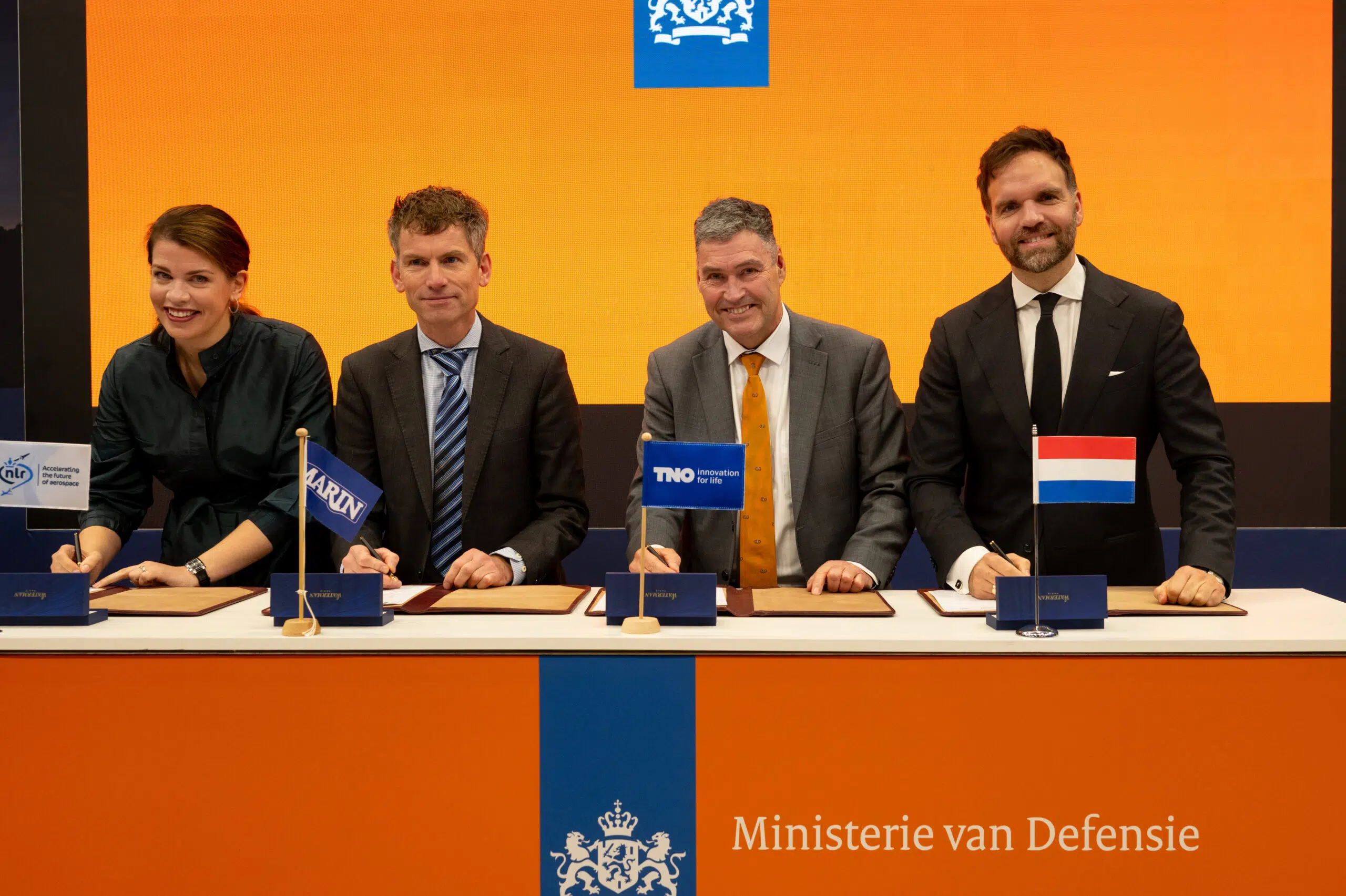
Poto credits: Unique Studios
S[&]T, a company of Dutch origin, has developed such an antenna in collaboration with NLR, commissioned by KIXS, the IT innovation department of Materiel and IT Command, or COMMIT for short. The development took approximately two years and a prototype has already been successfully tested by S[&]T.
While effective anti-jam antennas are already commercially available, they are typically ‘black box’-systems, meaning the user has no knowledge of the components and algorithms that are used. Conversely, by developing its own anti-jam antenna, the Dutch Ministry of Defence now has insight into the underlying technology and can even modify the algorithms if needed.
The development of this antenna is part of the ‘Assured PNT’ programme, in which the Ministry of Defence collaborates with Dutch companies and knowledge institutions to create robust systems that continue to provide accurate PNT information even under difficult circumstances.

Photo credits: Unique Studios
“The challenges of today and tomorrow demand rapid innovations that can be translated into practical solutions. As a knowledge institution, NLR plays a vital role in this process. With our expertise, facilities, and driven specialists, we can accelerate the development of ideas into operational solutions that enable our people in the field to work safer and more effectively. That’s why we are proud to showcase this concrete result of our collaboration with Defence and industry, together with KIXS and S&T,” NLR’s CEO, Tineke van der Veen says.
This first model has been developed for use on land vehicles and maritime applications, such as on Unmanned Surface Vehicles (USVs), and is now available for initial orders. Further development is expected in the coming years, including smaller variants, with the aim of creating a robust Modular Open System Approach (MOSA) PNT chain consisting of various modules, including an anti-jam antenna.