The Royal Netherlands Aerospace Centre (NLR) and the German Aerospace Center (DLR) have jointly released new guidance for Life Cycle Assessment (LCA) in the air transport system. The publication was officially presented during the ‘LCA in Aviation’ session at the EASN International Conference 2025 in Madrid, organised by the European Aeronautics Science Network (EASN).
The aviation industry is responsible for approximately 3% of global CO2 emissions, which may seem like a small percentage, but as air travel continues to grow in popularity, it’s essential for the industry to adopt sustainable practices and technologies to reduce its environmental impact. By investing in more efficient aircraft, developing alternative fuels, implementing sustainable aviation practices, and behavioural aspects, the sector can work towards reducing its carbon footprint and contributing to a more sustainable future. To get a better understanding of the total footprint not only the emissions should be taken into account.
Life Cycle Assessment is a key methodology for evaluating the environmental impacts of aviation technologies and operations across their entire life cycle. The new guidance offers an, aviation-specific framework that enables transparent, reliable, and scientifically robust assessments.
NLR CTO Dr Martin Nagelsmit pointed out the need to look further than direct emissions and apply a more holistic approach to measuring environmental impact. “The publication of this guidance document on Life Cycle Assessment in the air transport system represents a significant milestone in our pursuit of a more sustainable future for aviation. By uniting the LCA expertise of NLR and DLR, we enable researchers, industry and policy makers to widen the scope from in-flight emissions to the full life cycle and from climate change to a comprehensive view of environmental impacts.”
DLR Divisional Board Member for Aeronautics, Dr Markus Fischer, emphasises the importance of collaboration. “The development of a climate-compatible air transport system requires innovative technologies and processes as well as assessment capabilities to determine their impact. Through our cooperation for a systemic LCA in aviation, DLR and NLR demonstrate that collaborative efforts can drive meaningful progress in providing such guidance.”
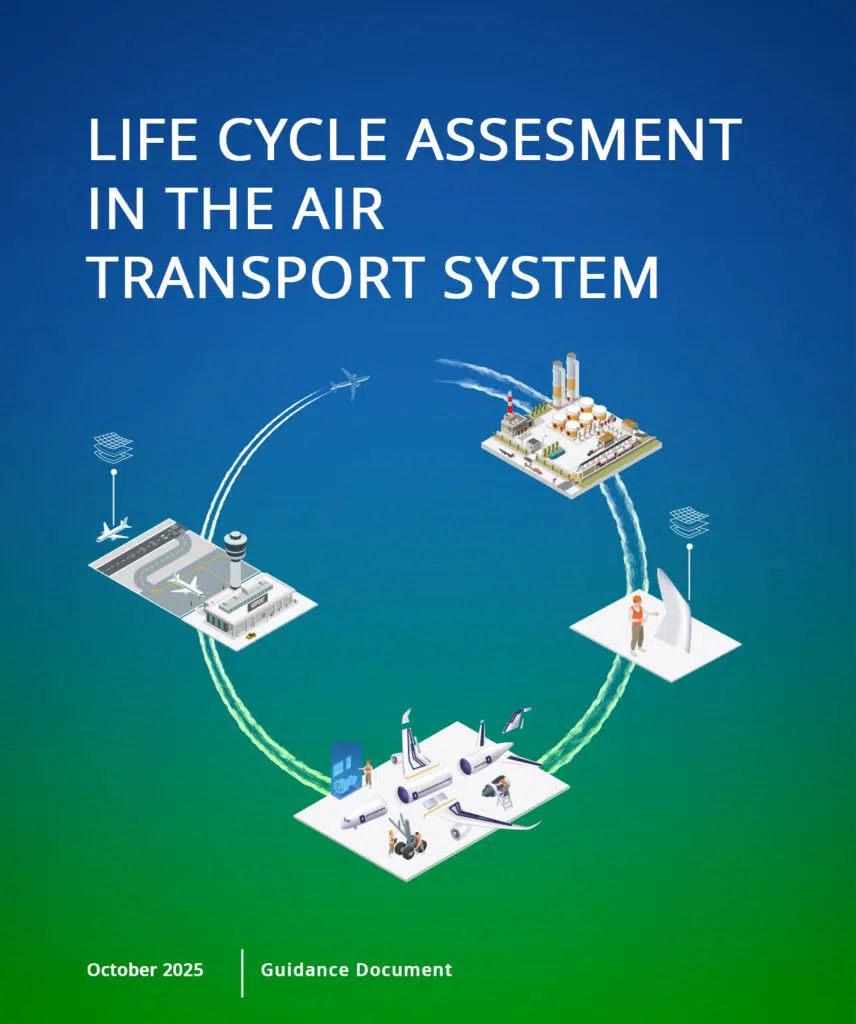
The publication was authored by a joint NLR–DLR research team. The full guidance document is publicly available for download here at our repository: https://hdl.handle.net/10921/1792.