NLR essential link in Tropomi data processing

2 minutes read

Tropomi was launched on 13 October 2017 on the European satellite Sentinel-5P, built by the European Space Agency (ESA) as part of the European Commission's Copernicus Earth Observation programme. The Tropomi instrument makes it possible to measure air quality on Earth with great accuracy, so the instrument equipped with Dutch technology is very valuable for a targeted approach to tackling global air pollution. NLR comprehensively tested the processing of the data that Tropomi sends back to Earth every day. The clients of Tropomi are the ESA and the Netherlands Space Office (NSO). From design to launch the entire satellite cost approximately 220 million euro, of which the Netherlands paid roughly half.

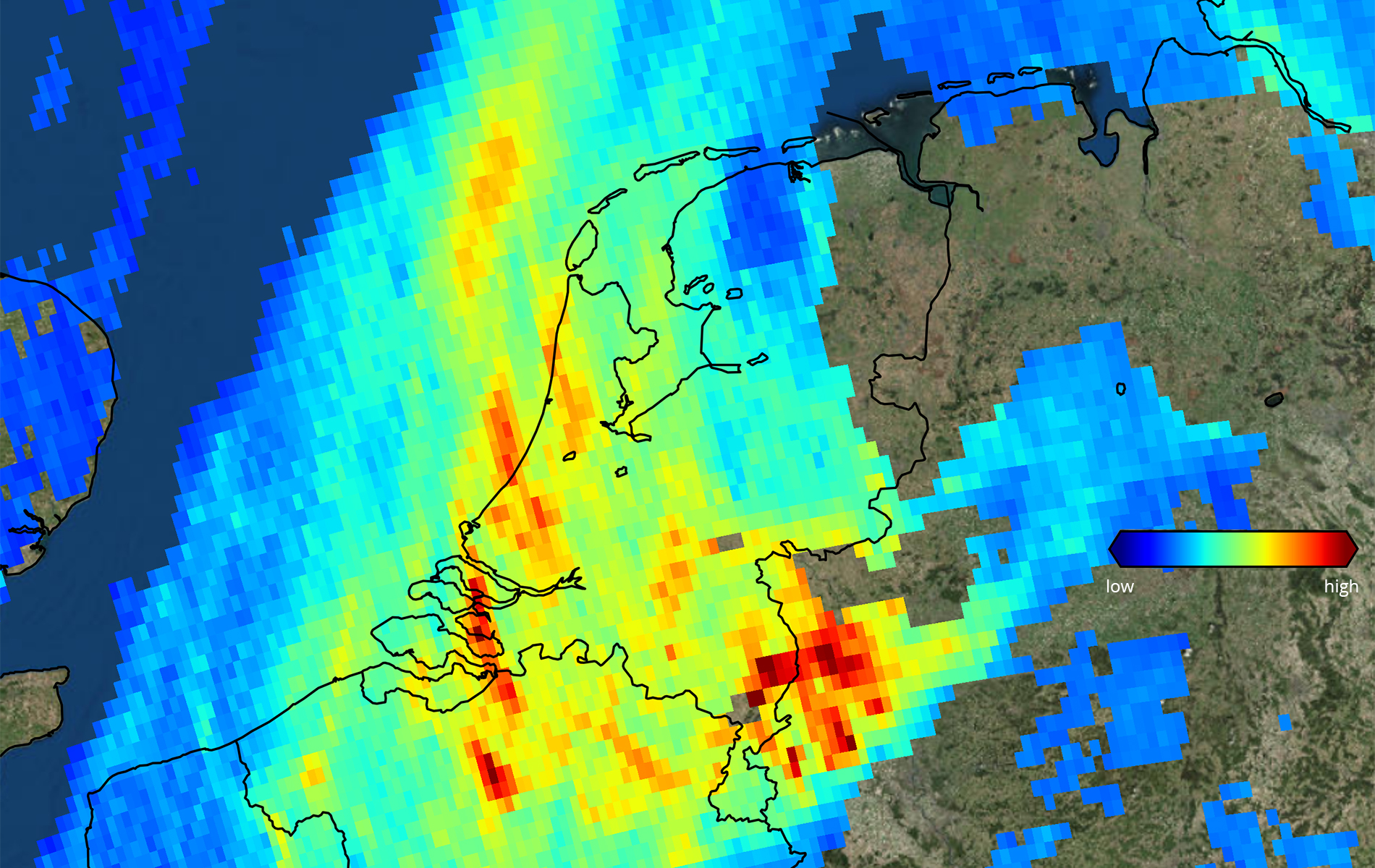
Tropomi (TROPOspheric Monitoring Instrument) orbits Earth fourteen times every day and covers the entire planet every 24 hours. With unprecedented accuracy Tropomi registers where certain measured gases are located and in what concentrations. It thus provides a precise picture of the spread of nitrogen oxide, released by traffic and industry, and of carbon monoxide, released among other things by the burning of biomass (wood, forests). It is also possible to obtain important information for aviation, such as recently volcanic ash ejected by Mount Agung on Bali. Tropomi now allows far better identification of the exact sources of this pollution, how the concentrations vary from day to day and, for example, the influence exerted by wind.

Every day Tropomi sends an exceptionally large volume of data to Earth. The data are received at ground stations in the Arctic area, after which the DLR Aerospace Centre in Germany processes the rough data into geophysical parameters. NLR was responsible for testing the data processing software developed by the Royal Netherlands Meteorological Institute (KNMI). The test programme was planned and implemented by NLR in accordance with ESA standards, using NLR’s expertise in developing, testing and qualifying software for aerospace applications. NLR was further responsible for defining and specifying the files ultimately delivered by DLR – the ‘L1b data product’ – or in other words: where are certain parameters located in the product files and what do they represent?

Tropomi is consistent with NLR’s ambition to deploy its information capability even more vigorously for ESA and other clients. NLR recently signed two contracts with the Netherlands Ministry of Defence that focus in part on processing and preparing for use data that originate from satellites: see these website press releases

See also this video and this website
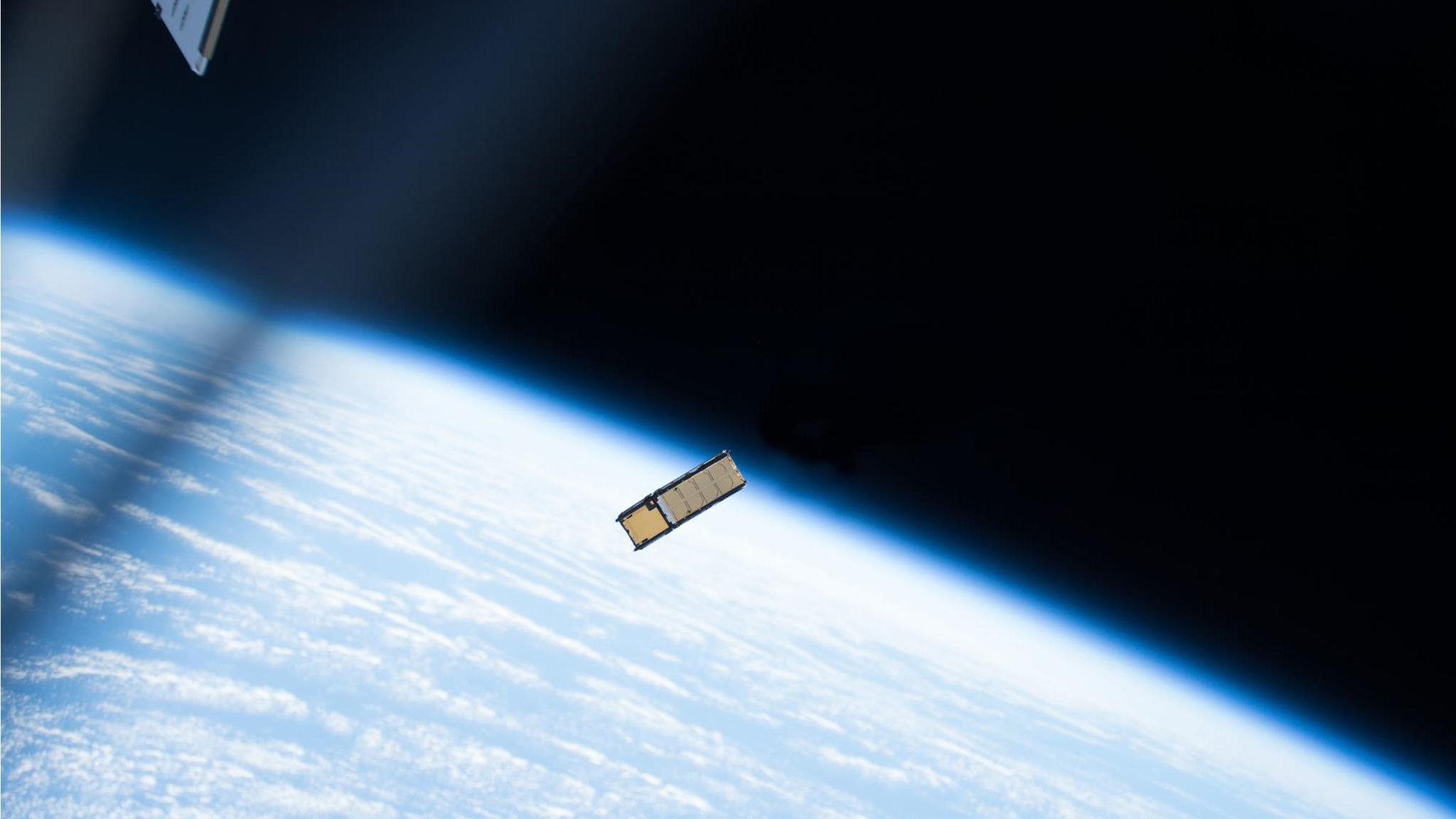
foto credits: Contains modified Copernicus data/Processed by KNMI

Latest news

Safety and Human performance

16 December 2025

Cosmic radiation threatens the reliability of aircraft systems

Recently, a remarkable incident made the news: thousands of Airbus aircraft worldwide were grounded after cosmic radiation disrupted digital electronic systems. A problem long familiar in space applications is becoming increasingly relevant for aviation. Ongoing digitalisation is making modern systems more vulnerable to invisible radiation from space.

Construction and Manufacturing

28 November 2025

Unique in the EU: Modular EPTF Test Facility for Hydrogen-Powered Flight

With the opening of the Energy to Propulsion Test Facility (EPTF), NLR now operates a unique, modular test facility designed to support research. At present, the focus lies on hydrogen-electric aircraft propulsion. The new facility provides startups, SMEs and industrial partners with optimal conditions to safely and thoroughly test complex innovations in this field. In doing so, NLR contributes to accelerating aviation sustainability.

Training and Simulation

21 November 2025

Royal NLR and Lockheed Martin collaborate on e-Pilot capability development

Together with its partners, Royal Netherlands Aerospace Centre (NLR) will work closely with Lockheed Martin to advance the development of an e-Pilot capability that enhances human-machine teaming in military aviation over the next six years. Lockheed Martin will share technical knowledge and experiences on e-Pilot technology to assist NLR and its partners in developing their own intellectual property within the sense, assess and augment architecture.