Royal NLR and TU Delft are both committed to climate action. Together they cover aviation research in the Netherlands, from fundamental research right through to preparing innovations for industrial market uptake. Towards sustainable aviation, the two institutes join forces. For the white paper NLR and TU Delft embrace the climate goals of the European Commission as outlined in the European Green Deal: to become a climate neutral continent by 2050. Martin Nagelsmit, head of environment and policy support department at Royal NLR is one of the authors of the white paper: “To have a climate neutral aviation system in thirty years’ time we need to act now. In this paper we share our view on how to reach the goal from a technological perspective. It helps us to focus on those technologies that are most promising.”
Sustainable aviation
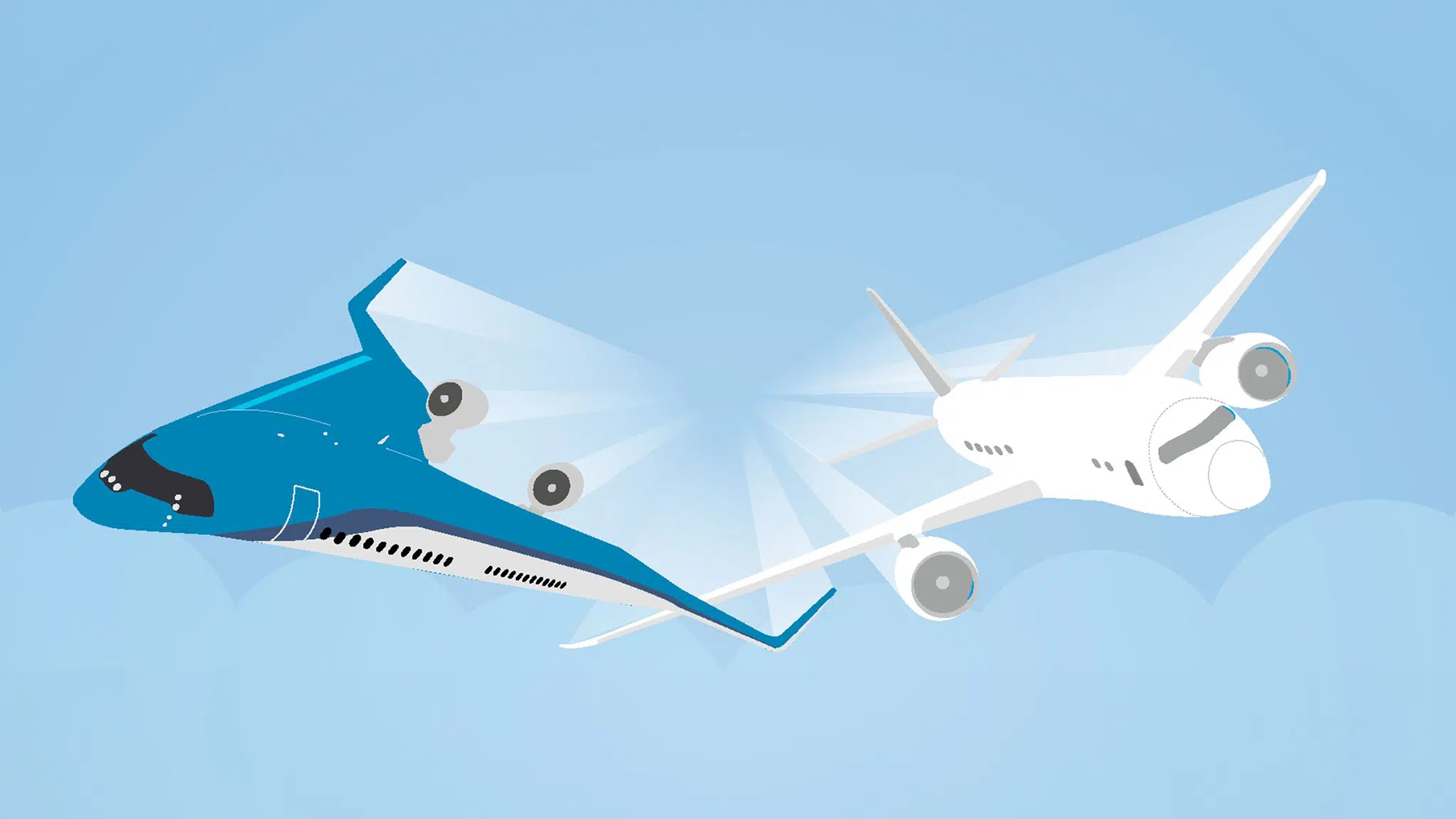
The white paper gives an analysis of the climate impact of aviation and lists the most promising technologies for climate neutral aviation in 2050, this includes not only reduction of noise emissions and improvement of local air quality, but also reduction of the impact on biodiversity and prevention of resource depletion. The two parties envision a future in which aviation will involve innovative air vehicle concepts powered by emission-free energy sources operating in a sustainable ecosystem based on circularity principles.
Prof.dr.ir. Leo Veldhuis, Head of section Flight Performance and Propulsion of TU Delft: “The development of more sustainable aviation will require innovative solutions supported by high-level applied and fundamental research in all aspects of flight, ranging from the utilization of novel energy sources and efficient aircraft to mission optimisation”. For this the paper specifies what is needed in terms of research, organisation and funding.
National programme
The white paper also provides input for a proposal to form a nation-wide R&D programme aimed specifically at reducing the climate impact of aviation, aligned to European programmes. This National Research and Development Programme (in Dutch called NOOP) will position the country as a centre of excellence for sustainable aviation and it will enable Dutch research institutes and as well as companies in the sector to play a substantial role in R&D and the supply chain.
Download
More information:
- Dr. Martin Nagelsmit: Martin.Nagelsmit@nlr.nl
- Prof. Dr. Leo Veldhuis: L.L.M.Veldhuis@tudelft.nl
Press officers:
- Kees de Waal, NLR: 06 2334 7785, kees.de.waal@nlr.nl
- Ineke Boneschansker, TU Delft: 015 278 5361, i.boneschansker@tudelft.nl