Fuel consumption per passenger-kilometre has gone down significantly over the past fifty years, making flying a very efficient way to travel. However, the large and growing number of flights worldwide means that we need more than just small incremental improvements if we are reduce the climate impact further. We need to make deliberate choices in our travel behaviour and when transporting goods, and we need to make sure that innovations can be applied more quickly and on a larger scale.
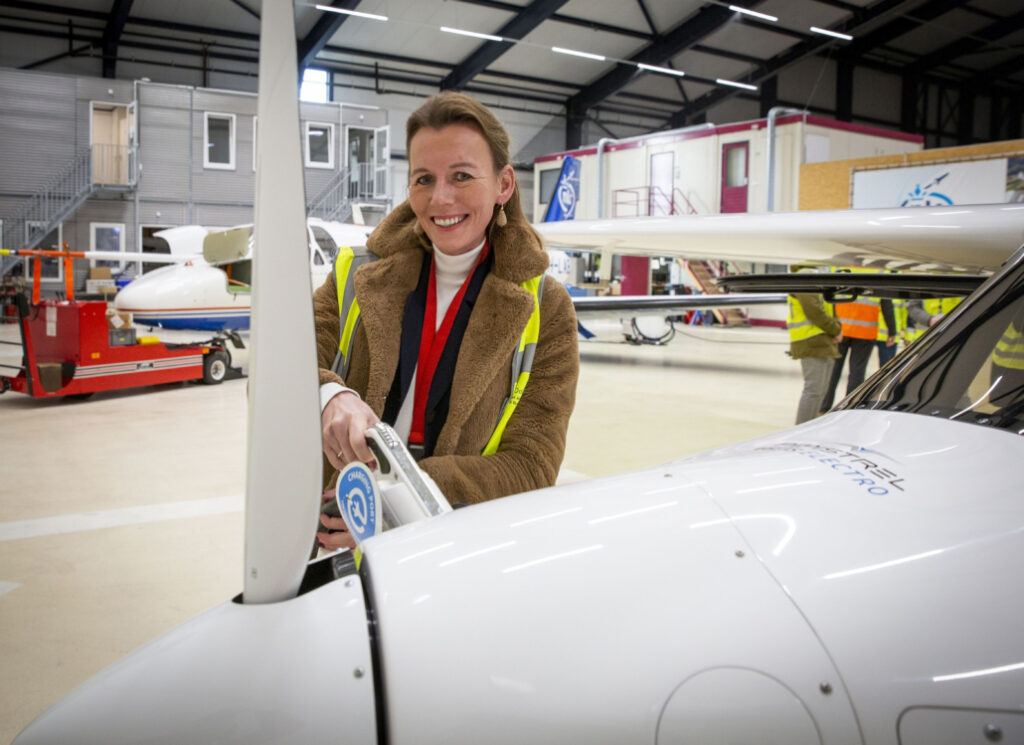
On Friday 11 February, researchers from the Royal Netherlands Aerospace Centre (NLR) discussed this with Caroline Nagtegaal, an MEP who is making efforts in the European Parliament to create a greener transport sector. The size of the challenge for the aviation sector became even more apparent during her working visit to NLR’s hangar at Rotterdam The Hague Airport.
There’s no holy grail
“An aircraft simply needs a lot of energy if it is going to fly,” says the researcher Bram Peerlings, to get the ball rolling. “The energy density of kerosene is very high and modern engines can deliver a lot of power. Both biokerosene and synthetic kerosene emit much less CO2 over their complete lifecycle, but their availability is very limited as yet. Batteries are relatively heavy, take up a lot of space and don’t get lighter as the flight progresses. As for hydrogen as the energy source, well, it doesn’t cause any CO2 emissions but storing it in the aircraft is a technical challenge. Unfortunately, we’re not going to find the holy grail. Instead, we’re going to need a variety of solutions and technologies.” In electric aviation, NLR sees possibilities for 19 passengers travelling up to about 500 kilometres; hydrogen-powered aircraft could be used for flights within Europe.
Energy transition
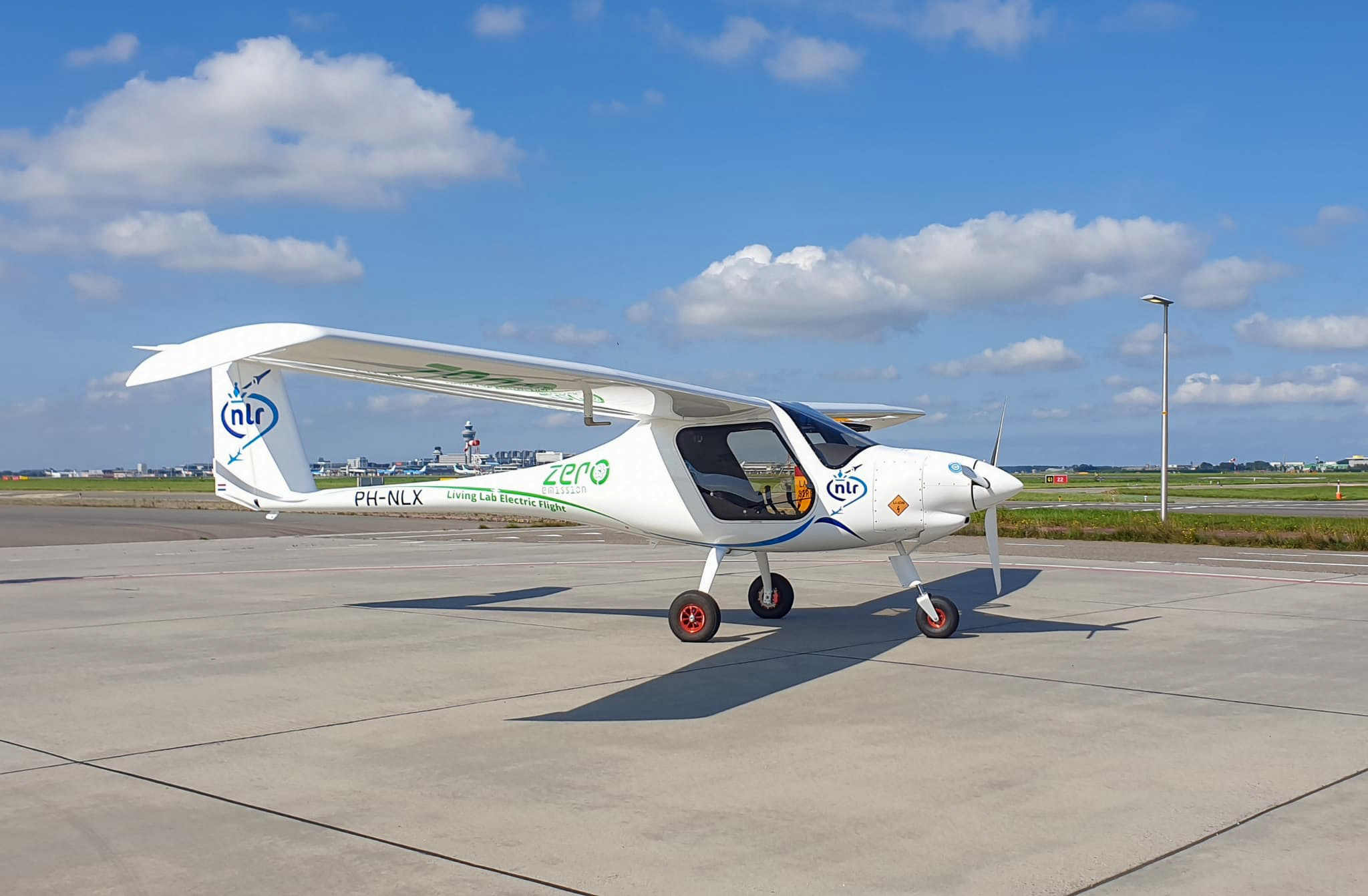
The European parliamentarian Nagtegaal sees these as important times in her work: discussing the challenges that the centres of expertise and industrial players are working on. “I have all that knowledge behind me when I go to Brussels. It helps me raise the right issues there, so that suitable regulations can then encourage and – if possible – accelerate developments.” To get a clear idea of the challenges, she even went along on a flight in NLR’s electrically powered aircraft. “Not only seeing it with my own eyes but also experiencing it gave me an even better idea of the challenges we’re facing,” says Ms Nagtegaal. “Of course, it’s only the beginning: the Pipistrel Velis Electro is a two-seater plane that can fly for just under an hour. But it should ultimately lead to larger aircraft. NLR envisages options for 19 passengers. A small company from Delft (NL) called Venturi Aviation is even aiming to produce an electric aircraft carrying 44 people. Where larger aircraft intended for longer distances are involved, other energy sources will be more suitable. To prepare for this, I’m working on a range of aspects such as an infrastructure in which hydrogen can play a major role too.”
Net zero CO2
Last year, NLR and SEO Amsterdam Economics drew up Destination 2050 for the European aviation sector, showing that CO2 emissions from flights within and departing from Europe can be reduced to net zero by 2050. That conclusion is also reflected in the recently launched Toulouse Declaration. Both parties within the sector and countries inside the EU and elsewhere are calling for a commitment to sustainable aviation. Specifically, the Toulouse Declaration calls for the targets for the reduction of CO2 emissions from international aviation to be brought into line with the temperature targets that were set out in the Paris Agreement. Despite its focus on carbon dioxide, the statement does acknowledge the climate impact of emissions other than CO2 , which is an important step towards achieving a climate-neutral continent by 2050.