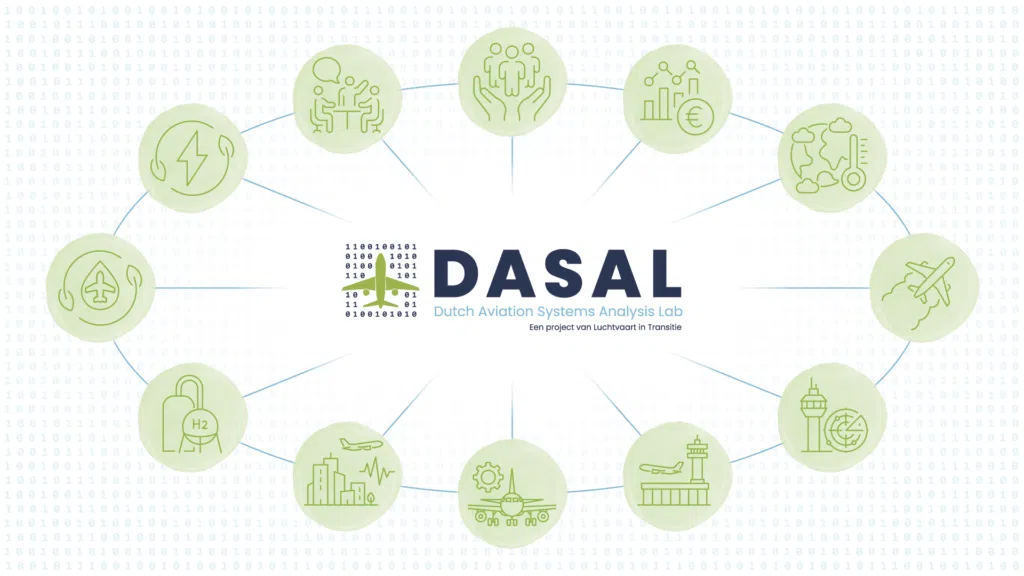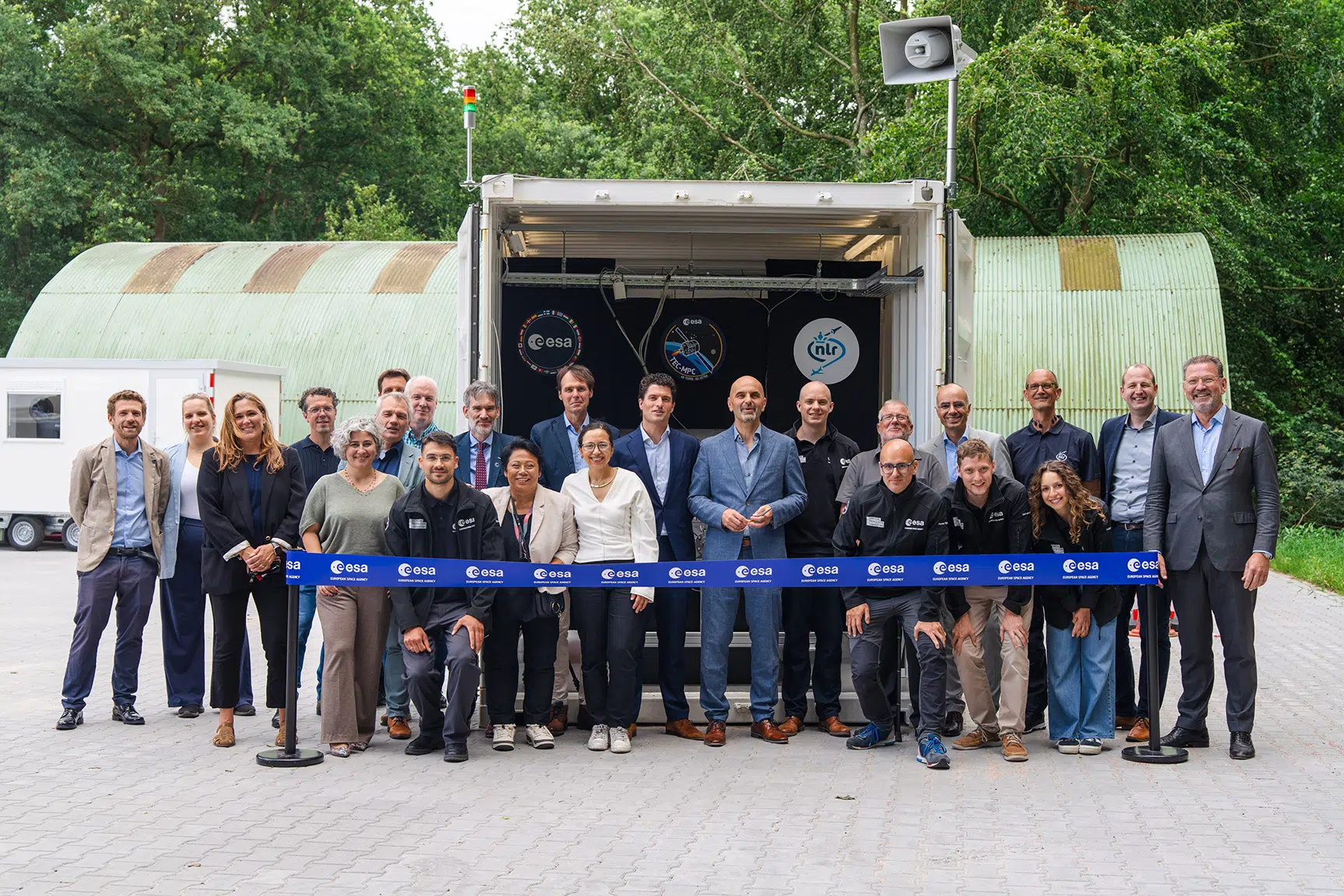
‘Dutch Aviation Systems Analysis Lab’, abbreviated as DASAL, is part of the larger Aviation in Transition research programme and runs until 2030. To gain deeper insight into the sustainability of aviation, NLR and TU Delft integrated their respective simulation models, allowing them to work together and provide a more comprehensive understanding of potential solutions. The demonstration was aimed at showing a proof of concept. “At this point it is not so much about the exact outcomes of the calculations, but much more about the collaboration between models and researchers. The ten simulation models from NLR and TU Delft, intended to provide insight into the differences between current aircraft and future hydrogen-powered types, that we linked during the demonstration worked exactly as intended,” said Roalt Aalmoes of NLR, coordinator of the project.
DASAL’s goal is to further develop various simulation models about future, more sustainable aviation and to connect them to one another. “In the transition to climate-neutral aviation by 2050, all sorts of things will change: it is not only essential to develop new aircraft that fly on sustainable aviation fuel (SAF) or even on electricity or hydrogen, but to consider the aviation system as a whole,” said Aalmoes. “How we fly, how we carry out maintenance, and which policy can best support this transition are really important. Researchers have long been analysing all those separate elements; in our project, the point is precisely that we link these together to bring the overall picture into sharper focus.”
Among those present at the demonstration were representatives of the Ministry of Infrastructure and Water Management. Deputy programme manager Martijn van Langen: “From the Ministry’s perspective, we see developments like this as highly valuable. Although the future always remains uncertain, models and tools such as those of DASAL can make an important contribution to well-founded policymaking.”
Driven by the ambition to develop as complete a picture as possible, NLR and TU Delft work closely together. “We already collaborate extensively in a range of specialised areas. What is new within DASAL is that we are joining forces on a much broader scale, addressing the entire challenge of climate-neutral aviation,” says Gianfranco La Rocca, who leads the DASAL project on behalf of TU Delft together with his colleague Joost Ellerbroek.
In addition to this demonstration, project specialists are working on the further development of a variety of models. La Rocca explains: “At TU Delft, much of our research is carried out by PhD candidates, who dedicate four years to a specific topic. DASAL currently involves nine PhD candidates, and we expect another three to join before the end of the year. Most have now been involved for more than six months, have developed a solid understanding of the subject matter and are ready to advance their own research.”
“One PhD candidate, for example, is focusing on the design of aircraft powered by sustainable energy carriers such as hydrogen, while another is investigating what airports will need in order to accommodate these new types of aircraft effectively. Others are developing models to predict the noise emissions and climate impact of future aviation technologies.”
At NLR, priorities are set on a yearly basis, in order to be able to more quickly respond to new developments. Aalmoes: “This year we are looking in particular at aviation-economic aspects, the influence of policy, and the performance of new aircraft engines.” With DASAL, both NLR and TU Delft also work on topics such as air quality, nitrogen deposition and noise nuisance.
In selecting research topics, the project is assisted by a dedicated advisory board, comprising both Dutch and foreign experts. Aalmoes: “Thanks to their input, we get an even better picture of the questions that are on the minds of the various parties in the aviation ecosystem, and which DASAL should be able to answer in the future. Because that is ultimately what we are after: building something now in order to be ready for the questions of tomorrow.”