Programme
Safe and competitive operations
The aerospace sector has had to deal with several major disruptions in recent years (for instance COVID-19 and the consequent downsizing of operations and then later scaling them up again, staff shortages, economic developments and the war in Ukraine). It is also a sector that is highly sensitive to political and other developments such as the nitrogen emissions issue and the reduction of flight movement numbers at Schiphol Airport. Society is increasingly critical of aviation, not only with an eye on climate change but also because of the safety risks. Meanwhile, new users of our scarce airspace (such as drones, Innovative Air Mobility (IAM) or electric aircraft) are increasing the pressure on it.
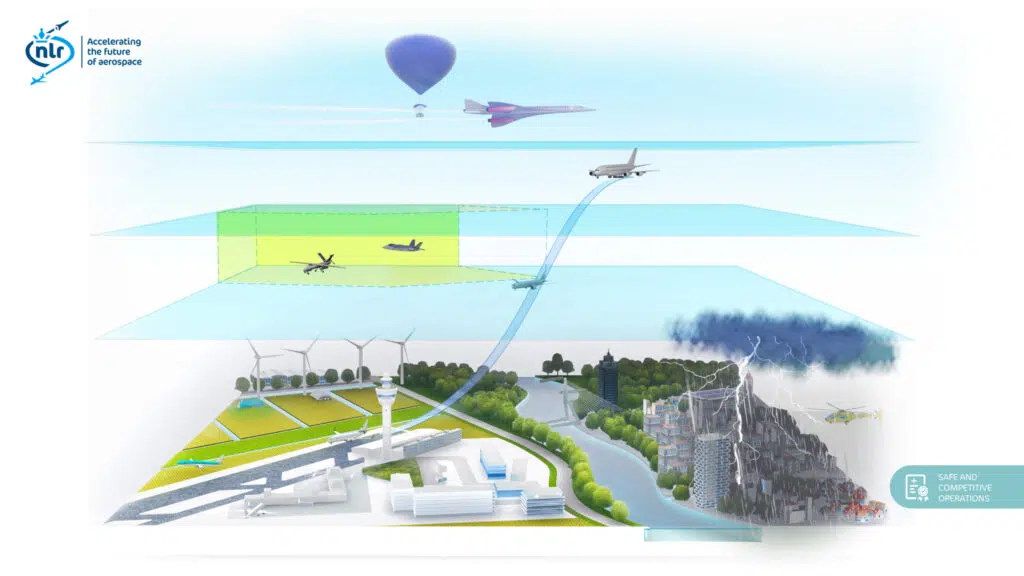
The programme Safe and competitive operations helps governmental authorities, the aerospace sector and society meet these challenges by making the aerospace sector in the Netherlands safer, more resilient and more cost-effective, now and in the future, and to make civil and military aviation, and society, safer.
“Effective cooperation in the skies”
Programme leader Nick van den Dungen on the Safe and Competitive Operations knowledge programme
We do this by presenting facts, specific proposals for action and advice, as well as through the targeted use of innovation. We offer insight into changes brought about by new technologies, e.g. for safety, operational concepts, organisation, regulations and oversight of aerospace safety. We also propose solutions for reducing costs in aviation operations, for expanding airspace capacity and for maximising the reliability and resilience of aviation operations, within societally acceptable limits. On behalf of the ecosystem of space companies Clean Space and Space Traffic Management (STM), we explore issues that rapidly become a priority within national and international policy.
Some projects
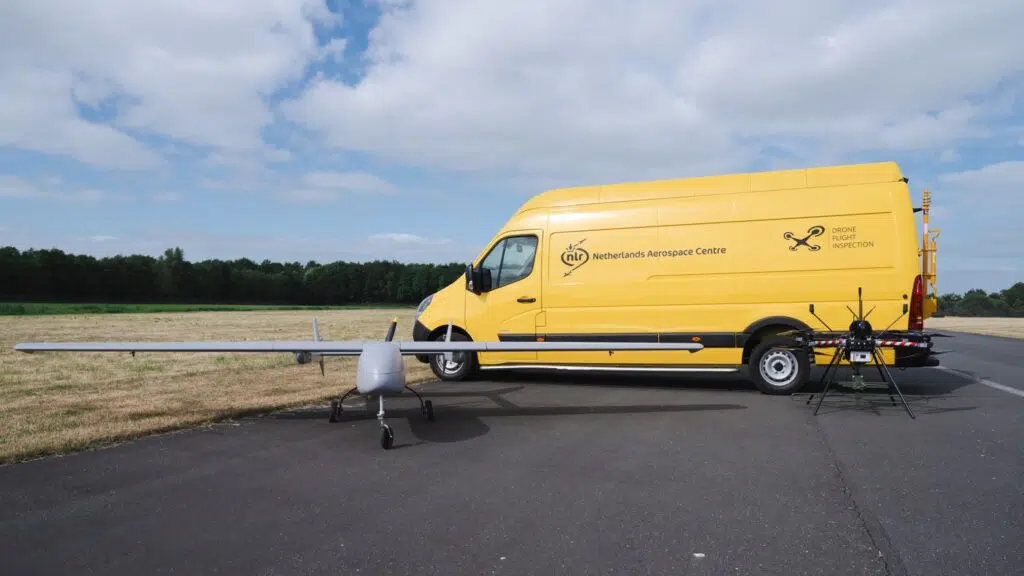
Drone flight Inspection
Drone Flight Inspection focuses on expanding and broadening the applications of the DFI platform, with particular attention to operations around airports and navigation aids (NAVAIDs). We aim to limit and eventually replace the flight inspection of NAVAID systems, such as ILS, with drone-based measurements. Our goal is to standardise the ReFI-DFI concept and incorporate it into international regulations, such as EASA and ICAO, to improve the efficiency and safety of airport operations.
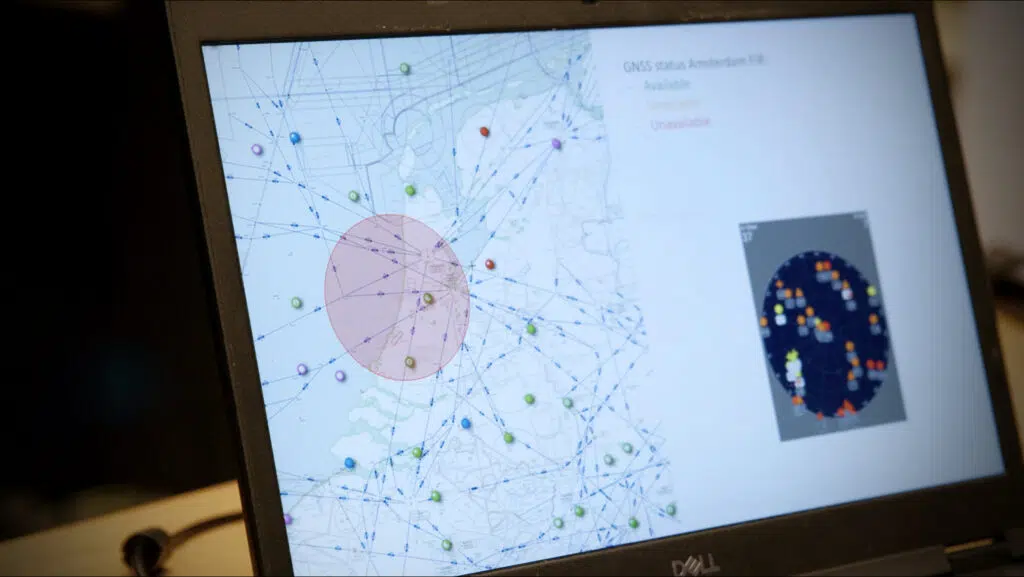
Jamming and spoofing: operational impact
We are investigating the operational impact of jamming and spoofing on aircraft systems and operations, including trajectory planning and execution. We are mapping the nature of interference signals encountered by air traffic control, airlines, and airports, with an initial focus on GNSS jamming and spoofing.
SESAR3 ER2 STEPLESS
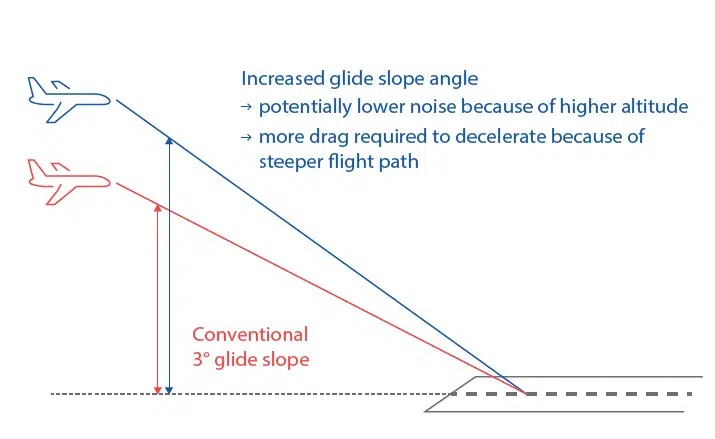
The STEPLESS project aims to reduce aircraft emissions and noise during final approach by applying steeper approach angles. Our solution dynamically optimises the settings of the high-lift system, taking into account conditions such as wind, aircraft mass, and ATC constraints. This enables energy-optimal flight, even with larger descent angles. It is also expected to yield operational improvements for the throughput of arriving traffic within the TMA.
Read more about this project on the website of SESAR.
Discover more knowledge and technology
Research infrastructure
Areas of expertise