Martin, what is the challenge facing the aviation industry?
“Europe is striving for a climate-neutral aviation sector. Meanwhile, the demand to fly remains high. So, essentially, the challenge is: how can we maintain our prosperity and continue to fly, while staying within ecologically and socially acceptable limits? At the same time, we want to promote the competitiveness of Dutch companies and strive for strategic autonomy.”.
What kind of research is NLR conducting in this area?
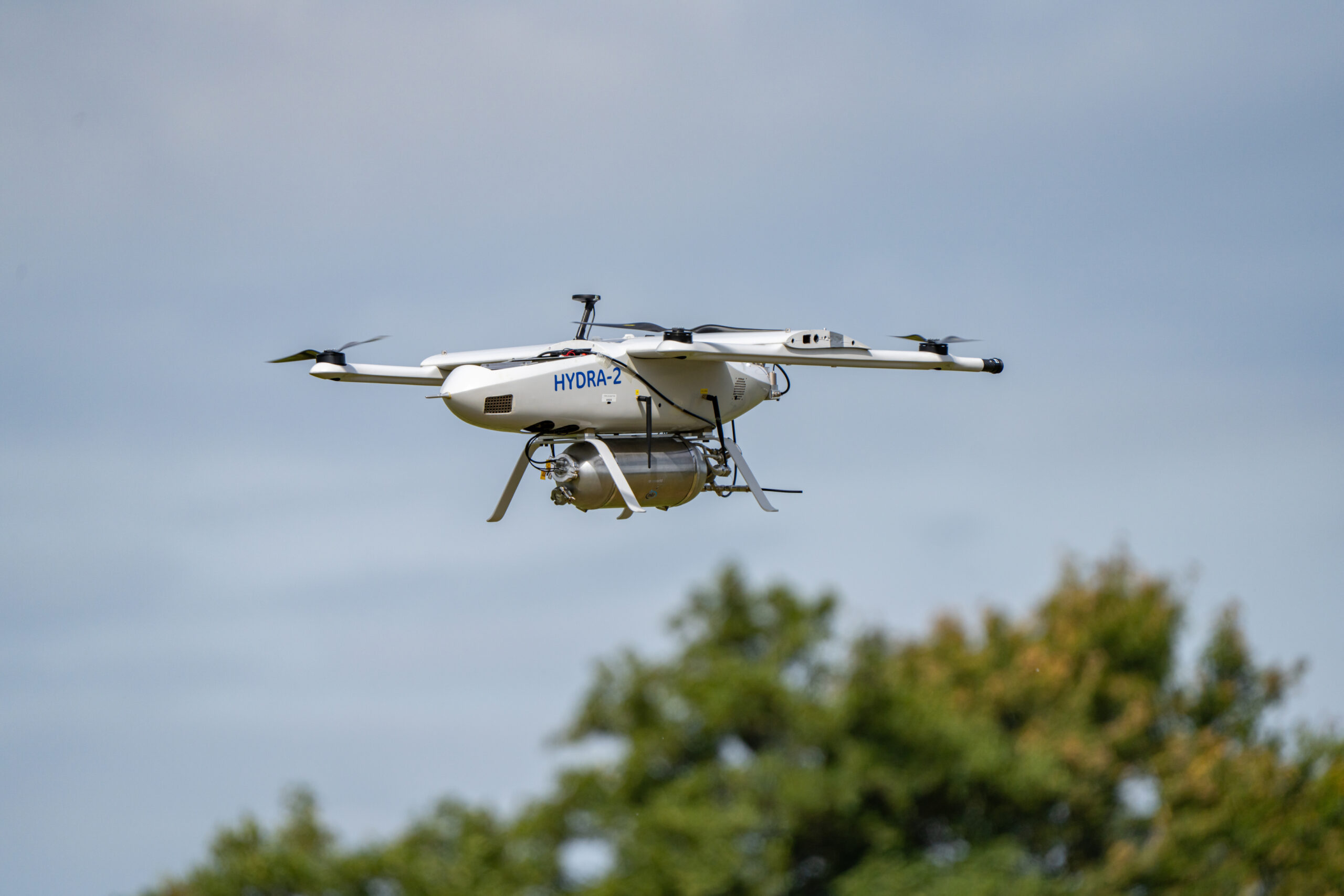
“There are already several ongoing projects in which our researchers are investigating how airplanes might fly on hydrogen in the future. For example, we are converting a small electric aircraft so that it can also derive its energy from liquid hydrogen. As part of the national “Aviation in Transition” program we are carrying out the ICEFlight project, in which we are developing the key technologies for handling liquid hydrogen on board future aircraft. In another project – TULIPS – we’ve examined which measures at airports can help reduce CO2 emissions from travel.”
How is that going?
“We’re certainly making progress, thanks in part to the projects I mentioned. But of course, it’s never fast enough, because climate change is continuing. Reducing aviation’s impact on the climate is a truly daunting challenge. This makes it all the more important that we continue to develop new technologies that make flying less polluting.”
What’s the news?
“New projects have recently been awarded funding in the fourth round of the European Union’s Clean Aviation programme. We at NLR are involved in ten of them – out of the eleven we applied for, which is a great result. This success hasn’t come out of the blue; rather, it builds on the hard work carried out by NLR researchers in previous projects.
Together, these projects will receive around 7.5 million euros in funding, a budget which we at NLR will double with our own funds. In the new projects, that will run over the coming years, we will be working closely with companies and universities. The research must yield new knowledge and – crucially – concrete products that will significantly reduce the climate impact of flying. I believe this is truly the strength of Europe: as the Netherlands, we can tackle part of this problem, but the major solutions must come from European cooperation.”
Could you give a few examples of projects?
“We’ll be working on several projects to develop aircraft propulsion systems using hydrogen as an energy carrier. We’re exploring two different approaches: you can burn the gas in a jet engine, or you can feed it into fuel cells, which convert it into electricity. Another project focuses on a component of a superconducting electric motor. But simply having more sustainable aeroplanes isn’t enough. The aircraft of the future must also be able to charge and refuel – new fuels, that is – at airports. We’ll be investigating the operational challenges that are likely to arise in this regard in a separate project.”
What else might this research yield?
“It is very much NLR’s role to ensure that the knowledge we develop is put to practical use by companies, that are involved in numerous new projects. We consider commercialisation to be increasingly important: ensuring that the knowledge we develop finds its way to partners. All this research must lead to thriving businesses. We no longer have companies in the Netherlands that build complete aircraft (although a few start-ups are now working on this again). But at a deeper level – within the supply chain – we have several excellent companies, such as Aeronamic, Fokker Elmo and GKN, which are involved in the new projects. In addition, we increasingly want to involve companies in our projects that may be new to the aviation sector but which can make a meaningful contribution with their technologies. Think of manufacturers of specific materials, electric motors or battery packs.”