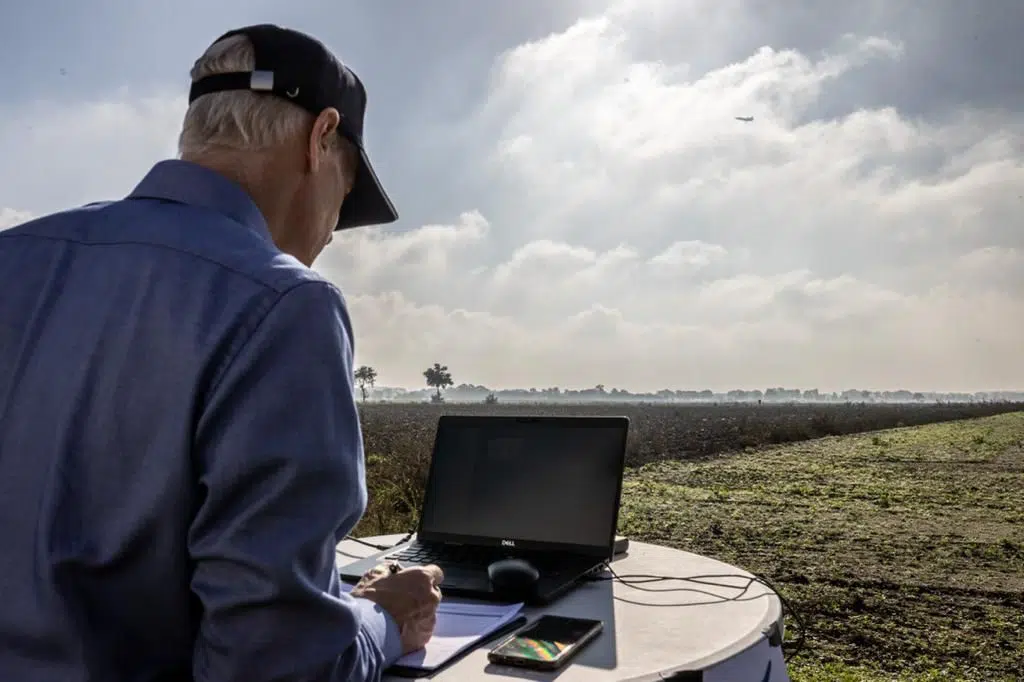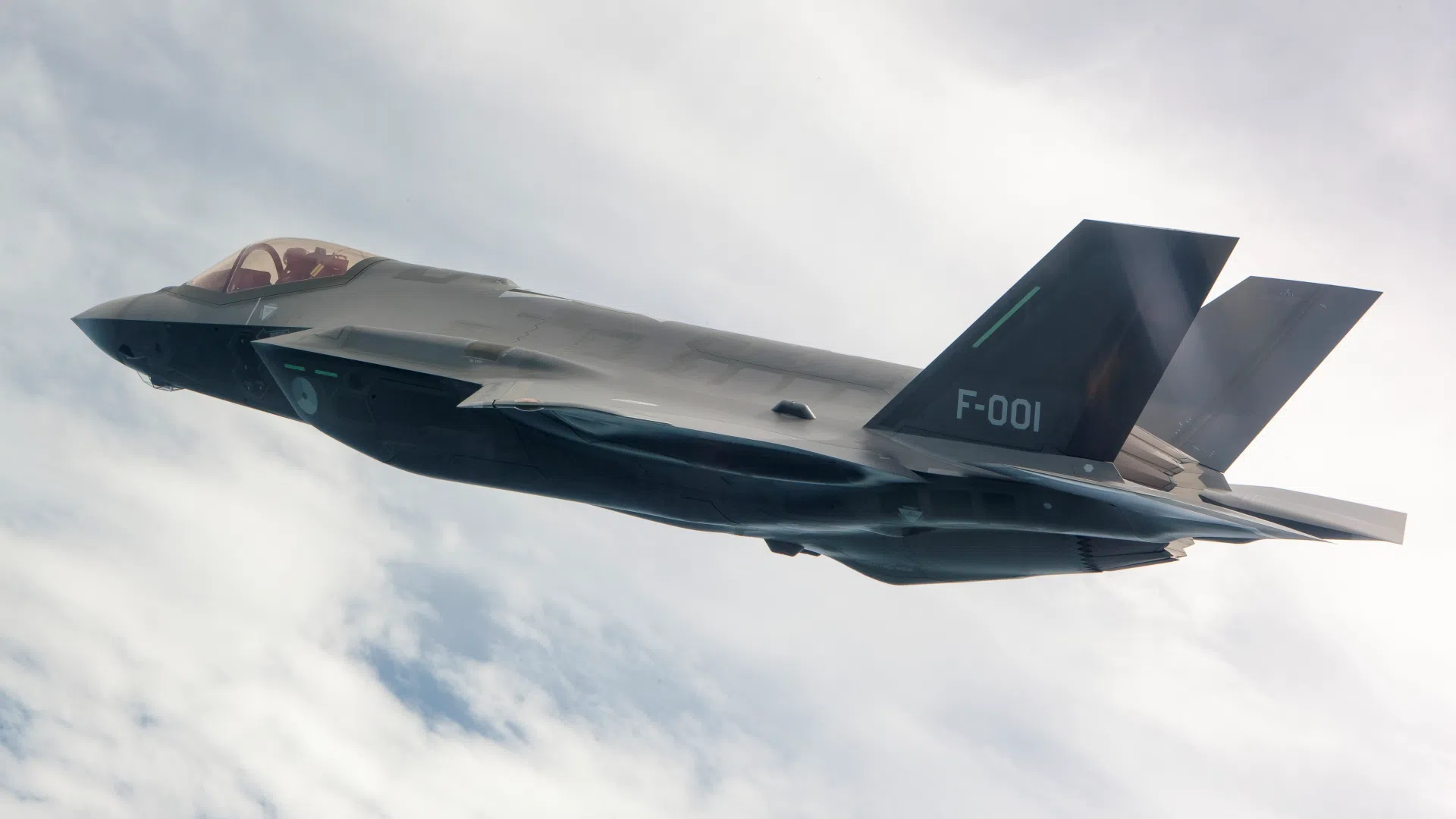
The Ministry of Defence intends to reopen De Peel airbase to train with F-35 fighter jets. A possible reopening has consequences for the region. Therefore, the surrounding area requested experience flights to be carried out to get an impression of the noise that local residents might expect. In the context of these experience flights, Defence asked NLR to conduct noise measurements. In consultation with the surrounding municipalities, seven locations were selected for these measurements. At these locations, NLR measured peak levels, which are the highest noise levels audible on the ground during F-35 passages.
Measurement Results
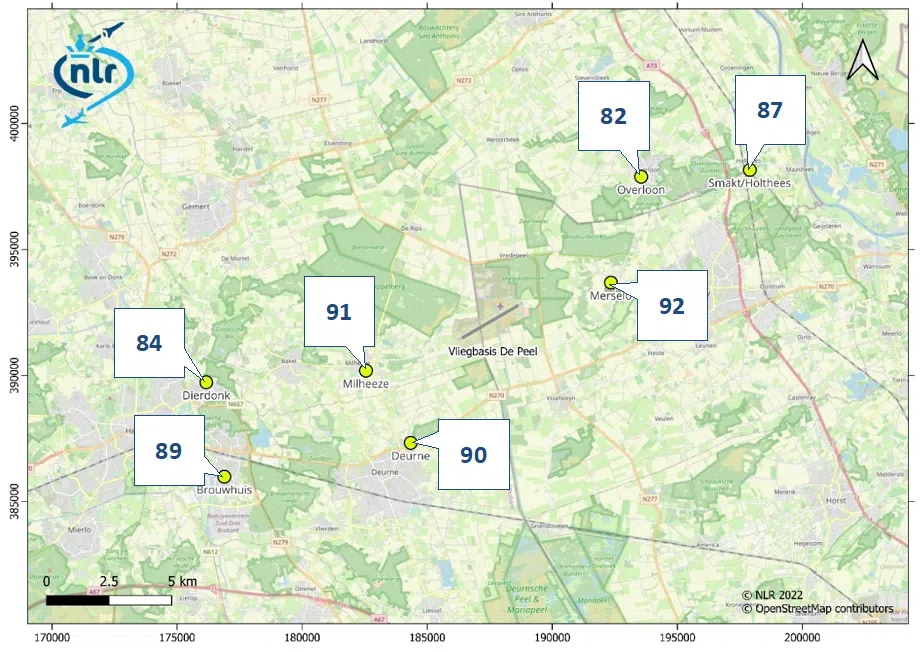
Defence carried out an experience flight in the morning and afternoon, each consisting of multiple passages. During both flights, the F-35 flew different procedures. The figure below shows the measurement locations and maximum measured peak levels (i.e., the highest value of all passages from both morning and afternoon flights) per measurement post.
The noise measurements show:
- The highest peak levels were measured at locations Merselo, Milheeze, and Deurne, with maximum peak levels of 92 dB(A), 91 dB(A), and 90 dB(A), respectively. These are the three locations closest to the airbase.
- The highest peak levels at locations Helmond-Dierdonk, Helmond-Brouwhuis, Overloon, and Smakt/Holthees were 84 dB(A), 89 dB(A), 82 dB(A), and 87 dB(A), respectively.
- The number of peaks above 70 dB(A) is significantly higher for locations Merselo, Milheeze, and Deurne compared to locations Helmond-Dierdonk, Helmond-Brouwhuis, Overloon, and Smakt/Holthees.
Snapshot
Differences can be seen between the results of the morning and afternoon flights, which were caused by differences in flight routes in some cases.
The measurements represent a snapshot. They provide insight into the noise levels that occurred during the experience flights. The results and conclusions from this study are based on a relatively small number of measurements and observations. The experience flights do not provide a complete reflection of all noise levels that may occur in the future if De Peel airbase is reopened. As flights will take place over a longer period with greater variation in conditions and flight routes, a wider range of noise levels will be observed. Additionally, future procedures and flight routes have not been finalised. The routes and procedures followed provide an indication of possible routes and procedures that may be flown in the future.
The report with measurement results and an interpretation of these results is available via this link.