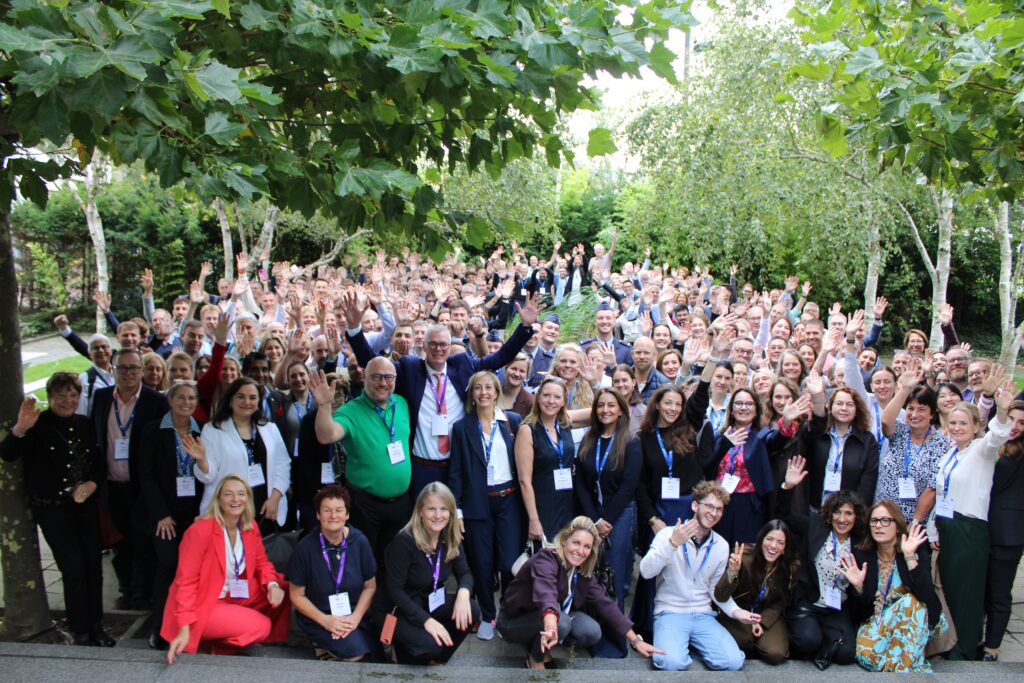
Two weeks ago the 36th European Association for Aviation Psychology conference took place in The Hague, celebrating EAAP’s 70th anniversary. Our conference theme was ‘From historical insights to future frontiers’, very fitting because that is exactly what we aim to do at NLR: what lies ahead for civil aviation? Asking experts from different disciplines would most probably give us a wide range of answers. At their core, however, I think many of these perspectives can be distilled into three overarching challenges shaping the future of aviation. Each of these has its own implications for the work of aviation psychologists and human factors experts.
Challenge 1: Sustainability
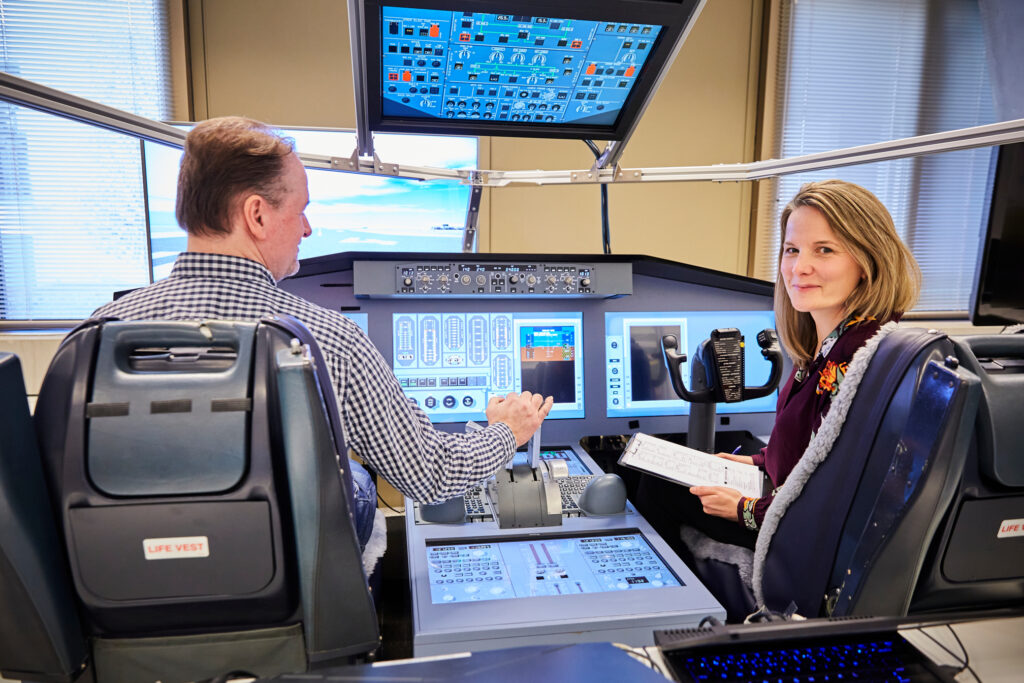
Aviation must become more sustainable in the years ahead, reducing its environmental impact while continuing to provide the connectivity on which society and the economy depend. This means, for instance, an increase in the use of sustainable aviation fuels (SAF), more efficient aircraft and, eventually, electric and hydrogen-powered technologies. But this transition is about more than technology. It is also about the people working within the system. As aircraft evolve, pilots will be flying new technology with new procedures, requiring them to adapt to changes in aircraft design, automation, training, and operational practices. These developments are very likely to alter traditional roles and responsibilities within the cockpit and could well introduce new forms of workload, decision-making, and human–machine interaction. Understanding how pilots perceive, adapt to, and interact with these technologies will therefore become increasingly important. Training will need to prepare crews not only to operate new systems safely, but also to maintain situational awareness, manage changing levels of automation, and respond effectively when technology does not behave as expected. At the same time, the introduction of unfamiliar technologies may influence pilot trust, confidence, workload, and perceptions of safety. As aviation moves towards a more sustainable future, we must consider the psychological impact of this transition alongside the technological and environmental challenges, ensuring that the human element remains central to the safe operation of the future aviation system.
Challenge 2: Increased automation and AI
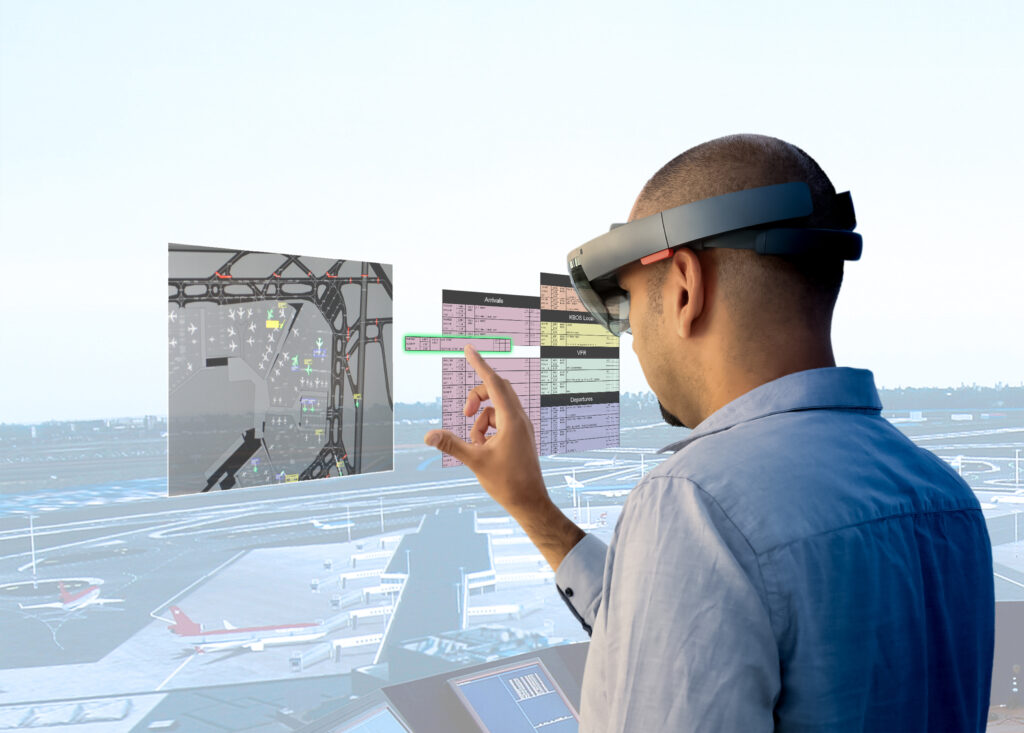
In the years ahead there will of course be more and more use of automation and AI. This will create new opportunities for efficiency and safety while changing the roles, responsibilities and skills of the people working within the aviation system. This change is one of the future focus points for our field. Changing roles mean that different types of people will be needed with a different skill set, affecting both selection and training. Furthermore, procedures will change, requiring aviation professionals to adapt to new ways of working and interacting with increasingly autonomous systems.
One may conclude that advancing technology may mean less focus on aviation psychology and human factors, but in fact, I think I can safely say that the opposite is the case. Increased use of automation and AI changes the role of the human and, in some cases, may make it more difficult. As humans become more of a monitor than an operator, we need to consider whether they are well-suited to this new role. Monitoring highly automated systems can be mentally demanding, particularly when the system operates normally for long periods and human intervention is rarely required. Humans naturally experience fluctuations in attention and vigilance, making it difficult to remain continuously alert when there is little active engagement with the task. This can create challenges such as reduced situational awareness, automation complacency and slower responses when human intervention is suddenly required. Therefore, as automation increases, our focus must be towards understanding how humans can best work alongside intelligent and autonomous systems. The challenge for aviation psychology will be to ensure that, even as technology takes over more operational tasks, humans remain engaged, capable of understanding the system, and ready to intervene when necessary.
Challenge 3: Growing demand for travel and new forms of mobility
Growing demand for travel and new forms of mobility will also bring challenges of their own, requiring aviation infrastructure, airspace and operations to adapt while maintaining safety, resilience and accessibility. Air travel is expected to evolve alongside drones, urban air mobility, advanced aircraft designs, and eventually more autonomous flight systems.
Firstly, this means that we will need to attract and select a vast number of pilots. And these pilots may well have to meet different demands than the pilots of today. Aircraft may need to be easier to operate with greater levels of onboard assistance and single pilot operations could well exist for smaller battery-powered aircraft and reduced crew operations for long haul.
Besides the changes mentioned above, there are two other challenging areas that I feel are of great importance to aviation.
Fatigue management
As demand for air travel continues to grow and new operational aircraft designs change the roles and activities of operators, managing fatigue and designing effective rosters will become increasingly important. Greater operational demands combined with relatively long and boring monitoring tasks, irregular working hours, increased traffic and potentially more complex operating environments could all place additional pressure on aviation professionals. Aviation psychology has an important role to play in understanding how working patterns, rostering, sleep opportunities and operational demands interact to influence human performance. Future approaches to fatigue management will need to consider not only how much people work, when they work and how predictable their schedules are but also how the changing nature of aviation operations affects their ability to recover.
Change management
Aviation is a highly complex and safety-critical system, meaning that introducing new technologies, procedures and ways of working cannot simply be treated as a technical challenge. Changes affect the people who have to work with them, and the success of a new system will depend partly on how well those people are able to understand, accept and adapt to the change. Effective communication, appropriate training, employee involvement and a clear understanding of new roles and responsibilities are all important. The challenge will be to ensure that people are not simply expected to adapt to technological change, but are supported throughout the process.
The human at the heart of new technology
Aviation is often described as a triumph of technology, and it is. However, every aircraft, every air traffic system and every increasingly automated operation ultimately exists within a human system. The need for human factors and aviation psychology in operations isn’t disappearing because of technological advancement but remains as important as ever. Human Factors and Aviation Psychology are at the heart of aviation’s future, helping us understand how people and increasingly autonomous technologies can work together safely, effectively and resiliently.
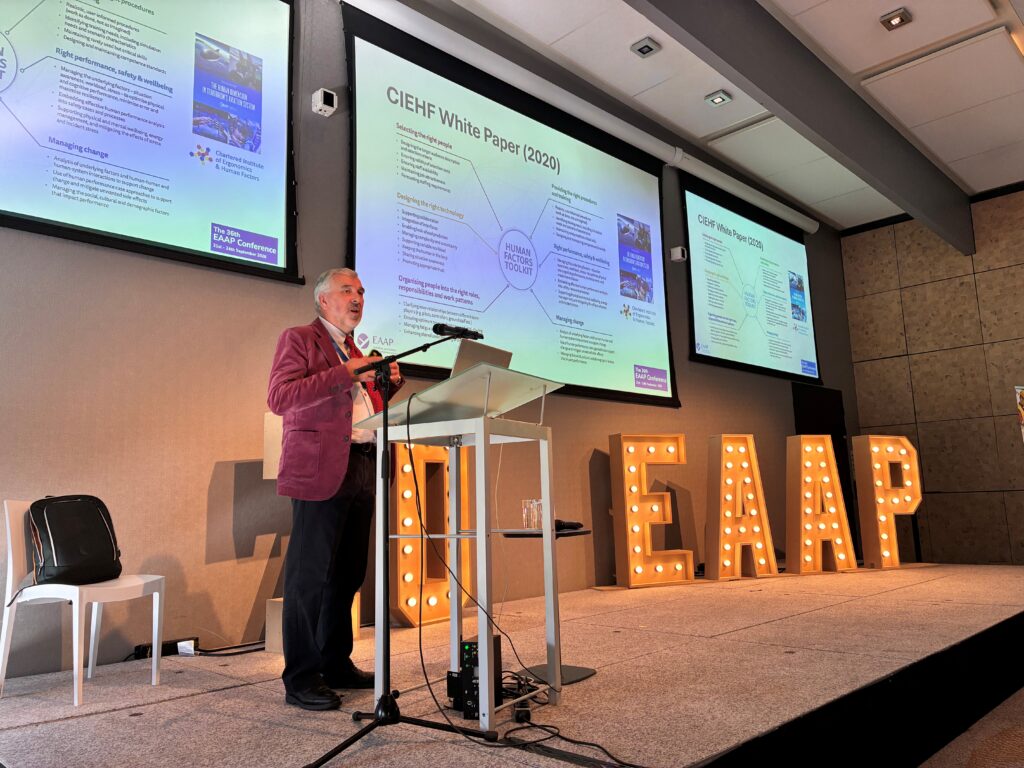
Keynote speaker at the conference, renowned human factors professor Don Harris, argued that that the next 70 years will put the human right at the heart of developments in aerospace. The human will become completely integrated into design and operations: the pilot will experience an increasingly cybernetic relationship with their machine. The Air Traffic Controller (ATCO) will become the Air Traffic Manager, overseeing the system, not controlling the aircraft, and selection and training requirements will need to keep pace. He emphasized that aviation psychology will become aerospace psychology and that the focus will no longer primarily be on pilots and ATCOs. There will be a need for more focus on ground-based control of air operations and space operations, pilot aiding and autonomous control along with a focus on selection and long-term operations in demanding environments.
In conclusion: yes, humans do matter more than ever!
Technology continues to evolve and with it, bring new challenges, but one thing remains clear: the human in the system will remain important for a long time to come. As aviation moves towards greater automation, increased traffic and more flexible operations, the human will remain a critical part of the system. Ensuring that people are equipped, supported and prepared to work effectively within these changing systems is just as important as the technology itself. In this sense, the future of aviation will depend not only on developing new technologies, but also on developing, supporting and understanding the people and organisations that work with them.