Sustainability and Environment
06 April 2021
Sustainable alternatives to kerosene: the facts
Why are CO2 emissions from flying still rising although planes are becoming more economical? What would be a logical distance for flying battery-powered electric aircraft? What techniques are there for flying on hydrogen? The facts, plain and simple.
31 March 2021
SUSTAINair is investing in circular aviation for the green transition
The SUSTAINair project is investigating and developing solutions for sustainably using raw materials and improving the performance of aircraft. This Horizon 2020 project, which recently got off the ground, is aiming at the same time to achieve circular aviation by drastically reducing the waste and material costs throughout the lifecycle of the aeroplane.
19 February 2021
Blog: Trust in aviation is about more than noise nuisance alone
The past year has been an exceptional period for aviation: the outbreak of the coronavirus pandemic has sharply reduced air travel world-wide. At Schiphol Airport, the number of flights has fallen by 54% in comparison with 2019. Little or no air traffic means less exposure to aircraft noise. This is a situation that is unheard of for local residents around Schiphol. It may be somewhat similar to the short-lived peace that descended when the Icelandic volcano eruption in 2010 grounded air traffic for days, or even further back, after the ‘9/11’ terrorist attacks in 2001. The difference, however, is that the present pandemic has been cutting air traffic for a year now, rather than for a few days or up to a week.
16 February 2021
Royal NLR and TU Delft present vision for route to sustainable air transport
In the white paper published today NLR and Delft University of Technology present their joint vision on the most promising technologies for achieving a climate neutral air transport system by 2050. The European Green Deal states that Europe should be a climate neutral continent by then; a goal that comes with complicated challenges in terms of human behaviour, consumption, economics and technology. Aligned with this great challenge the white paper also presents a view to support setting up a dedicated national research and innovation programme for sustainable aviation.
11 February 2021
Royal NLR and SEO plot the course to sustainable aviation in Europe
As the devastating effects of climate change loom, virtually every industry has a role to play in saving the planet. With all eyes fixed on slowing the rate of global warming, to no more than 1.5°C, NLR and SEO developed a roadmap to show how the European aviation industry can meet sustainability goals and reach a net-zero carbon footprint.
03 February 2021
Flying safely with liquid hydrogen
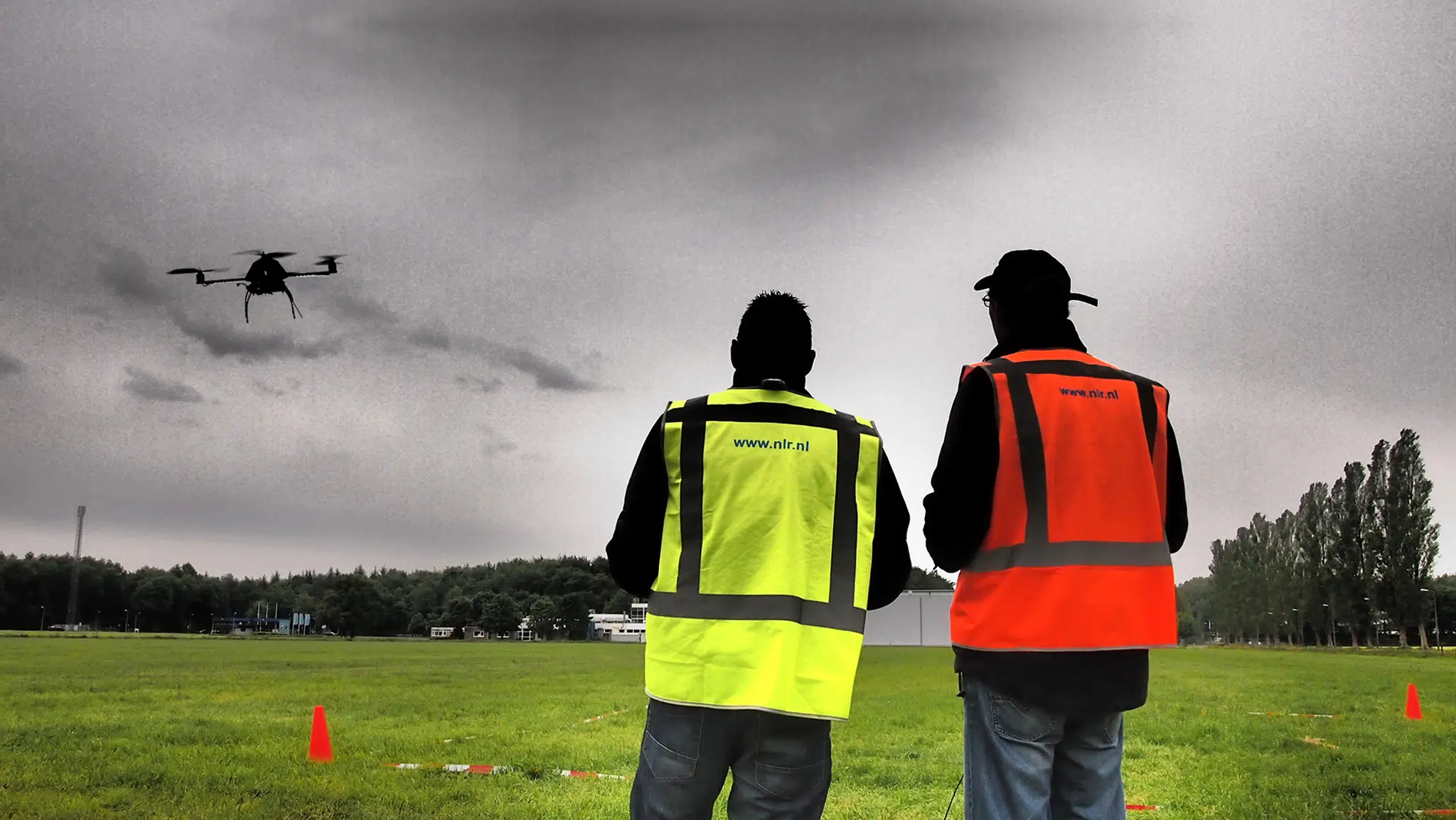
NLR will demonstrate drone flights fuelled by liquid hydrogen stored in tanks made entirely of composite material – a lightweight solution, with no risk of metal fatigue. With this, NLR is taking the next step towards safe, climate-neutral aviation, contributing to the ambitions of the Dutch ‘Duurzame Luchtvaartakkoord’ (Sustainable Aviation Accord) and the associated ‘Actieprogramma Hybride Elektrisch Vliegen’ (Hybrid Electric Propulsion Action Programme).
07 September 2020
Challenge accepted: Circular Economy in Aviation
For those passionate about aviation, 2020 has been a roller-coaster of emotions. The year started off with seemingly unlimited opportunities for the aviation industry. But within few weeks, due to the spreading of COVID-19, airlines all over the world started to ground aircraft, until reaching a never-before standstill of flights in April and May. Airlines started filing for bankruptcy and retiring iconic aircrafts such as the 747-400, while hoping to recover fast and go back to normal as soon as possible. On the other hand, as aviation was already committed to become a more sustainable industry, many saw this disruption as an opportunity to speed up such transition.
24 July 2020
Blog: Towards a sustainable recovery in aviation
COVID-19 has caused a large negative impact in the aviation industry. In order to minimise the transmission of the virus between countries, borders were closed and transport movements decreased. Air traffic was considerably reduced, leaving the industry with the lowest numbers in operations of the last decade. Cargo and repatriation flights were the main operations conducted during the lock-down. As the world is trying to recover from COVID-19, aviation is recovering too, meaning that the number of flights is increasing again.