If policies remain unchanged, aviation’s share of global CO2 emissions will rise from 2% to more than 20% by 20501. The Netherlands has stated its aims for sustainable aviation in the Second Aerospace Memorandum2; these include the goal of having short-haul commercial aviation fully electric by 2050.
The ministry asked NACO and NLR to draw up a route map for implementing electric flight in the Kingdom of the Netherlands. The study is the first to pay attention in an integrated way to the aviation ecosystem of stakeholders plus all the technical, logistical, energy-related and financial aspects that are involved in setting up electric aviation. The availability of aircraft and batteries has been examined, for instance, as have the configurations and logistics at airports, the recharging technology, sustainable energy supplies and the costs.
The study has revealed a variety of challenges. Regarding the planes themselves, they include developing batteries, certifying new aircraft and scaling up the production to meet demand. On the ground, they include adapting the infrastructure and the legislation and regulations, setting up sustainable energy sources and dealing with the peaks in energy demand during recharging. Despite the challenges, the researchers have backed the conclusion that it should be possible within not too long a time to use aircraft with electrical propulsion and a capacity of up to nineteen passengers that can take over the role of traditional aviation structurally on routes of up to 200 km. This also presents extra opportunities for regional aviation.
In the starting blocks
“Our study is providing valuable input into the debate about the future of electrically powered flight and its role in making aviation greener,” says Esther Kromhout, director of NACO (Netherlands Airport Consultants, part of Royal HaskoningDHV): “The roadmap shows what will be possible in the near future (2026-2030) based on current technical developments. It is a realistic scenario that will be feasible if the stakeholders actively look to cooperate with each other. We’re still only in the starting blocks; this is a small but significant piece of the larger puzzle, the global transition to zero-emission and genuinely sustainable aviation. Those are all themes that we’re working on, every day.”
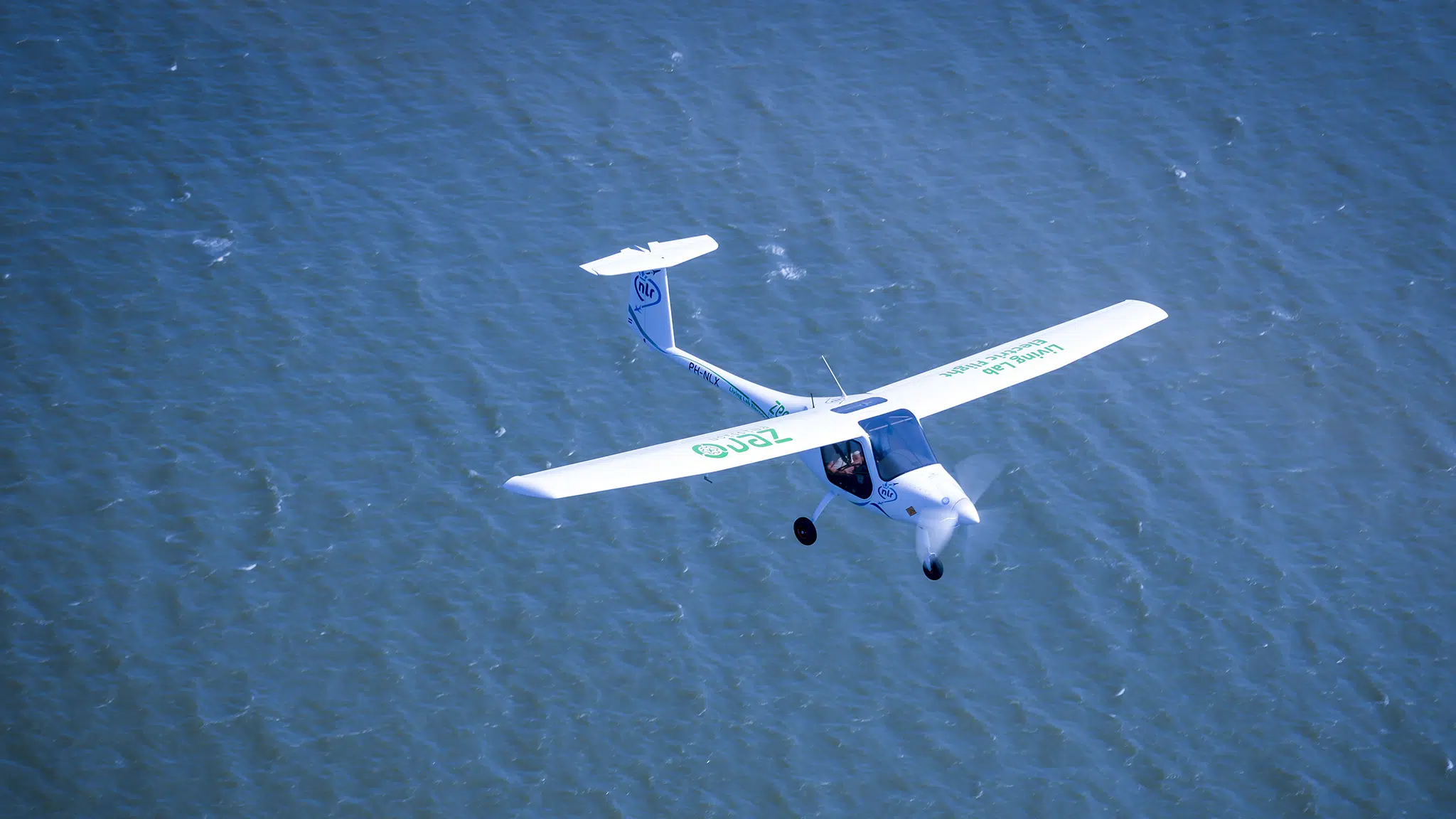
“Our fully electric Pipistrel Velis Electro has already let us demonstrate that electric flight is possible,” adds Martin Nagelsmit, head of the Sustainability and Environment department at NLR, “albeit currently only for small aircraft over short distances. There are challenges on the ground too, and in policy and regulations – as we keep finding out almost on a daily basis. There’s a great deal more needed in addition to electric flight if aviation is to become fully sustainable. There isn’t a single holy grail that will resolve the climate impact caused by the current generation of aeroplanes. If we’re to tackle the entire spectrum appropriately, we need to put effort into a variety of solutions, including propulsion with hydrogen, sustainable fuels and even more efficient aircraft and operations.”
Aruba, Bonaire and Curacao
The study used the scheduled services between Aruba, Bonaire and Curacao as an example for quantifying the impact of introducing electric flight, in terms of the infrastructure, the energy demand and the costs. The study provides an understanding of both the investments and the operational costs in converting commercial air traffic between the three islands in three phases: starting on a small scale in 2026, followed by 50% of the air traffic (indexed to 2019 volumes) by 2030 and then all flights fully electric by 2035. The knowledge that has been acquired in this study will also allow the options to be mapped out for other places in the Netherlands and the Kingdom as a whole.
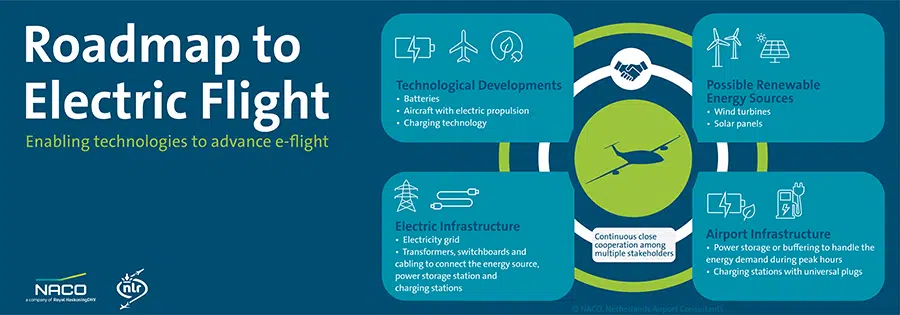
See the links here to the Electric Flight Roadmap, the Electric Flight Master Plan (short version) and the parliamentary letter plus associated appendices:
- https://hdl.handle.net/10921/1607
- https://hdl.handle.net/10921/1606
- https://www.rijksoverheid.nl/documenten/kamerstukken/2022/02/18/aanbieding-masterplan-elektrisch-vliegen
- IPCC, 2014: Climate Change 2014: Synthesis Report. Contribution of Working Groups I, II and III to the Fifth Assessment Report of the Intergovernmental Panel on Climate Change ↩︎
- Ministry of Ministry of Infrastructure and Water Management, 2020 – Verantwoord vliegen naar 2050 – Luchtvaartnota 2020-2050 [Responsible Flight through to 2050 – Aerospace Memorandum 2020-2050], p. 68 ↩︎