NLR laboratory aircraft inspects volcanic ash cloud

1 minute read

The National Aerospace Laboratory (NLR) laboratory aircraft flew to the volcanic ash cloud yesterday. The purpose of the flight was to verify the atmospheric models used to predict the movements of the ash cloud.

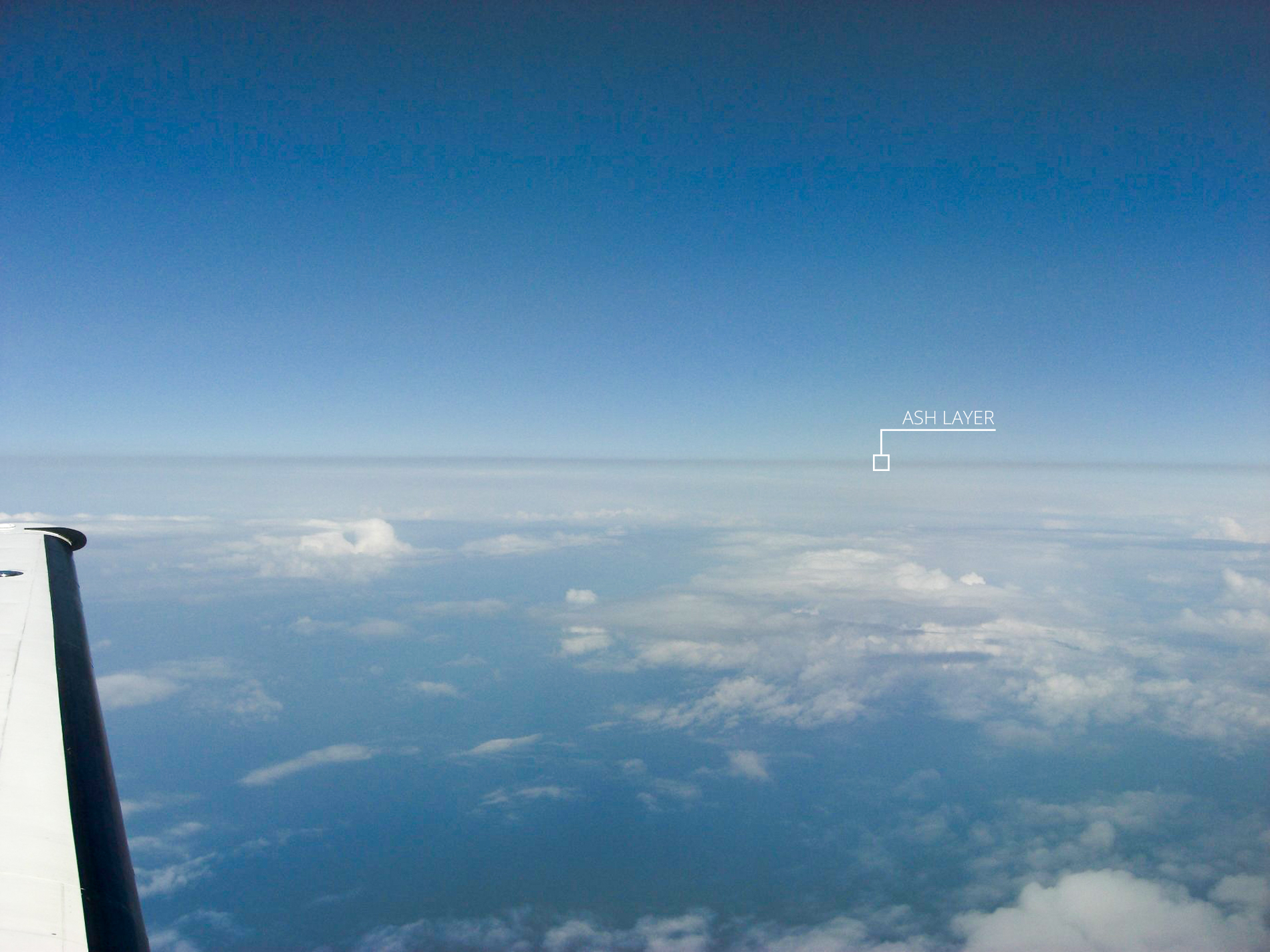
The flight made by the Cessna Citation on Sunday evening over the southern provinces of the Netherlands showed that the ash cloud is visually clearly visible. The boundaries of the ash cloud that hung over the southern provinces last night are clearly visible. This is of great importance to pilots when the airspace is partially reopened.

The reason for the flight was to verify the models used by the Royal Netherlands Meteorological Institute (KNMI) to calculate the movements of volcanic ash clouds. These measurements are used by Dutch aviation authorities in decision-making regarding the closure and reopening of airspace.

The flight made yesterday showed that the location of the volcanic dust layer was in good agreement with the models. To achieve this, the laboratory aircraft flew over the ash cloud. The ash cloud was present up to an altitude of 3 kilometres and had a varying thickness.

In Europe, there are still limited means to measure and track volcanic ash with great precision. There is also no regulation that determines at what concentration of ash particles the airspace should be opened or closed. Researchers at the NLR are therefore working closely with other institutions such as the KNMI, RIVM, Ministry of Defence, IVW, and Eurocontrol to investigate how sensors and measuring instruments can be quickly and safely deployed to accurately track volcanic ash.

Latest news

Construction and Manufacturing

28 November 2025

Unique in the EU: Modular EPTF Test Facility for Hydrogen-Powered Flight

With the opening of the Energy to Propulsion Test Facility (EPTF), NLR now operates a unique, modular test facility designed to support research. At present, the focus lies on hydrogen-electric aircraft propulsion. The new facility provides startups, SMEs and industrial partners with optimal conditions to safely and thoroughly test complex innovations in this field. In doing so, NLR contributes to accelerating aviation sustainability.

Training and Simulation

21 November 2025

Royal NLR and Lockheed Martin collaborate on e-Pilot capability development

Together with its partners, Royal Netherlands Aerospace Centre (NLR) will work closely with Lockheed Martin to advance the development of an e-Pilot capability that enhances human-machine teaming in military aviation over the next six years. Lockheed Martin will share technical knowledge and experiences on e-Pilot technology to assist NLR and its partners in developing their own intellectual property within the sense, assess and augment architecture.

Construction and Manufacturing

21 November 2025

Royal NLR partners with Lockheed Martin on airframe repair and life extension capabilities

Royal Netherlands Aerospace Centre will work together with Lockheed Martin on the development of small crack methodologies for airframe lifing over the next three years. In this project LM and NLR will share and exchange technical knowledge and experiences on small crack methodologies applied to laser peening and cold spray technologies