NLR laboratory aircraft inspects volcanic ash cloud

1 minute read

The National Aerospace Laboratory (NLR) laboratory aircraft flew to the volcanic ash cloud yesterday. The purpose of the flight was to verify the atmospheric models used to predict the movements of the ash cloud.

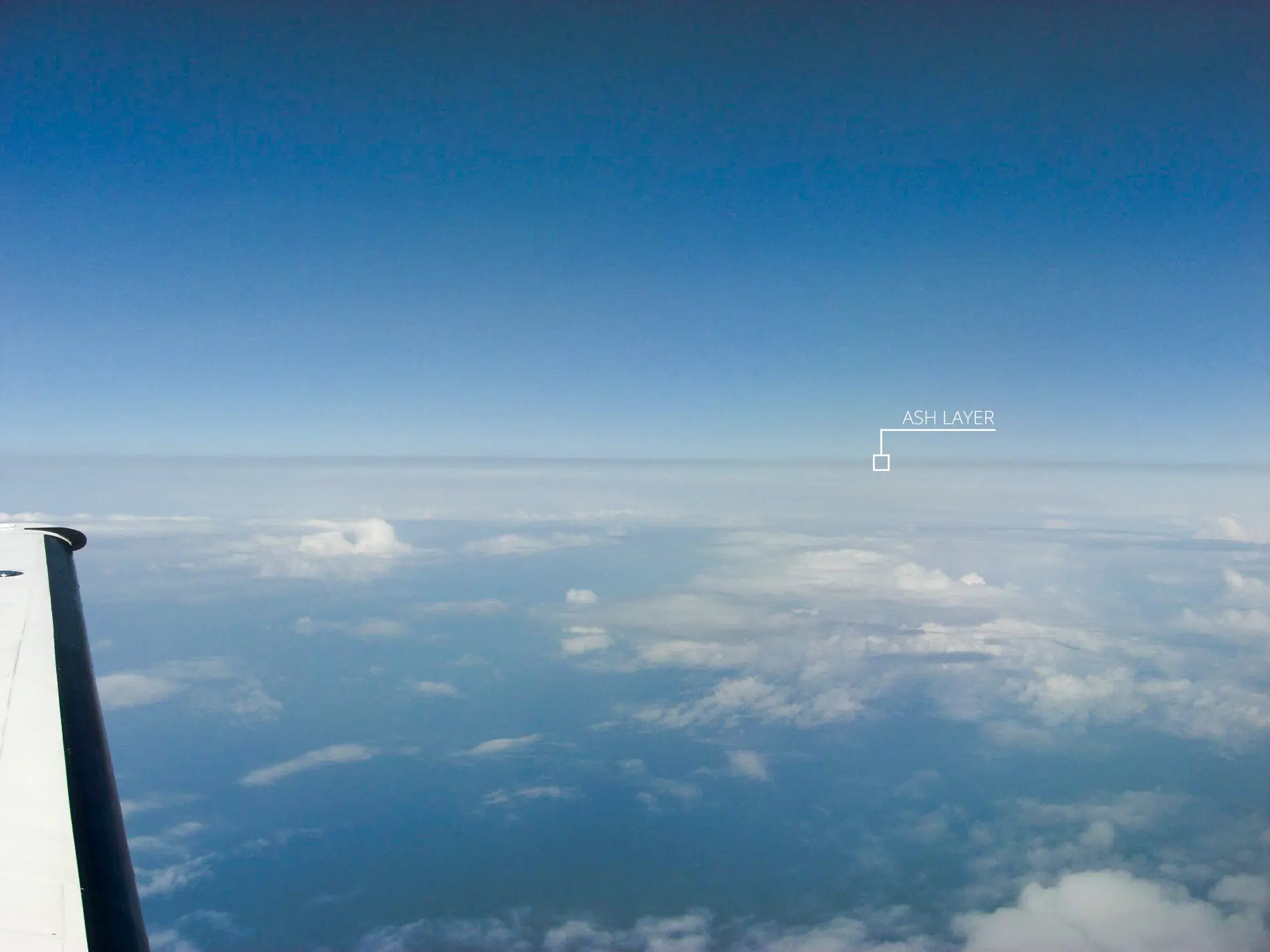
The flight made by the Cessna Citation on Sunday evening over the southern provinces of the Netherlands showed that the ash cloud is visually clearly visible. The boundaries of the ash cloud that hung over the southern provinces last night are clearly visible. This is of great importance to pilots when the airspace is partially reopened.

The reason for the flight was to verify the models used by the Royal Netherlands Meteorological Institute (KNMI) to calculate the movements of volcanic ash clouds. These measurements are used by Dutch aviation authorities in decision-making regarding the closure and reopening of airspace.

The flight made yesterday showed that the location of the volcanic dust layer was in good agreement with the models. To achieve this, the laboratory aircraft flew over the ash cloud. The ash cloud was present up to an altitude of 3 kilometres and had a varying thickness.

In Europe, there are still limited means to measure and track volcanic ash with great precision. There is also no regulation that determines at what concentration of ash particles the airspace should be opened or closed. Researchers at the NLR are therefore working closely with other institutions such as the KNMI, RIVM, Ministry of Defence, IVW, and Eurocontrol to investigate how sensors and measuring instruments can be quickly and safely deployed to accurately track volcanic ash.
Latest news

NLR corporate

18 June 2026

Fifty years of German-Dutch Wind Tunnels: a success story of European cooperation

On 18 June 2026, a milestone is celebrated in the Noordoostpolder, an area of the Netherlands reclaimed from the sea. The German-Dutch Wind Tunnels (DNW), a collaboration between the German and Dutch research organisations DLR and NLR, will have been in existence for fifty years. During this time, DNW has grown into a leading organisation for aerodynamic and aeroacoustic experiments for research institutes and industry worldwide.

Sustainability and Environment

03 June 2026

NLR and TU Delft link simulation models in new lab focused on climate-neutral aviation

How do you make an entire aviation system more sustainable, rather than just a single flight or a single aircraft? That is what Royal NLR – Netherlands Aerospace Centre – and TU Delft are investigating in the newly established Dutch Aviation Systems Analysis Lab. Last week, the organisations demonstrated connecting their simulation models for the first time. An important step towards being able to find the answers to tomorrow’s questions.

Defence and Security

08 May 2026

NLR-Marknesse host of NATO exercise TIE26

From 12 to 22 May, NLR-Marknesse will serve as the host location for NATO's annual exercise dedicated to improving drone counter-measures. During this event, military personnel, tech experts, and innovators from across the Alliance will gather in the Noordoostpolder for a counter-drone exercise.