NLR’s Maaskant Building reopened

1 minute read

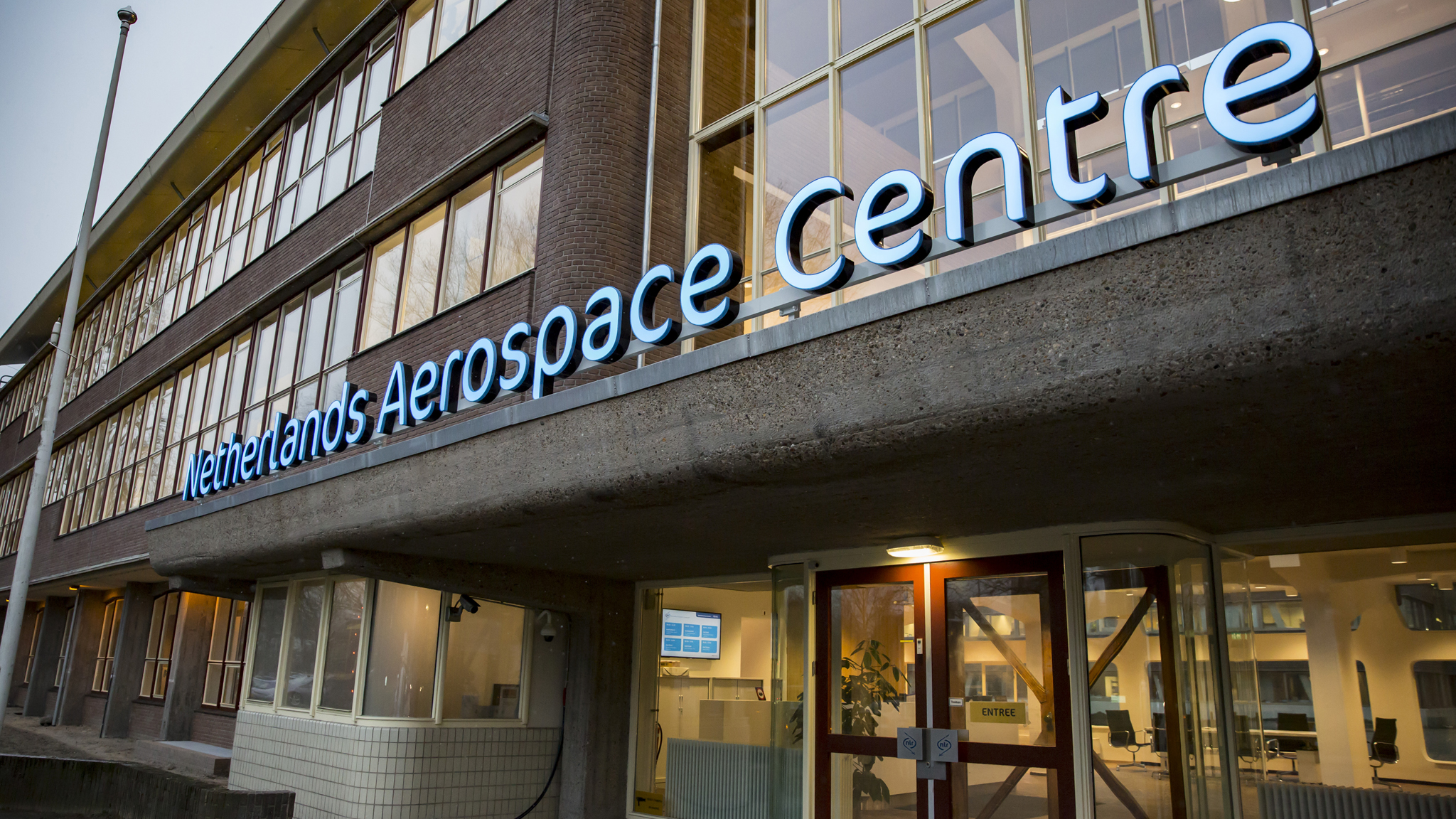
The 'Maaskant Building' of NLR in Amsterdam was reopened on Thursday, 9 February 2017. Amsterdam alderman Pieter Litjens, responsible for Traffic and Transport, performed the opening ceremony together with the architect’s son Ronald Maaskant. From start to delivery, it took almost three years to renovate and carry out new-build work at the NLR-Amsterdam site.

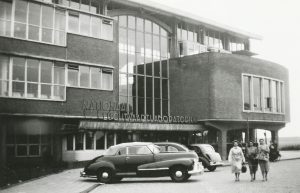
The building designed by architect Hugh Maaskant was erected between 1939 and 1941. The building is listed as a national monument of historic importance, among other things because of details like its arched roof, curved concrete supporting structures and brickwork masonry. Another special feature is that the brick walls on the outside run through to the inside, distinguishable only by a large glazed wall. So the exterior and interior architectures merge with each other almost unnoticeably. As Maaskant himself said, the hall had to be ‘the lively central point’, a meeting place for employees and visitors. See here for a video clip of the building process.

The beautiful monumental building has been restored to its original glory and at the same time transformed into a pleasant working environment that meets all contemporary requirements. Together with the new-build work, shortly also at the NLR site in Marknesse-Flevoland, the NLR complex reflects what NLR is: a unique organisation that performs applied research with a significant impact on society, economy and technology, forming a meeting place for the entire Dutch aviation sector.

Latest news

Sustainability and Environment

04 March 2026

Clearing the skies: why space debris demands action now

As the number of satellites in orbit grows, so does the challenge of keeping space safe and sustainable. What was once a vast and largely empty domain is rapidly becoming congested with hazardous debris. Without coordinated action, the very infrastructure that underpins modern society is at risk. The growing debris problem requires collective efforts — including the Zero Debris Charter — aimed at securing the future of space.

Safety and Human performance

16 December 2025

Cosmic radiation threatens the reliability of aircraft systems

Recently, a remarkable incident made the news: thousands of Airbus aircraft worldwide were grounded after cosmic radiation disrupted digital electronic systems. A problem long familiar in space applications is becoming increasingly relevant for aviation. Ongoing digitalisation is making modern systems more vulnerable to invisible radiation from space.

Construction and Manufacturing

28 November 2025

Unique in the EU: Modular EPTF Test Facility for Hydrogen-Powered Flight

With the opening of the Energy to Propulsion Test Facility (EPTF), NLR now operates a unique, modular test facility designed to support research. At present, the focus lies on hydrogen-electric aircraft propulsion. The new facility provides startups, SMEs and industrial partners with optimal conditions to safely and thoroughly test complex innovations in this field. In doing so, NLR contributes to accelerating aviation sustainability.