Royal NLR – Netherlands Aerospace Centre is proud to announce that it has been awarded a contract by Lockheed Martin under an Industrial Participation Programme, marking another example of the continued collaboration between Lockheed Martin and the Dutch industry.
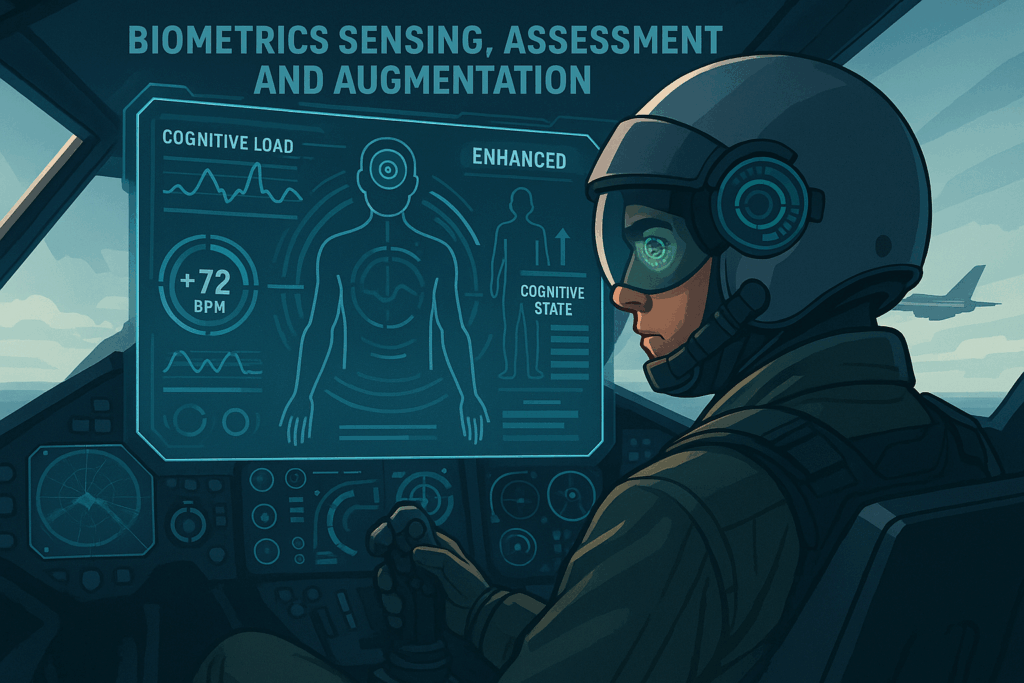
The e-Pilot project is a partnership aimed at developing a comprehensive human–machine teaming agent that enhances pilot performance, operational safety, and overall effectiveness in military aviation. This concept encompasses the fusion of advanced cockpit systems, artificial intelligence enabled technologies, biometric sensing, and sophisticated modelling to synergistically augment pilot capabilities through an integrated human–machine teaming agent. The project aims to deliver:
- A robust framework for assessing pilot condition states and human–machine cooperation
- Demonstration of the e-Pilot concept in single-vehicle and multi-ship operational use cases
- Improved pilot performance, safety, survivability, and mission effectiveness
Upon completion, the project is expected to provide the Dutch industry with a significant advancement in military aviation, enabling more effective and safe mission execution through enhanced human–machine teaming.
NLR’s involvement brings unparalleled expertise in aerospace technology to the e-Pilot project. With a proven track record in European collaboration and cutting-edge international research, NLR plays a crucial role in advancing technologies across mid- to high-readiness levels (TRL 3 to 7). By transferring this knowledge to Dutch industry, NLR helps accelerate the path from research to application, enabling the development of mature, mission-relevant solutions that directly support the Dutch Ministry of Defence and its operational needs.
“This collaboration accelerates the development of intelligent pilot-support technologies that strengthen both the Dutch defence capability and our national innovation ecosystem. The e-Pilot concept also offers significant potential for civil aviation applications, contributing to safer, smarter, and more efficient flight operations. By bridging manned and unmanned domains, this initiative reinforces the leading role of the Netherlands in human–machine teaming and intelligent aerospace systems”, Tineke van der Veen, CEO of Royal NLR, states.
Lockheed Martin has been at the forefront of the e-Pilot concept and human–machine teaming technologies across multiple platforms. Lockheed Martin will share technology developed over the past decade with NLR to enhance their capabilities in which, Elitac Wearables, 2M Engineering, and the research organisation TNO, will be involved as Dutch industry partners.
“This project underlines the importance of a solid Dutch consortium consisting of state-of-the-art knowledge institutes and dedicated, specialised industry partners teaming up with Lockheed Martin to accelerate research and development in the field of human–machine interaction. This project will enable the Dutch Forces to use this to their advantage in both training and missions,” said JC Dicke, Commissioner for Military Production of the Netherlands. “This illustrates the importance of the win-win-win Industrial Participation Policy where the OEM, the Dutch industrial base and the Forces all benefit”.
“The ability to predict what will happen next and autonomously provide correction or take action to assist the pilot is a key feature of an e-Pilot (digital twin) that can augment human cognitive and physiological limitations, playing a critical role to enhance survivability and mission effectiveness”, Keith Higginbotham, Lockheed Martin Aerospace Physiology & Human Performance technical lead, says. “This project will enhance Dutch industry in supporting military pilots with the latest cutting-edge technologies. It also reinforces the importance of international collaboration and a strong Industrial Participation partnership.” “Lockheed Martin looks forward to continuing its partnership with the Royal Netherlands Aerospace Centre and Dutch industry subject-matter experts,” Joe Krapf, Lockheed Martin Industrial Participation Country Manager, states. “The e-Pilot project will enhance NLR’s capabilities in developing software packages supporting Dutch military and commercial pilots.”