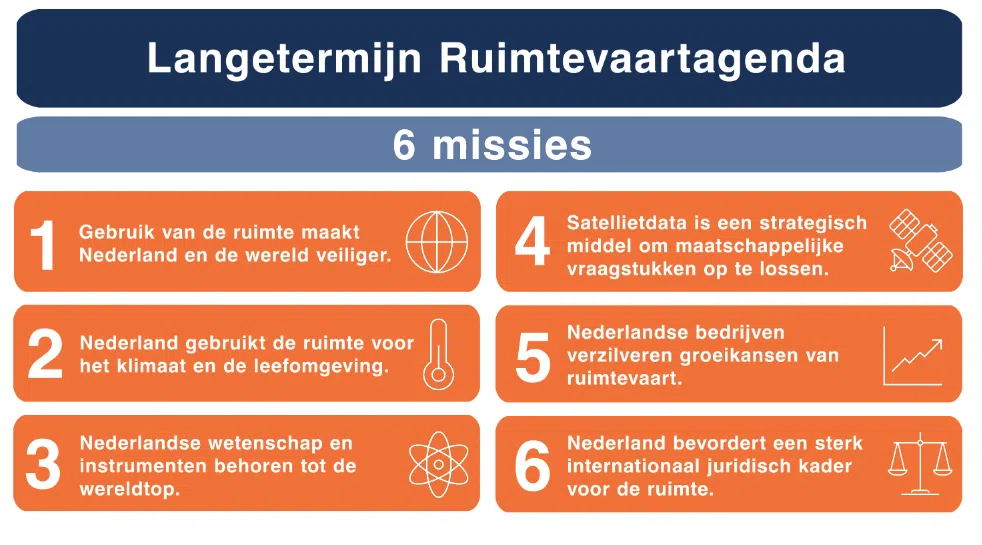
Aerospace technologies help solve many societal, scientific and economic challenges. Whether it concerns monitoring climate change, ensuring social safety or providing communication capabilities, the importance of aerospace technology is a tangible part of our daily lives. That is why a long-term aerospace agenda was handed over today at the Space Expo in Noordwijk to Micky Adriaansens, Minister of Economic Affairs and Climate.
With the launch of the long-term aerospace agenda, the Dutch Aerospace Industry emphasises the strategic importance of aerospace as a critical infrastructure for the Netherlands. The Netherlands have unique knowledge and a technological position to excel in this area by contributing to our national security through, among other things, dyke monitoring and climate measurements. According to the industry, which has pushed for the creation of this agenda, this is a good start but now it is important to follow through, take the next steps and invest in aerospace.
More information
The full news article can be found here on the website of SpaceNed.
The long-term aerospace agenda is a clear signal that the Netherlands is seriously committed to a thriving and safe aerospace industry. The time is ripe for strategic autonomy in aerospace.