Speed is essential in the transition to a more sustainable society. This also applies to the design and production of industrial applications. If a designer is able to map out earlier and more clearly how a product with less material still meets the desired quality and safety requirements, than this contributes to a dynamic, sustainable transition.
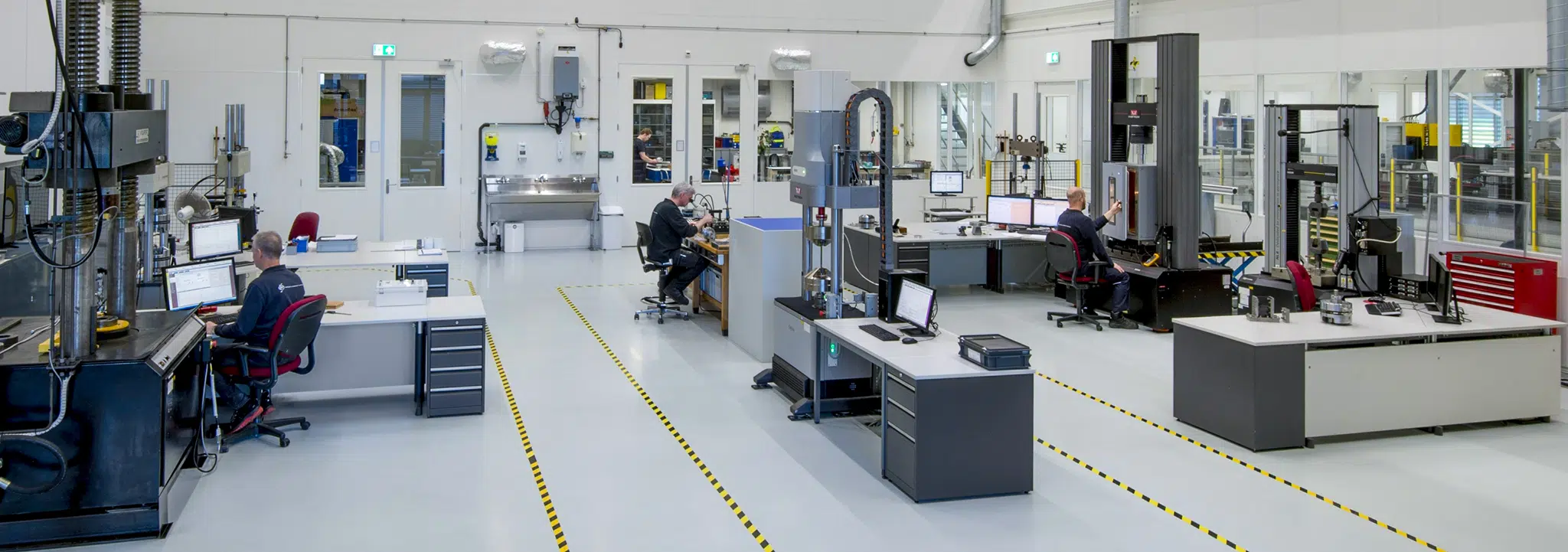
For that reason NLR is proud to present the Instron E20000: the world’s first electric 20kN fatigue machine. Previously, these high forces were only possible with hydraulic machines and 20 kN is a kind of “minimum” for testing on common test pieces of, for example, aluminium, stainless steel or titanium. In addition, this electrical machine can perform the tests at higher speeds. Think of frequencies of 100Hz compared to hydraulic machines that reach approx. 3Hz, especially with large deformations. In addition to the existing fleet of (hydraulic) fatigue machines, NLR is now ready for the future demand for physics-based support for the fatigue behaviour of metals.
Sustainable philosophy
Last year NLR published the white paper ‘Aircraft structural design’. It outlines improvements in the understanding and modeling of material behaviour to enable major advances in aircraft design. In the publication, NLR introduces the so-called ‘green fatigue design philosophy’. This sustainability-oriented design philosophy reduces the necessary caution, as applied in applicable design constraints that apply from a fatigue point of view – that material tears up under a low, varying load.
This design conservatism offers a margin to cover uncertainties, such as about material properties. Less conservatism means less waste, a smaller footprint and therefore ‘greener’. This, of course, requires a validated, much improved modeling of the fatigue behavior that clearly indicates when a notch can form in a piece of material that further tears, resulting in a possible fracture.
Prominent contribution
NLR has traditionally been very knowledgeable about fatigue. Experts are currently finalizing a physics-based modeling of crack growth behaviour, which they believe renders current empirical formulas superfluous. The substantiation of this formulation has been a test process for many years, in which many hundreds of test pieces have been subjected to a fatigue test. This has been done for an important aluminum alloy. Figures for other metals will follow later. The test department plays a prominent role in the validation of this new modelling to enable that designs are created even sharper (and cheaper) in the future.