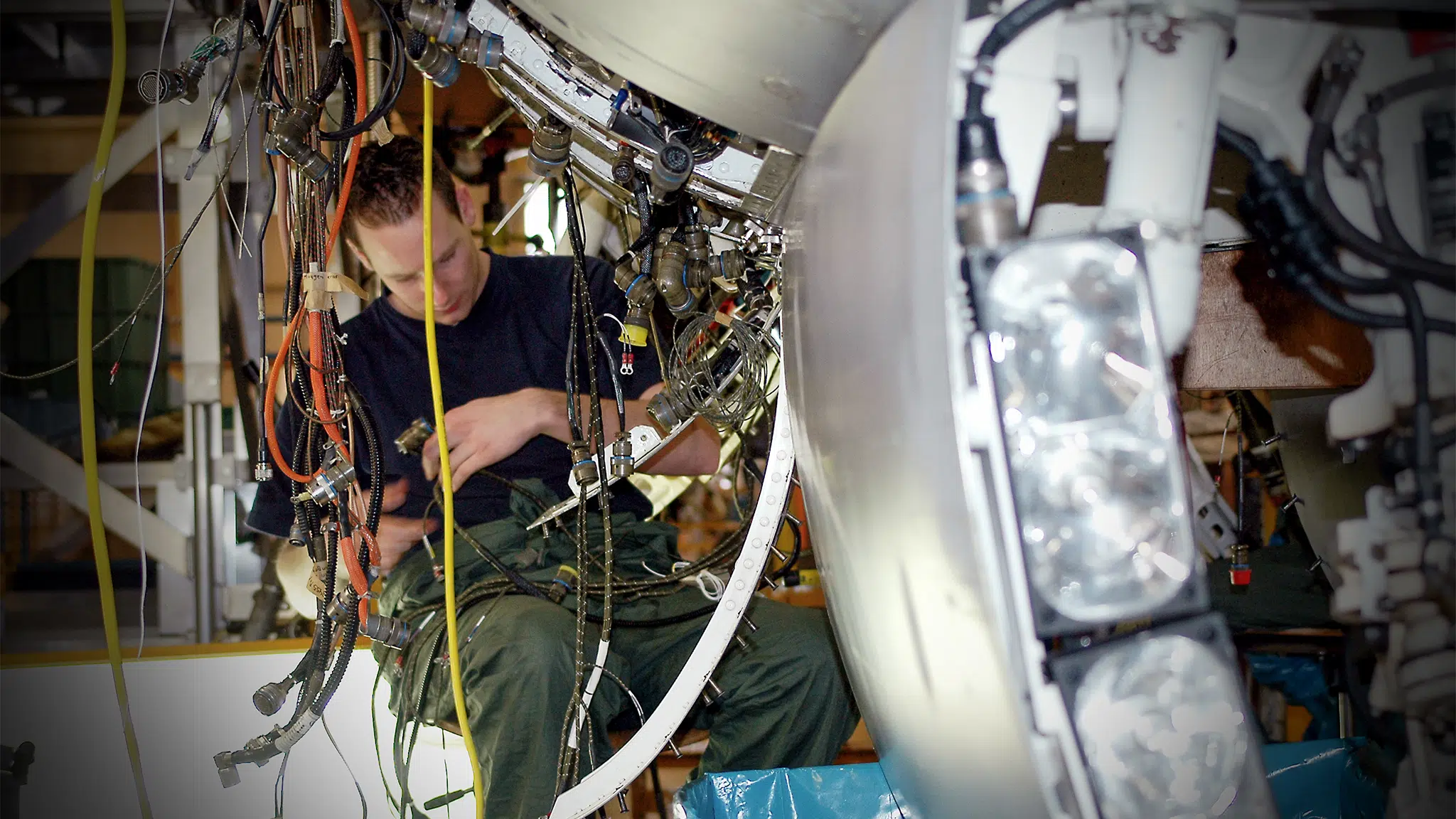
Development of maintenance training as a result of changed regulations
The challenge
The development of the European Military Aviation Regulations (EMAR) resulted in changes in the Dutch military aviation regulations. The content and levels of the maintenance type training for the F-16, AH-64D, CH-47D/F and the NH-90NFH therefore needed to be updated. Moreover, the training did not fully meet the needs of (novice) mechanics, and the training did not always accurately represent the actual work of the mechanic. The focus of the training was merely on theory; the practical side was not offered in an integrated way.
The solution
First, a competency-based training concept was defined in line with the 4-component instructional design principles (4C/ID). This concept focuses on whole-task training. Theory and part-task practice are integrated to support the whole task scenario. Qualification profiles were defined based on the outcome of the training needs analysis. Finally, the training was developed, including supporting materials. Besides training materials, an assessment method also was developed to allow student coaching and evaluation. This method comprises competencies including their observable behaviors and can be used for continuous coaching and assessment.
What did we do?
In cooperation with maintenance mechanics and instructors, the various steps in an instructional design process were carried out. To analyze the training needs, several workshops were held with both experienced and inexperienced maintenance mechanics.
Throughout the process, there were various presentations and discussions to explain and define the desired training concept. Working sessions with the instructors and developers were subsequently held to develop training course in accordance with this concept.
Project partners:
Royal Netherlands Air Force:
Royal Military Air Force School (KMSL)
Research organisation: Royal NLR
Start: May 2014
Duration: 3 years