Project: FLANS (Flight test LIGNex1 AESA NLR Support)
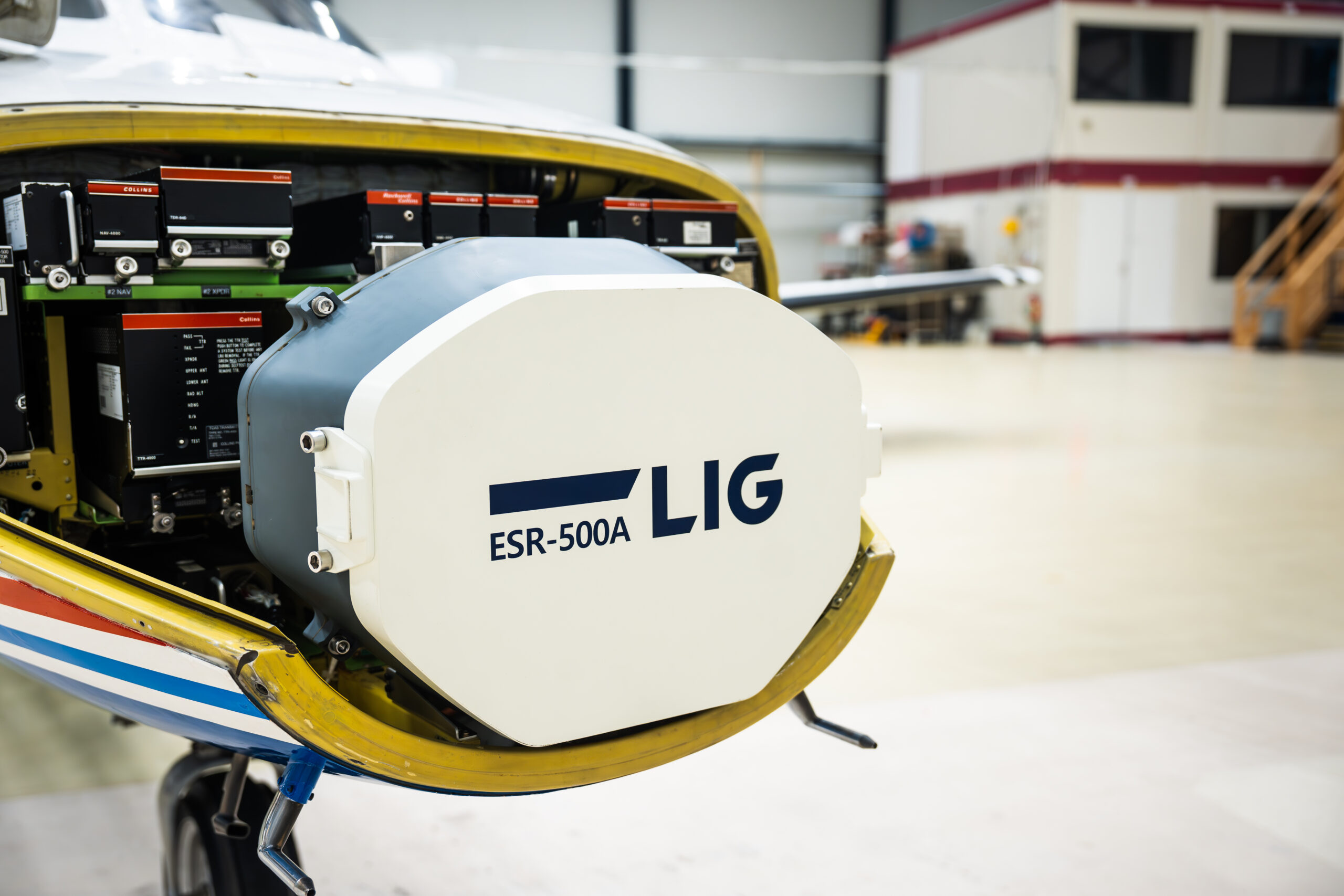
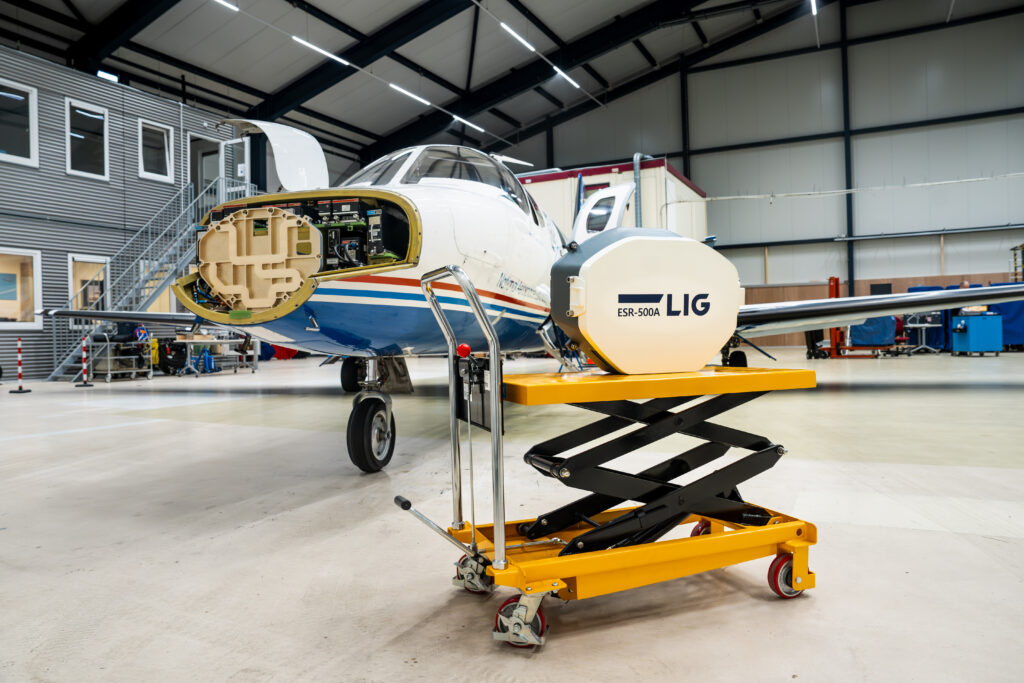
The project includes the integration and certification of LIG Nex1’s newly developed AESA radar system and its supporting equipment into NLR’s Cessna Citation II research aircraft (PH-LAB) to facilitate flight testing prior to operational fielding. Three test campaigns are scheduled for October 2025, January 2026, and May 2026.
The challenge
The AESA radar system must be tested on a representative platform, in cooperation with various targets of interest, such as boats, cars, and other aircraft, in real-world scenarios. However, several challenges must be addressed before flight testing can begin, specifically:
- The system’s large size and weight pose a challenge due to the PH-LAB’s limited space, particularly in the nose section.
- Modifications are needed to accommodate the radar’s unique air-cooled design, which differs from conventional AESA systems that use a combination of air and water cooling.
The solution
NLR operates the Cessna Citation II flight test bed under RADO (Research Aircraft Design Organisation) approval, allowing the integration and certification of AESA radar modifications to the aircraft. Given its extensive flight testing experience and a proven track record of collaborating with other platforms, NLR can provide operationally relevant flight test scenarios. NLR was also able to successfully address key design challenges by implementing mechanical reinforcements of the aircraft nose and introducing forced air cooling.
What did we do/What are we doing?
Due to previously added mechanical reinforcements, the NLR team was able to install the radar in the PH-LAB’s nose compartment, enabling optimal operational performance for flight testing in conjunction with targets of interest. NLR also modified the design to introduce forced air cooling, using a custom-made air circulation system with a heat exchanger that utilises ram air to cool the air warmed by the radar system.
Additionally, the cabin accommodates two radar operators from LIG Nex1, who will work alongside the NLR crew. Flight tests will be conducted in Dutch airspace, requiring NLR to coordinate with target operators and obtain the necessary flight approvals.
Project partners:
NLR, LIG Nex1
Project timeline:
2024-2026