A common, modernised approach for platform qualification training
The challenge
The Defence Helicopter Command of the Royal Netherlands Airforce expressed a need for a common, modernised approach for qualification training on all of their platforms.
The solution
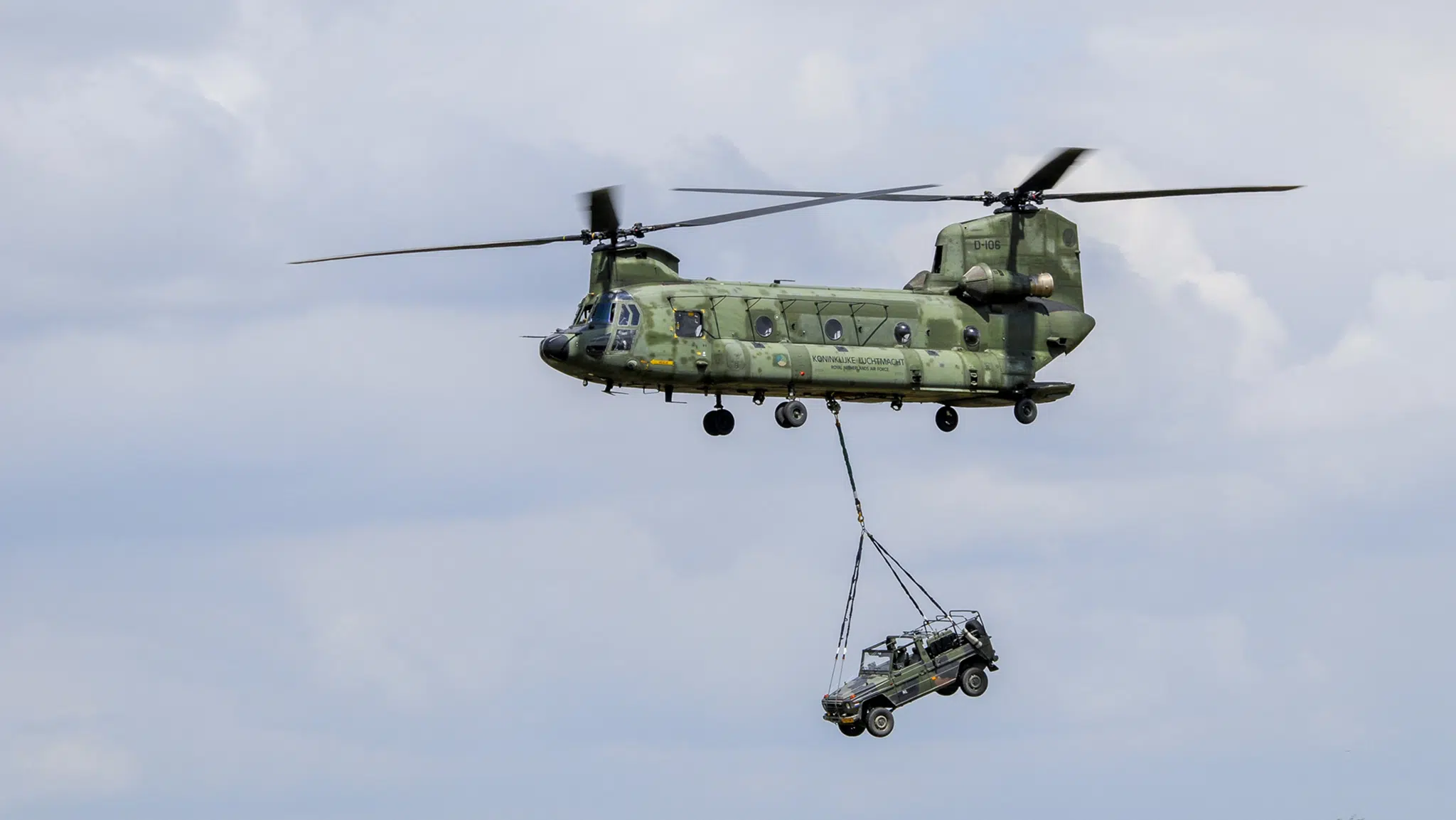
The project produced actual MQT for AH-64 and CH-47 crews. Additionally, user requirements, a system concept and a roadmap for an MSMT simulation facility were provided.
The method applied is a competency-based training approach that applies the train-as-you-fight principle from the start. This primarily whole-task training setup is constructed using principles (for example gradually increasing complexity) that optimise cognitive load throughout the training.
What did we do?
In cooperation with subject matter experts (operational pilots/load masters and instructors), a competency-based training needs analysis was performed. Competency profiles were identified for CH-47 pilots and load masters and for the AH-64 pilots. Idealised mission qualification training (MQT) outlines were designed that would lead to fully combat-ready pilots and load masters for a wide range of normal and adverse operational conditions. This is based on the assumption that modern tactical simulators are available, suitable live ranges are available and that there are no scheduling issues. Such ideal training conditions are important for creating and working with a clear vision of training.
With the idealised training setups in mind, actual MQT were developed, implemented and evaluated. User requirements for a multi-ship/multi-type (MSMT) simulation facility were also identified and a roadmap to a future idealised MSMT system concept was suggested.
All activities were facilitated by NLR and new, science-based approaches were applied as far as acceptable for the subject matter experts.
Project partners:
Defence Helicopter Command (DHC) of the
Royal Netherlands Air Force
Joint IV Commando (JIVC) of the Ministry of Defence
Research organisation: Royal NLR
Start: June 2016
Duration: 2.5 years