Integration of the MQ-9B SkyGuardian into European Airspace

2 minutes read

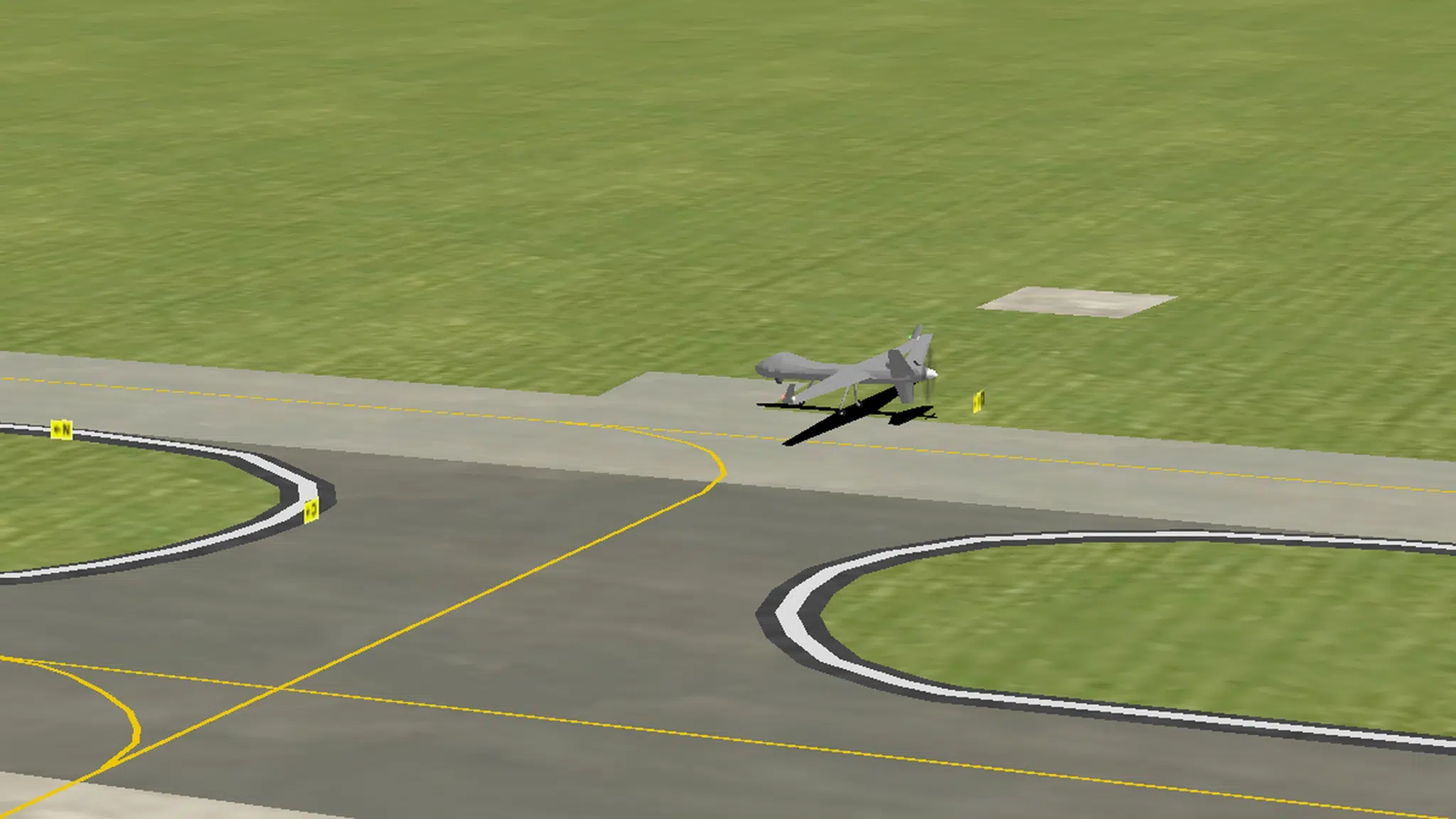
NLR has partnered with General Atomics Aeronautical Systems, Inc. (GA-ASI) to develop the procedures needed to safely and efficiently integrate Medium Altitude, Long Endurance (MALE) Remotely Piloted Aircraft (RPA) into European Airspace. The first phase of this collaboration culminated on 28-29 May 2019 during which a large-scale simulation exercise was performed at the Amsterdam campus of NLR. The goal of this exercise was to test the first version of the MALE RPA airspace integration procedures, and involved experienced civil Air Traffic Controllers (ATCOs), as well as licenced airliner and RPA pilots. The exercise considered operations from Rotterdam The Hague Airport (EHRD), a civil airport in the Netherlands, and made use of a simulated MQ-9B SkyGuardian MALE RPA, an RPA that is designed and manufactured by GA-ASI.

“The goal of this study is to iteratively develop the procedures needed to operate MALE RPA in Europe based on empirical evidence gathered from a series of real-time simulation exercises,” said Dr. ir. Emmanuel Sunil, R&D engineer and project manager NLR. “During the first simulations performed in May, we subjected air traffic controllers to many contingency procedures ranging from engine failure to loss-of-link between the pilot and the RPA. The results indicate that the new procedures that we are developing will make it possible for MALE RPA to fly safely and efficiently in civil European airspace along with other manned air traffic.”

For the exercise, two NLR simulators were utilized: the NLR ATM Research Simulator (NARSIM), which simulates air traffic and provides working positions for ATCOs and aircraft pilots, and the NLR Multi UAS Supervision Testbed (MUST), which functions as the RPA simulator and the pilot ground control station. GA-ASI supported this exercise by providing 3D and kinematic models of the SkyGuardian RPA.

Future simulations studies are planned to improve the fidelity of the MALE RPA airspace integration procedures, through testing the effectiveness of on-board TCAS II and also consider the use of novel technologies such as Detect and Avoid (DAA) to further increase the safety of RPA operations. DAA technology provides RPA pilots with additional situational awareness of the traffic situation around their aircraft.

Get an impression of the simulations in the video clip below.
Latest news

NLR corporate

18 June 2026

Fifty years of German-Dutch Wind Tunnels: a success story of European cooperation

On 18 June 2026, a milestone is celebrated in the Noordoostpolder, an area of the Netherlands reclaimed from the sea. The German-Dutch Wind Tunnels (DNW), a collaboration between the German and Dutch research organisations DLR and NLR, will have been in existence for fifty years. During this time, DNW has grown into a leading organisation for aerodynamic and aeroacoustic experiments for research institutes and industry worldwide.

Sustainability and Environment

03 June 2026

NLR and TU Delft link simulation models in new lab focused on climate-neutral aviation

How do you make an entire aviation system more sustainable, rather than just a single flight or a single aircraft? That is what Royal NLR – Netherlands Aerospace Centre – and TU Delft are investigating in the newly established Dutch Aviation Systems Analysis Lab. Last week, the organisations demonstrated connecting their simulation models for the first time. An important step towards being able to find the answers to tomorrow’s questions.

Defence and Security

08 May 2026

NLR-Marknesse host of NATO exercise TIE26

From 12 to 22 May, NLR-Marknesse will serve as the host location for NATO's annual exercise dedicated to improving drone counter-measures. During this event, military personnel, tech experts, and innovators from across the Alliance will gather in the Noordoostpolder for a counter-drone exercise.