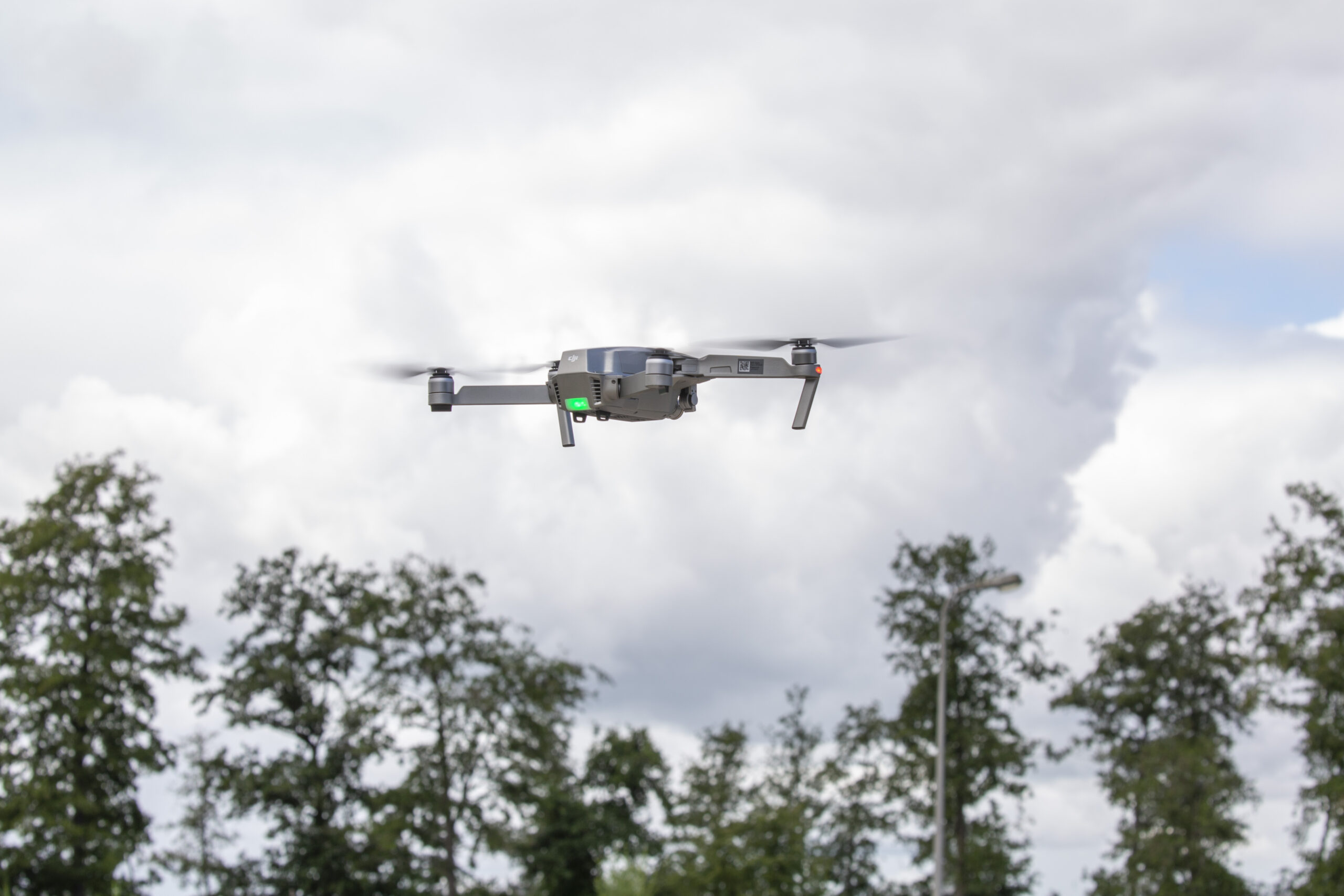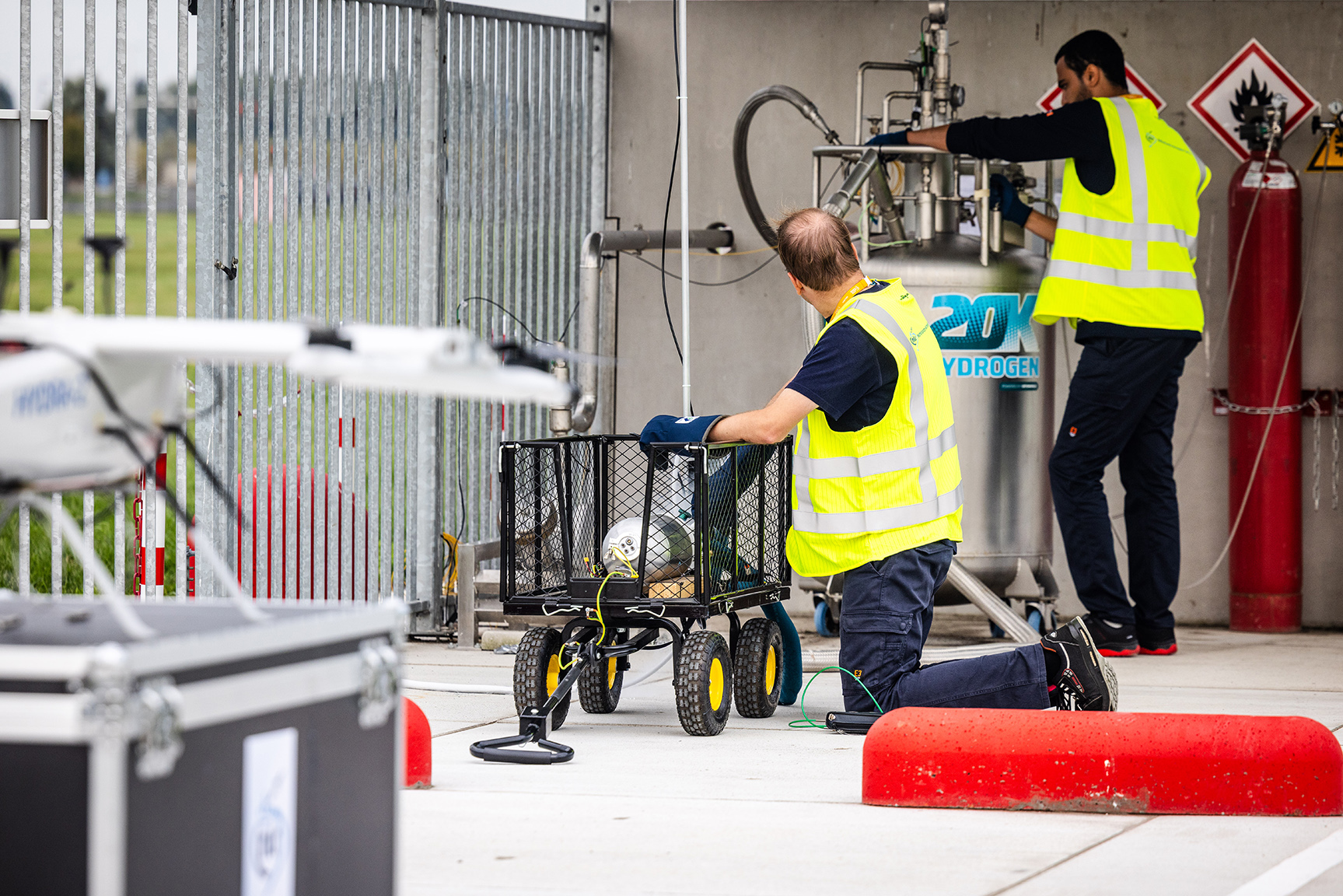
Royal NLR (Royal Netherlands Aerospace Centre) and Rotterdam The Hague Airport (RTHA) have successfully demonstrated a flight powered by liquid hydrogen. The demonstration put the full chain of supply, storage and application into practice, enabling a drone to fly on liquid hydrogen at an operational airport. NLR’s HYDRA-II drone was used as a flying research platform.
The demonstration follows an important development in 2025, when NLR’s HYDRA-II drone became the first in the Netherlands to successfully fly on liquid hydrogen. Drones provide an effective research platform for developing and testing innovative technologies for hydrogen-powered flight. While the focus at NLR’s Drone Centre in Marknesse in 2025 was primarily on the drone technology itself, today’s demonstration focused on what is needed to safely and practically use liquid hydrogen for flight at an active airport.
Martin Nagelsmit, CTO at NLR: “With the demonstration involving our NLR drone, RTHA has achieved an important milestone. This builds on our collaboration, which previously led to the realisation of a liquid hydrogen storage facility at the airport. Through NLR’s own PHYREX project, NLR is taking the next step. As part of this project, an NLR Pipistrel Velis Electro, our electric research aircraft based at RTHA, is being converted to fly on liquid hydrogen. The aim is to conduct the first test flights in 2027.”
Practical demonstration of the complete chain
The aviation sector is exploring a range of solutions to reduce CO₂ emissions. In addition to sustainable aviation fuels (SAF) and electric flight, the potential role of (liquid) hydrogen is also being investigated. Hydrogen could play an important role in making aviation more sustainable. This is why research into the opportunities and challenges of hydrogen as an energy carrier for aviation is being carried out worldwide.
During the demonstration, the complete chain was put into practice: from the delivery and storage of liquid hydrogen at the airport to its application in an aircraft. This provides valuable insight into how these processes can be organised safely, efficiently and effectively in practice, and what knowledge is still needed for future applications.
Rotterdam The Hague Airport as a testbed for innovation
As a testbed for innovation, Rotterdam The Hague Airport makes its airport site available for demonstrations, testing and research. The airport’s relatively small scale and close collaboration with educational and knowledge institutions, companies and government bodies enable innovations to be explored in practice relatively quickly. The liquid hydrogen storage facility at Rotterdam The Hague Airport was central to today’s demonstration.
Daan van Dijk, Senior Innovator at Rotterdam The Hague Airport: “It is particularly important now to innovate and gain practical experience with hydrogen, so that we can understand the role it could play in the aviation of the future.” Thanks to the storage facility and the operational processes around it, we will be able to support research and testing applications requiring liquid hydrogen in the future. This is not yet commonplace at airports today, making this infrastructure and the practical knowledge gained particularly valuable for the further development of hydrogen in aviation.”
Collaboration within TULIPS
The demonstration is part of TULIPS, a European innovation programme under Clean Aviation in which airports, knowledge institutions and companies work together to develop new technologies for aviation.
Rotterdam The Hague Airport works within the programme with Schiphol Group, Royal Netherlands Aerospace Centre (NLR), Air Products and other European partners. The knowledge and experience gained from the demonstration will be shared within the network and used to support further research.