Project: HEROPS (Hydrogen-Electric Zero Emission Propulsion System)
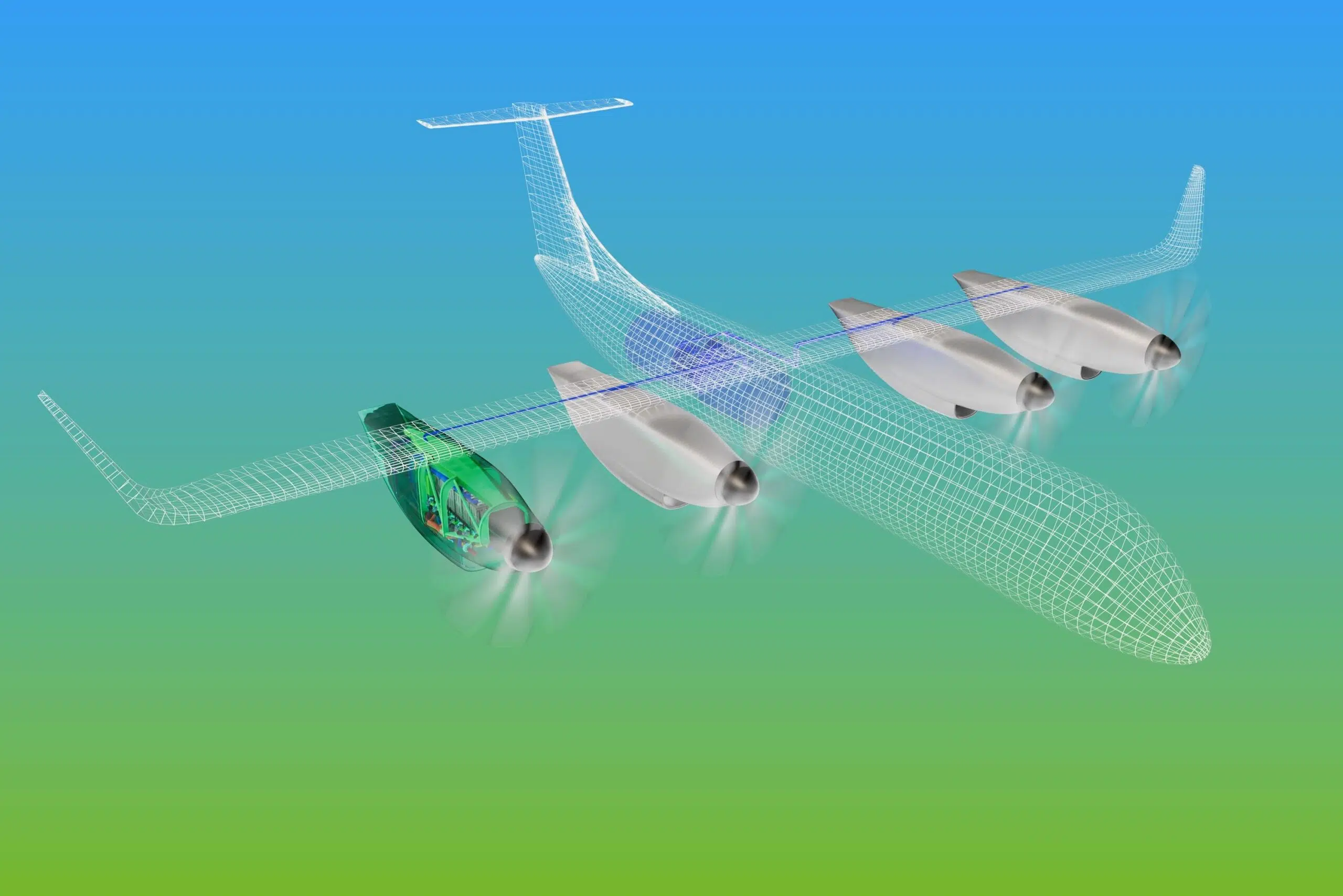
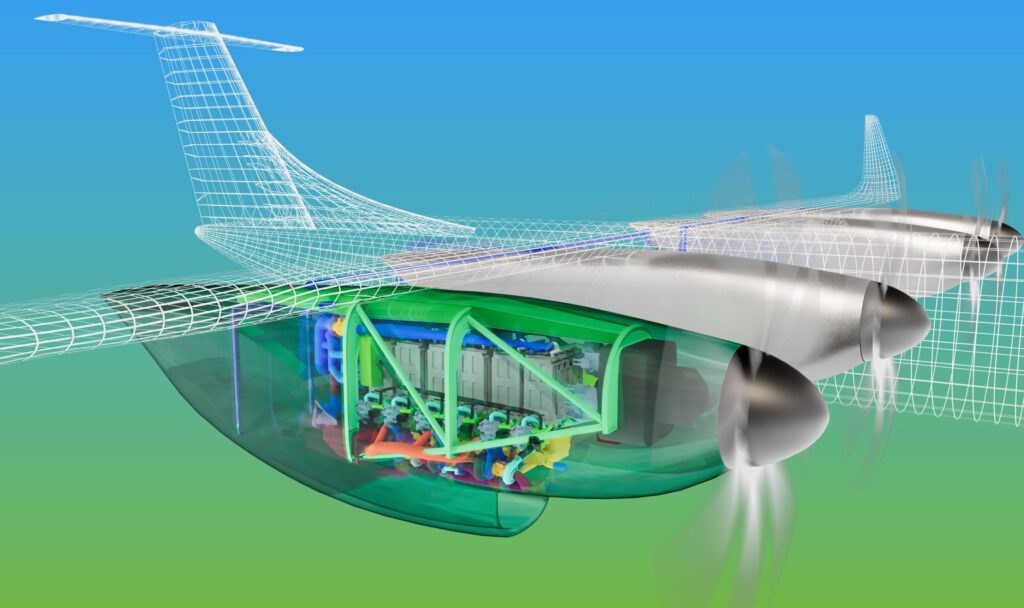
HEROPS aims to introduce climate-neutral propulsion into regional aircraft by developing MTU’s Flying Fuel Cell (FFC) propulsion system concept for entry into service in 2035. This disruptive hydrogen-electric propulsion system uses fuel cells as its sole power source and a liquid hydrogen fuel tank, without the need for high-power batteries. Integrating both the fuel cell system and the electric propulsion unit into a compact engine nacelle will ensure an efficient system at a high power-to-weight ratio.
The challenge
HEROPS is targeting demonstration of a 1.2 MW propulsion system based on a scalable 600 kW core module at TRL4 (Technology Readiness Level). The core module and all further subsystems will be validated up to TRL5. Scalability to the 2- 4 MW power level will be confirmed, complemented by simulation and electrical network testing of the overall modularised system. The certification programme will expand on current work, allowing the HEROPS technology to be developed in a timely manner, in line with relevant certification requirements.
The solution
The HEROPS project will meet this challenge with a European consortium of aircraft propulsion system integrators, electrical system experts, key tier-one suppliers and leading researchers in stack technology (a set of software components and tools used to build a software system), mechanics and propulsion. The consortium partners will benefit from other relevant European and national programmes.
What we are doing
The two-phased approach of the overall programme – including extensive development, test and validation cycles at each stage – is expected to advance the FFC concept to TRL6 for integration and demonstration on a regional aircraft by 2028. This will pave the way for commercial prototyping and entry into service by 2035, delivering a propulsion technology that will be key for achieving the European Green Deal’s objective of climate-neutral aviation by 2050 with 100% avoidance of CO2 and NOx emissions and up to 80% reduction of the climate impact from contrail cirrus.
Project partners:
Project coordinator: MTU
Click here for all partners in the consortium
Project timeline:
2024-2026


This project has received funding from the Clean Aviation Joint Undertaking under the European Union’s Horizon Europe research and innovation programme under GA no. 101140499.
The text only reflects the author’s view. The European Union and Clean Aviation JU are not responsible for any use that may be made of the information it contains.